
THE G-20 IN PITTSBURGH
by Tom Over 9-23-09
<br><br>
On Tuesday, Sept 22, activists from Philadelphia, New York City, Pittsburgh and other cities held a mock funeral procession to demand better policies for addressing the AIDS pandemic, a day ahead of the arrival of delegates for the G-20.
<br><br>
The approximately 50 participants in the New Orleans-style funeral march drew a mix of interest, irritation, and amusement from onlookers in the business district of downtown Pittsburgh.
<br><br>
At the head of the funeral march where pallbearers carried a cardboard coffin, a man shouted into a microphone while someone else carried a portable amplifier, “when people with AIDS are under attack, what do we do ?” and marchers shouted in unison, “fight back!”
<br><br>
Amidst the early afternoon bustle of an weekday, the demonstrators repeated this call-and-answer and similar chants as the funeral march made its way around the perimeter of the David L. Lawrence Convention Center, the site of the G-20 Summit later this week.
<br><br>
Erica Goldberg works with ACT UP Philadelphia. She said global health is not on the agenda of the G-20 Summit.
“One of the things that some of the G-20 nations have promised us is funding for the global fund to fight, TB, malaria, and HIV/AIDS. This is all really important, especially if we want to meet the United Nations’ Millennium goal of eradicating these diseases by 2015. As of right now, this won’t be met. We have to hold our leaders accountable. They are the ones making decisions for the poorer countries,” Goldberg said.
<br><br>
She commented on the timing of the demonstration. “We wanted this to be the first thing they (the G-20 delegates) see. They’re coming here tomorrow. We’re holding them accountable. This needs to be on the agenda.”
<br><br>
She said AIDS activists chose Sept 22, two days before the official start of the G-20 Summit, and one day before the arrival of the delegates, so as to not have to compete with other protests. Also, she said the AIDS activists figured there would be less of a chance of conflict with police if they staged their protest earlier in the week.
<br><br>
“We hope that this will hit the papers tomorrow, that it’s the first thing they see when they walk in, that they have this on their conscience and know we’re not going away,” Goldberg said. She urges people to contact legislators about supporting the Global Fund to Fight AIDS, Tuberculosis, and Malaria.
“President Obama, as much as I love him, went back on his promise to fulfill the funding,” Goldberg said.
<br><br>
She commented on how drug companies factor into all of this. “ Medication does not need to be this expensive. They can definitely lower their prices. We have big drug interests lobbying to prevent AIDS medication from getting” to developing nations.
<br><br>
Goldberg said debt cancellation for developing nations is a factor that comes into play.
“When you don’t cancel debts of nations and they have to pay back loans to the IMF and the World Bank, they won’t have the funds necessary for getting AIDS medication, or they might get the medication but can’t pay the health professional because of their debt.
<br><br>
She said vested interested motivated by huge profits stand in the way of doing a better job of addressing tuberculosis, malaria, and HIV/AIDS. “We have the power, the ability, and the medication.”
World News
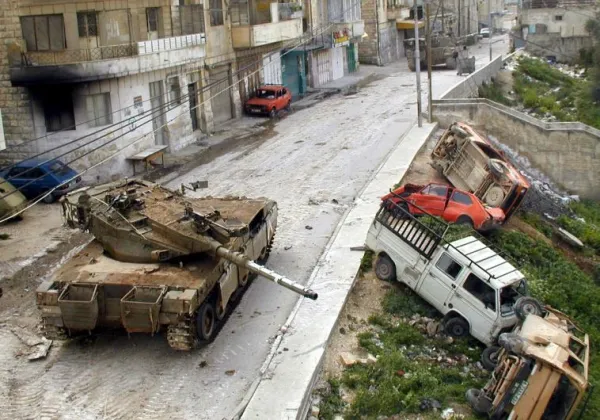
On January 11, the Israeli Lod District Court ruled against a Palestinian film-maker, Mahmoud Bakri, ordering him to pay hefty compensation to an Israeli soldier who was accused, along with the Israeli military, of carrying out war crimes in April 2002, in the Palestinian Jenin refugee camp located in the northern occupied West Bank.
The case, as presented by Israeli and other media, seemed to deal with typical legal matters such as defamation of character and so on. To those familiar with the massive clash of narratives which emanated from that singular event, known to Palestinians as the ‘Jenin Massacre’, the Israeli court verdict is not only political but historical and intellectual, as well.

SUPHANBURI, Thailand -- The government is treating for free thousands
of patients suffering cancer and other illnesses with a recently
illegal brew of marijuana boiled in coconut oil, created by Daycha
Siripatra who says a mind-reading Buddhist monk helped tweak its
recipe.
Mr. Daycha also teaches the public how to make cannabis oil themselves.
It's as easy as cooking soup on a kitchen stove.
Mr. Daycha, an agricultural expert, is now government-licensed to
make, prescribe, and distribute his popular Daycha Oil to the public
for common or serious ills.
His interest began 10 years ago when he worried about contracting
cancer after several relatives died from the disease even with
chemotherapy.
He searched online for treatments and illegally experimented with a
formula publicized by Canadian cannabis activist Rick Simpson.
Mr. Simpson suggested naphtha, a solvent, to extract oil from marijuana.
To test the oil, Mr. Daycha secretly began treating two terminal
cancer patients.
"Unlike many other cannabis oils, Rick Simpson Oil is high in

In an interview with the British newspaper, The Times, in 2015, former US Defense Secretary, Donald Rumsfeld, vehemently denied that exporting democracy to Iraq was the main motive behind the US invasion of that Arab country 12 years earlier.
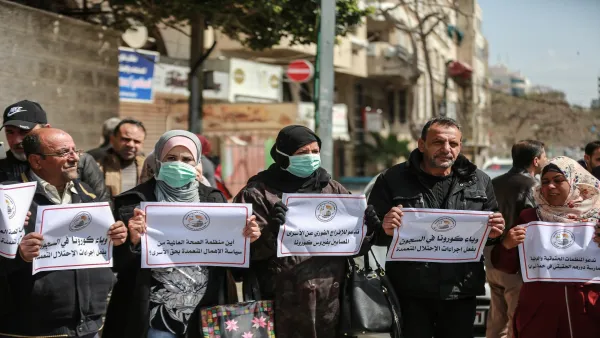
Israel’s decision to exclude Palestinians from its COVID-19 vaccination campaign may have surprised many. Even by Israel’s poor humanitarian standards, denying Palestinians access to life-saving medication seems extremely callous.
Amnesty International, among many organizations, condemned the Israeli government’s decision to bar Palestinians from receiving the vaccine. The rights group described the Israeli action as evidence of the “institutionalized discrimination that defines the Israeli government’s policy towards Palestinians.”
As the US ruling elites have fully succumbed to Israel’s political discourse on Palestine, the Israeli government of right-wing Prime Minister, Benjamin Netanyahu, may feel that it, alone, is capable of determining the future of the Palestinian people.
This conclusion is, perhaps, gleaned from Israel’s behavior in recent years and months. The expansion of illegal Jewish settlements, the plan to annex large swathes of the Occupied Palestinian Territories and the entrenching of the existing system of apartheid and perpetual colonialism are all evidence that demonstrates Israel’s renewed sense of empowerment.
Israel is further emboldened by the fact that the so-called ‘international community’ has, thus far, failed to challenge American and Israeli intransigency. The European Union, which is fighting for its own identity, let alone survival, is proving to be a marginal force in Israel and Palestine. Without American guidance, the EU seems incapable of leading its own independent initiatives.

BANGKOK, Thailand -- Thailand's 68-year-old king and his loyal, testy
prime minister suffered a dangerous 2020, relentlessly exposed to
loud, satirical, young revolutionaries in the streets demanding
democracy and limits to the monarch's wealth and security forces.
"Maha" or "Great" King Vajiralongkorn and Prime Minister Prayuth
Chan-ocha now face a harsh January but are expected to emerge secure.
"Prayuth does not seem to be in danger. The royal-military alliance
seems to be unassailable," said Michael Nelson of the Asian Governance
Foundation.
The foundation focuses on law, academia and other sectors in Asia. Its
advisors include former commanding general of the U.S. Marine Corps in
the Pacific, Lt. Gen. Wallace C. Gregson.
"The protesters, though big on Facebook, also have little backing in
the population. And now, the government is getting tough with them,"
Mr. Nelson said in an interview.
Prime Minister Prayuth seized power in a bloodless 2014 coup when he
was a general and army commander-in-chief.

2020 will go down in history as the year that terminated the American-sponsored ‘peace process’. While 2021 will not reverse the monumental change in the US attitude and objectives in Palestine, Israel and the Middle East, the new year presents Palestinians with the opportunity to think outside the American box.

On December 21, the United States Congress passed the COVID-19 Relief Package, as part of a larger $2.3 trillion bill meant to cover spending for the rest of the fiscal year. As usual, US representatives allocated a massive sum of money for Israel.

It is convenient to surmise that Israel’s current political crisis is consistent with the country’s unfailing trajectory of short-lived governments and fractious ruling coalitions. While this view is somewhat defensible, it is also hasty.
Israel is currently at the cusp of a fourth general election in less than two years. Even by Israel’s political standards, this phenomenon is unprecedented, not only in terms of the frequency of how often Israelis vote, but also of the constant shifting in possible coalitions and seemingly strange alliances.
It seems that the only constant in the process of forming coalitions following each election is that Arab parties must not, under any circumstances, be allowed into a future government. Decision-making in Israel has historically been reserved for the country’s Jewish elites. This is unlikely to change anytime soon.

December 8 came and went as if it was an ordinary day. For Palestinian political groups, it was another anniversary to be commemorated, however hastily. It was on this day, thirty-three years ago, that the First Palestinian Intifada (uprising) broke out, and there was nothing ordinary about this historic event.
Today, the uprising is merely viewed from a historic point of view, another opportunity to reflect and, perhaps, learn from a seemingly distant past. Whatever political context to the Intifada, it has evaporated over time.
The simple explanation of the Intifada goes as follows: Ordinary Palestinians at the time were fed up with the status quo and they wished to ‘shake off’ Israel’s military occupation and make their voices heard.