
Global

BANGKOK, Thailand -- When the CIA's most macabre paramilitary officer
Tony "Poe" Poshepny demanded and received the hacked-off ears and
heads of communists in Laos during the Vietnam War, no one predicted
he would become an exhibit in a new museum in Bangkok's red-light
zone.
The Patpong Museum, on Patpong Road, also describes why U.S.
intelligence and military officers, airlines, IBM, and others rented
buildings alongside sleazy bars packed with prostitutes, especially
during the Vietnam War which ended in 1975.
"In 1957, we have the American Chamber of Commerce here. We have the
U.S. Information Service Library here. We have Shell Oil here. Pan Am,
TWA," the museum's founder and curator Michael Messner said in an
interview.
The CIA's clandestine Air America secretly flew troops, casualties,
refugees, ammunition, rice and other supplies in Laos and elsewhere
and staffed an office here until 1972.
On display is a 1963 letter with an Air America logo from 3 Patpong
Road informing a pilot's parents that he vanished in Laos when
communists shot down his plane.

Epstein came to my attention when I was an investigative journalist for one of Columbus, Ohio's alternative newsweeklies, Columbus Alive. Not many people know that the infamous Jeffrey Epstein spent a lot of time in Columbus in the 1990s and owned the second most valuable house in Franklin County (where Columbus resides), in the plush Stepford suburb known as New Albany. I investigated central Ohio billionaire Les Wexner's and Jeff Epstein’s ties to the intelligence community more than 20 years ago. Much of this is captured in two books – The Fitrakis Files: Spooks, Nukes, and Nazis and The Fitrakis Files: Cops, Coverups, and Corruption (CICJ Books, freepress.org).
Epstein came to my attention when I was an investigative journalist for one of Columbus, Ohio's alternative newsweeklies, Columbus Alive. Not many people know that the infamous Jeffrey Epstein spent a lot of time in Columbus in the 1990s and owned the second most valuable house in Franklin County (where Columbus resides), in the plush Stepford suburb known as New Albany. I investigated central Ohio billionaire Les Wexner's and Jeff Epstein’s ties to the intelligence community more than 20 years ago. Much of this is captured in two books – The Fitrakis Files: Spooks, Nukes, and Nazis and The Fitrakis Files: Cops, Coverups, and Corruption (CICJ Books, freepress.org).
Epstein came to my attention when I was an investigative journalist for one of Columbus, Ohio's alternative newsweeklies, Columbus Alive. Not many people know that the infamous Jeffrey Epstein spent a lot of time in Columbus in the 1990s and owned the second most valuable house in Franklin County (where Columbus resides), in the plush Stepford suburb known as New Albany. I investigated central Ohio billionaire Les Wexner's and Jeff Epstein’s ties to the intelligence community more than 20 years ago. Much of this is captured in two books – The Fitrakis Files: Spooks, Nukes, and Nazis and The Fitrakis Files: Cops, Coverups, and Corruption (CICJ Books, freepress.org).
California “Berning” for Ro Khanna to Chair the State’s Delegation to Democratic National Convention
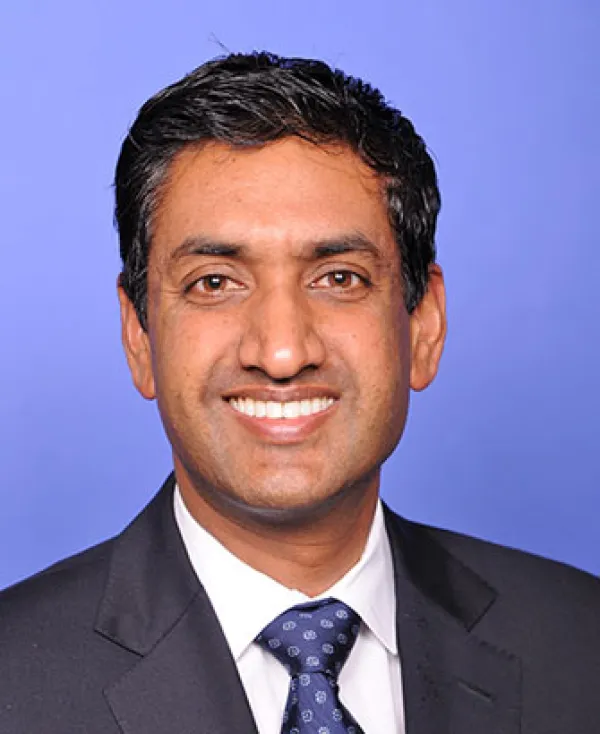
The Democratic Party is at a crossroads in California, where Bernie Sanders defeated Joe Biden in the presidential primary three months ago, winning more than half of the state’s delegates to the national convention. In recent days, over 110 Sanders delegates -- just elected in “virtual caucuses” across the state -- have signed a statement calling for Congressman Ro Khanna to be the chair of California’s delegation to the Democratic National Convention in mid-August.
Fairness, logic and even party unity all argue for Khanna to chair the delegation.
Noting that “Sanders received appreciably more votes in the California primary than any other candidate,” the statement points out that “Khanna has been a national champion on issues supported by California Democrats -- health care for all, national budget priorities based on human needs and opposing Trump on huge increases in military spending and endless wars, criminal justice reform, and a path to citizenship for immigrants.”

If you can do activism, do it around policies in a principled manner, and steer clear of elections.
If you can do funding, fund principled activist organizations, not political candidates.
If you must divert your energies and money into elections, I have a recommendation for how best to do it (not that you’ll necessarily listen to me, having already ignored my first two paragraphs, but what the heck):
Part of getting better governance out of Washington, D.C., will have to come from shifting power back from the White House to the Congress and putting better people into the Congress.
The coming election for the White House has, as always, an even worse lesser-evilism problem than it had the time before. The lesser evil is a bit too evil for a bit too many people. Some want to pinch their nose and go for it anyway. Others want to try for something better next time by, for once, withholding votes that have certainly not been earned. Others would support lesser-evil voting if not for the fact that so many who engage in lesser-evil voting develop symptoms of lesser-evil thinking and behaving and cheerleading on a long-term basis.
Well, he deserved to die, didn’t he? He fought, he ran, he grabbed the cop’s taser and fired it. And he was intoxicated, apparently. And he was blocking traffic.
“If an officer is hit with that Taser, all of his muscles will be locked up, and he’ll have the inability to move and to respond,” said a Georgia county sheriff, referring to the killing of Rayshard Brooks in Atlanta on June 12. “This was a completely justified shooting.”
Completely. Justified.

AFTER THE WI-OH-GA PRIMARY FIASCOS:
How to Avert a Fall Coup
Emergency Election Protection 2020
Info-Webinar on Zoom & Facebook Live
This webinar means to provide activists, organizers, citizens with core information on the conduct of the 2020 elections
Wed., June 17, 3:00 -4:30pm Eastern / noon-1:30 Pacific
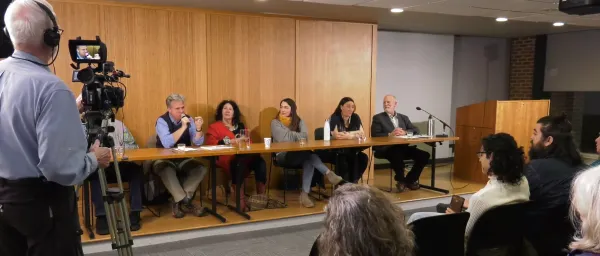
600 people have now signed a petition in Charlottesville, Va. at http://bit.ly/cvillepeace
Almost all of the signers are from Charlottesville.
The petition is addressed to the Charlottesville City Council and reads:
We urge you to ban from Charlottesville:
(1) military-style or “warrior” training of police by the U.S. military, any foreign military or police, or any private company,
(2) acquisition by police of any weaponry from the U.S. military;
and to require enhanced training and stronger policies for conflict de-escalation, and limited use of force for law enforcement.
Here are some of the comments people have added when they signed:
I join in with many Black leaders in this community to call for a demilitarization of our police force and the defunding of resources that should be better spent on other public services.
Militarized police encourages brutality and excessive force. We need to go the other way.

In 1953 author Simone de Beauvoir asked Must We Burn De Sade? regarding the French Marquis and his sadomasochistic books. Today, as the twin plagues of Covid-19 and police brutality disproportionately ravage African Americans, we’re likewise asking: Must Gone with the Wind be gone?
On June 10 - the birthday of Hattie McDaniel, who won one of the 1939 epic’s eight Oscars, including Best Picture - HBO Max blew GWTW off the streaming service’s lineup. As statues of historical figures linked to slavery and racism are being razed, removed and defaced at Bristol, London, Montgomery, Richmond, Boston, Philadelphia, Louisville, Barbados, Antwerp, Belgium and beyond, the question is being raised: What should be done about televised/ cinematic systemic racism and bigoted, Confederate TV/movie monuments, like GWTW?