
Local
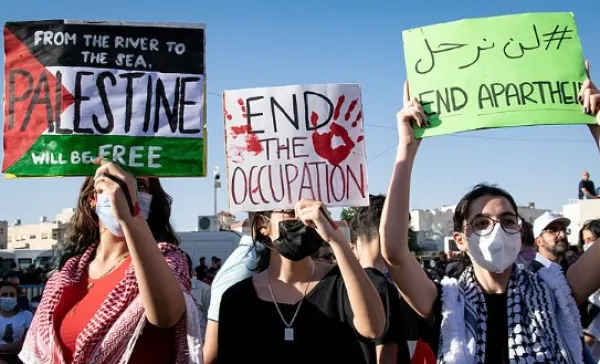
A diverse coalition of Ohioans from across the state, including a caravan from Cleveland, is headed to Columbus today to testify against Senate Bill 297 (SB 297), a controversial piece of legislation being rushed through during the lame-duck session. The bill, endorsed by Ohio Attorney General Dave Yost, seeks to encode the International Holocaust Remembrance Alliance (IHRA) definition of antisemitism into state law, attaching this definition to heightened criminal penalties.

Tuesday, December 10, 4pm, Old First Presbyterian Church, 1101 Bryden Rd.
Join us for a public reading of the Universal Declaration of Human Rights.
Adopted by the General Assembly of the United Nations in 1944, the Universal Declaration of Human Rights states basic rights and fundamental freedoms to which all human beings are entitled.
Hosted by Old First Presbyterian Church.

American cities are in crisis. From an ever-widening income gap to the absence of affordable housing to crumbling schools, many metropolitan areas are on an unsustainable trajectory. However, these problems are not caused by immigration and “woke policies” as the right would have you believe. Instead, the root of the problem is the insatiable greed of the capitalist class and the corruption that inevitably follows in its wake.
Columbus, Ohio is a classic example of the mutually beneficial relationship between city officials and developers that all too often leaves working people behind. In an ongoing effort to lure wealthy developers to the area, the city provides tax abatements. In return for building in certain areas and for including “affordable” housing in their developments, these developers are given significant tax breaks. From the point of view of finance capital and elected officials in the city it is a classic win-win situation. Corporations get their money, and the city gets new and more profitable housing units for its expanding population.

Monday, December 9, 2024, 1:00 PM
Shipley Public Safety Building at 1970 W. Broad St.
We'll host a rally beginning at 12:15 p.m. to protest fracking under Ohio's state parks and public lands. Some of our supporters will wear Christmas-themed costumes and sing anti-fracking Christmas carols. We hope to see you there to help shine a light on Ohio's state law that REQUIRES fracking under Ohio's state parks and public lands.
Please contact Melinda Zemper at mzemper@fuse.net or (513) 706-3737 with questions.
Note: For the latest articles, notes, observations and opinions on fracking under Ohio's state parks and public lands, we are now on Blue Sky in addition to X.com, Facebook and Instagram.

Sunday, December 8, 4pm
Indianola Presbyterian Church, 1970 Waldeck Ave.
This year’s theme: “Expressing Gratitude: With Our Heads, Hearts, and Hands.” Doors will open at 3:30pm; the service will be at 4pm; a potluck will follow.
To attend or to co-sponsor, please RSVP at bit.ly/3XV0g6n. RSVP for this event by using this link.
Hosted by Interfaith Association of Central Ohio.

Saturday, December 7th, 2024 | 4:30 p.m.
The Connection Center of All People, located at 911 Parsons Ave, Columbus, OH 43206
Honoring Julius Tate Jr: Candlelight Vigil and Community Gathering to Demand Justice and Dismantle Harmful Systems
In remembrance of Julius Tate Jr., whose life was tragically cut short on December 7th, 2018, the community will gather to honor his memory and call for systemic change in policing. Julius was taken from us far too soon, and his family, friends, and community have been left to grieve this immeasurable loss.
Join us on Saturday, December 7th, 2024, at The Connection Center of All People, located at 911 Parsons Ave, Columbus, OH 43206, for a candlelight vigil and FREE community dinner. Doors open at 4:30 PM and dinner will be served at 5:00 PM. This gathering will serve not only as a celebration of Julius’s life but as a continued call for justice and accountability.

Though the results of the national election were razor thin by my assessment, I think the turn toward authoritarianism and away from more pluralistic public policy making is troubling for all of society, not just those of us advocating for universal single payer healthcare. This billionaire lead DOGE advisory organization being formed will undoubtedly propose further monopoly of all aspects of our society.
Public statements about the austerity to be visited on broadly defined segments of our society, will only lead to further upheaval and division. Without extreme popular push back I feel we're in for a very fraught future in total.

The Oil and Gas Land Management Commission will consider fracking two large tracts at Salt Fork State Park, two wildlife areas and two rights-of-way along state highways at its Monday, Dec. 9 meeting.
The 1 p.m. meeting will be held at the Ohio Department of Public Safety, Charles D. Shipley Building, 1970 W. Broad St. in Columbus. A rally is planned for 12:15 p.m. outside the building.
"At 20,000 acres, Salt Fork State Park is Ohio's largest state park," said Anne Sparks, steering committee member at Save Ohio Parks. "This pristine area belongs to the people of Ohio in perpetuity, not politicians in office for a term or two. Twenty-four hour lights, noise and increased truck traffic will negatively impact people's health, disturb park user experiences and shrink its bird, animal and plant populations. Of note is that the commission delayed a decision on Salt Fork at its October meeting so it could read more than 300 public comments against fracking."
On the agenda for discussion, with possible approval or denial for fracking:

Fridays, 11pm on WGRN 91.9FM, streaming on wgrn.org
Mondays, 2pm on WCRS 92.7 and 98.3FM on wcrsfm.org
Everybody Knows with Dr. Bob Fitrakis and Dan-o Dougan with special guest Brian Clash Griffin talking about the music and life of Phil Ochs and the upcoming Phil-a-thon music tribute to activist folksinger Phil Ochs on Thursday, December 19, 6pm at Dick's Den, 2417 N. High Street.

Friday-Sunday, December 6-8
Friday, Dec. 6 - 7pm
Saturday, Dec. 7 - 4pm & 7pm
Sunday, Dec. 8 - 4pm
Columbus Performing Arts Center, Shedd Stage,549 Franklin Ave.
Two Scoops National Performing Arts Compnay presents What's Going On? is a multifaceted art experience, blending artistry with activism in tribute to the memory of Eliiah McClain. Guests are invited to immerse themselves in an engaging showcase featuring captivating music, dance, and theatrical displays aimed at fostering dialogues centered on hope and reconciliation.
Thanks for the Ohio Arts Council and Greater Columbus Arts Council. This production of BLACK N BLUE is brought to you with licensing permission of Dramatists Play Services.