Politics

The end of winter has brought an dramatic uptick in far right activity in America. 2014 seemed on course to be no different from 2012 or 2013, which saw very little organizing or activity by Klan and neo-Nazi groups. In the past few weeks there has been an armed standoff in Nevada, a racist murder spree in Kansas, a storming of a union hall by Ukrainian fascists in Chicago and massive KKK flyer drops in Ohio and throughout the Midwest.
In each incident, the response by government agencies has been muted and coddling. Mainstream media sources appear unwilling or not competent to conduct basic background research either the players or the action on the field. Frazier Glenn Miller, a long time white supremacist, decided to start Passover with a murder spree on Sunday, April 13 in Kansas City. Meanwhile in Chicago, activists engaged in a teach-in at a United Electrical Workers Union hall were besieged by a mob of nearly 50 Ukrainian fascists.
"Secretary Kerry? It's Ukraine on the phone asking about liberation again. Have you been able to get them a reference letter yet from Libya or Iraq or Afghanistan? How about Vietnam? Panama? Grenada? Kosovo maybe? Ukraine says Syria says you have a reference letter in the works from Kosovo. No? Huh. They said they'd accept one from Korea or the Dominican Republic or Iran. No? Guatemala? The Philippines? Cuba? Congo? How about Haiti? They say you promised them a glowing reference from Haiti. Oh. They did? No, I am not laughing, Sir. What about East Timor? Oh? Oh! Sir, you're going to liberate the what out of them? Yes sir, I think you'd better tell them yourself."
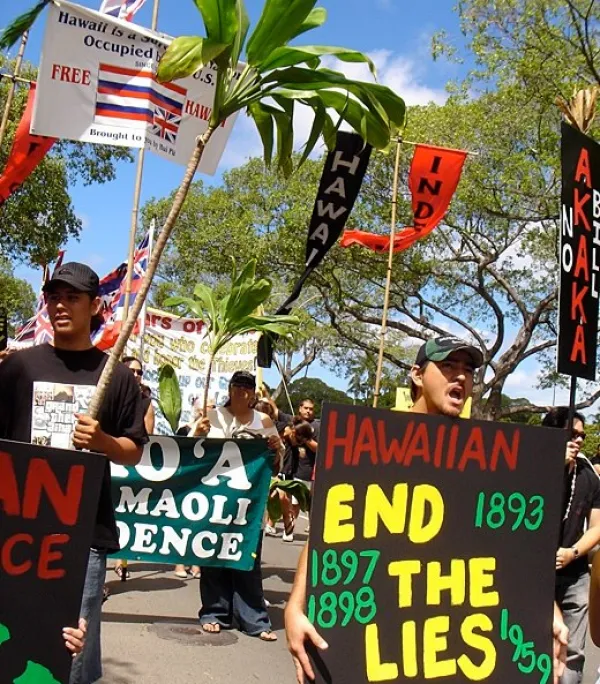
Some nations the United States should probably not liberate -- except perhaps the 175 nations which could be liberated from the presence of U.S. soldiers. But one nation I would make an exception for, and that is the nation of Hawai'i.
Jon Olsen's new book, Liberate Hawai'i: Renouncing and Defying the Continuing Fraudulent U.S. Claim to the sovereignty of Hawai'i, makes a compelling case -- a legal case as well as a moral one.

Pol Pot's daughter, who at age 10 saw her father's bloated corpse in a Cambodian jungle in 1998, has married her university sweetheart in a ceremony overshadowed by the late Khmer Rouge leader's murderous regime. Sar Patchata, 26, is the only child of Pol Pot, whose real name was Saloth Sar. Pol Pot's fanatic mix of Maoist and Stalinist communism and rush to create a rural-based society with "new people" starting at the "year zero," resulted in nearly two million Cambodian deaths from executions, torture, slavery, starvation, and disease. Ms. Sar earned her master's degree in English literature in Malaysia where, a few years ago, she met Sy Vicheka. The two Cambodians married in Kbal Spean village, a former Khmer Rouge stronghold in northwest Cambodia's Banteay Meanchey province near Thailand's border. About 50 guests attended the two-day ceremony which began on March 15, according to Cambodian media. On March 16, the couple was blessed by four Buddhist monks and reportedly received cash, gold and other gifts worth thousands of dollars.

BANGKOK, Thailand -- Thailand's U.S.-trained military has a new enemy and is now hunting northern separatists who want to seize most of this Buddhist-majority country, create a Lanna People's Democratic Republic, and expel Bangkok to a shrunken South Thailand. The military is warning Thais not to demand independence in the north because such "treason" and "sedition" could spark a bloody civil war. "Separatism is a severe offense," said army deputy spokesman Col. Winthai Suwaree. "Expressing differences in opinion is permitted under the constitution, but expressing the need to separate the country is not," Col. Winthai said. "The separation talk is especially shocking because, for the first time, the idea the country can be physically hacked up...along the political fault lines has been openly discussed," said Atiya Achakulwisut, a Bangkok Post editor. Caretaker Prime Minister Yingluck Shinawatra, stung by allegations that she sympathized with the separatists, said on March 3, "We want to see Thailand as one and indivisible." Hoping to distance her government from the separatist issue, Ms. Yingluck met leaders of the armed forces on March 4 in her capacity as defense minister.