
Politics
Image
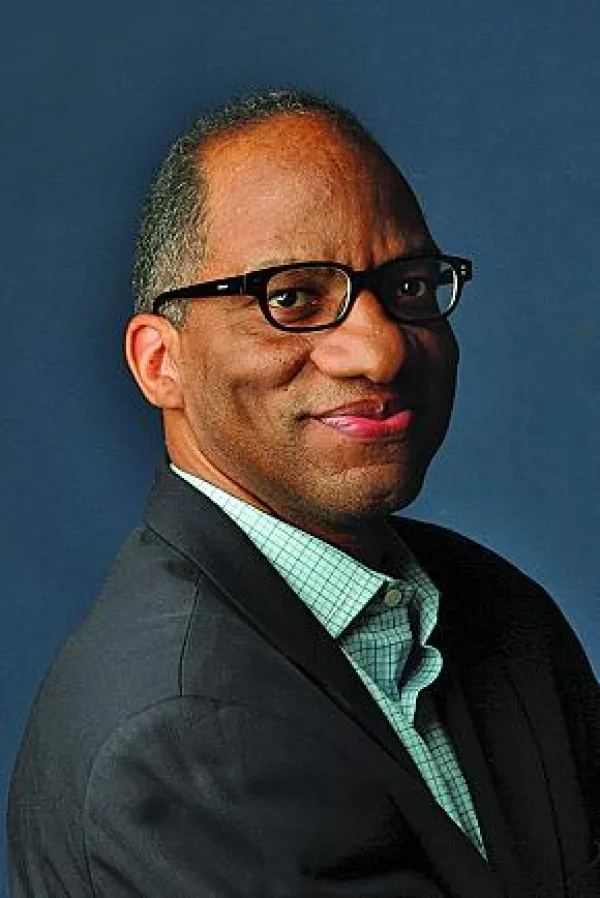
“The Butler: A Witness to History” author, Washington Post reporter and Columbus native Wil Haygood will be the keynote speaker at this year’s Columbus Association of Black Journalists (CABJ)’s 25th anniversary celebration. Wil Haygood, whose grandparents are from Selma, Alabama, is a journalist and cultural historian. His success as a journalist has opened the door to key newsrooms and reporting sites around the world.
His thoughtful studies of iconic personalities Adam Clayton Powell, Jr., Sammy Davis, Jr., and Sugar Ray Robinson prepared him well for the gentle interrogation needed to unlock the wealth of information maintained by Eugene Allen, butler to U.S. presidents for 34 years. As author of “The Butler: A Witness to History,” Haygood provided the inspiration for a movie that has informed America of key moments during political processes that enriched and strengthened many community and political actors.
For the past 25 years, the Columbus Association of Black Journalists (CABJ) has been dedicated to the support, recognition and professional advancement of African Americans in the news industry.
Image

The Ohio UFO flap of 1973 made history for a number of reasons, not the least of which is the so-called Coyne Incident, which stands as one of the best documented UFO encounters.
While 1973 stands out in the annals of ufology, it is far from being an isolated incident. UFOs were sighted frequently before 1973 and continue to be reported in the Buckeye State to this day. Ohio is, in fact, one of the more active states for UFO sightings, according to the National UFO Reporting Center (NUFORC). With California the number one state in reports (with 8,248 reports between 1994 and 2011), Ohio ranked number nine with 1,813 reports in the same period.
The Mutual UFO Network (MUFON) ranks Ohio number 12 on its list of most reported sightings by state. MUFON also ranks California its number one state for sightings.
One of the more well known events in recent history happened in the Cleveland area in March of 2010, when witnesses reported seeing odd lights over Lake Erie for nine consecutive nights.
A MUFON investigator went to the scene in Euclid and was able to observe the phenomenon.
Image

This past Saturday, over 50 Ohioans braved the cold and rain on game day to rally outside the Wendy’s just south of the Ohio State campus. Ohio Fair Food, a group consisting of students, farmworkers, people of faith and organized labor, showed up demanding one thing: that Ohio-based Wendy’s join the Fair Food Program, a program which ensures a humane work environment and increased pay for Florida tomato pickers.
Of the five largest fast food corporations in the country — McDonald’s, Subway, Burger King, Taco Bell and Wendy’s — Wendy’s is the only one not participating in the Fair Food Program. The reasons for Wendy’s to sign on are clear; the program provides a modest increase of 1 penny more per pound of tomatoes picked, a code of conduct which ensures basic rights such as water and shade for farmworkers, and gives farmworkers a voice on the job, including the right to file grievances without fear of retaliation.
Wendy’s CEO Emil Brolick was the President of Taco Bell in 2005 when the chain became the first corporation to join the Fair Food Program. At the time Brolick stated, “We are willing to play a leadership role within our industry to be part of the solution.
Image

Over the millennia, the often deified and sometimes demonized Cannabis
plant has taken a circuitous route from friend to foe and back.
Scholars differ on when mankind first discovered the medicinal mysteries
contained within Cannabis. Some trace usage back to 4000 BC in Central
Asia. Charred seeds found in an ancient Romanian burial site suggest
inhalation of the herb's potent and pungent smoke in third millennia BC.
In 1500 BC, it was mentioned the Altharva Veda, one of four ancient holy
books. A basket of seeds and leaf fragments dating back 2,800 years was
discovered in China where Cannabis graced the pharmacopeia of emperor
Chen-Nong.
On October 15 in partnership with USA Today The Ohio State University (OSU) sponsored the third in a series of panels by the Bipartisan Policy Center's Commission on Political Reform. The Center intends to hold a series of town hall style meetings to build the appearance of national consensus around policy recommendations they intend to offer Congress and the President in 2014. The event took place on the same day that the Center and USA Today released a joint poll claiming that most Americans support the Center's conclusions.
The event featured two panels, each with a moderator who asked questions, and took written and vetted questions from the audience and the internet. Questioners were required to list their affiliation along with their name on the tiny question sheets. Unscripted questions from the press and audience were not permitted during the panels. Broadcast teams from C-SPAN and a Los Angles based media outlet that declined to identify itself covered the event. The Lantern, the OSU student paper with advertising and business departments operated by USA TODAY, also ran a story on the event.
After the nebulous, ill-planned government crisis that occupied the airwaves over the past few weeks, business has assumed its normal course inside the beltway. Some legislators are hopeful about the future, others remain skeptical, but one thing is for certain; Democrats on the Hill will continue to miss the ball.
The public was so relieved that Republicans decided to release their hostages after painstaking stubbornness that many failed to realize one question had gone unasked. How much will government be spending when it opens? The answer is as simple as it is startling. Today the government is operating at sequester spending levels, despite a chance to change that lugubrious narrative. Of course, this news won’t cause Republicans to blink. The larger question is why Democrats refused to even raise the issue when it stared at them from across the aisle. To add to an already grim track record, the negotiating position was one demarked by immediate concession.
The public was so relieved that Republicans decided to release their hostages after painstaking stubbornness that many failed to realize one question had gone unasked. How much will government be spending when it opens? The answer is as simple as it is startling. Today the government is operating at sequester spending levels, despite a chance to change that lugubrious narrative. Of course, this news won’t cause Republicans to blink. The larger question is why Democrats refused to even raise the issue when it stared at them from across the aisle. To add to an already grim track record, the negotiating position was one demarked by immediate concession.
When the State Department revoked Edward Snowden’s passport four months ago, the move was a reprisal from a surveillance-and-warfare state that operates largely in the shadows. Top officials in Washington were furious. Snowden had suddenly exposed what couldn’t stand the light of day, blowing the cover of the world’s Biggest Brother.
Cancelation of the passport wasn’t just an effort to prevent the whistleblower from getting to a country that might grant political asylum. It was also a declaration that the U.S. government can nullify the right to travel just as surely as it can nullify the right to privacy.
“Although I am convicted of nothing,” Snowden said in a July 1 statement after a week at a Moscow airport terminal, the U.S. government “has unilaterally revoked my passport, leaving me a stateless person. Without any judicial order, the administration now seeks to stop me exercising a basic right. A right that belongs to everybody. The right to seek asylum.”
Cancelation of the passport wasn’t just an effort to prevent the whistleblower from getting to a country that might grant political asylum. It was also a declaration that the U.S. government can nullify the right to travel just as surely as it can nullify the right to privacy.
“Although I am convicted of nothing,” Snowden said in a July 1 statement after a week at a Moscow airport terminal, the U.S. government “has unilaterally revoked my passport, leaving me a stateless person. Without any judicial order, the administration now seeks to stop me exercising a basic right. A right that belongs to everybody. The right to seek asylum.”
On last Tuesday October 8 at 10:00 a.m. the day that the United States Supreme Court was hearing oral arguments on McCutcheon vs. FEC, Ohio PIRG held a press conference outside the Ohio Supreme Court on Front Street, just south of W. Broad. Street in downtown Columbus. Speaking at the press conference were representatives of Ohio PIRG, Common Cause, Move to Amend, Communication Workers of America, and the Sierra Club.
Alabama political donor Shaun McCutcheon has asked the court to strike down the overall limit on what an individual can give to federal candidates, parties, and PACs in a two year election cycle. That limit currently stands at $123,200 – over twice the average household income in the U.S. In 2012, only 1,219 donors came within 10% of hitting the aggregate limit. New research from U.S. PIRG and Demos projects that if the limit is lifted, this small set of donors would raise their giving and inject an additional $1 billion in campaign contributions through the 2020 elections.
Alabama political donor Shaun McCutcheon has asked the court to strike down the overall limit on what an individual can give to federal candidates, parties, and PACs in a two year election cycle. That limit currently stands at $123,200 – over twice the average household income in the U.S. In 2012, only 1,219 donors came within 10% of hitting the aggregate limit. New research from U.S. PIRG and Demos projects that if the limit is lifted, this small set of donors would raise their giving and inject an additional $1 billion in campaign contributions through the 2020 elections.
On October 15 in partnership with USA Today The Ohio State University (OSU) sponsored the third in a series of panels by the Bipartisan Policy Center's Commission on Political Reform. The Center intends to hold a series of town hall style meetings to build the appearance of national consensus around policy recommendations they intend to offer Congress and the President in 2014. The event took place on the same day that the Center and USA Today released a joint poll claiming that most Americans support the Center's conclusions.
The event featured two panels, each with a moderator who asked questions, and took written and vetted questions from the audience and the internet. Questioners were required to list their affiliation along with their name on the tiny question sheets. Unscripted questions from the press and audience were not permitted during the panels. Broadcast teams from C-SPAN and a Los Angles based media outlet that declined to identify itself covered the event. The Lantern, the OSU student paper with advertising and business departments operated by USA TODAY, also ran a story on the event.
The event featured two panels, each with a moderator who asked questions, and took written and vetted questions from the audience and the internet. Questioners were required to list their affiliation along with their name on the tiny question sheets. Unscripted questions from the press and audience were not permitted during the panels. Broadcast teams from C-SPAN and a Los Angles based media outlet that declined to identify itself covered the event. The Lantern, the OSU student paper with advertising and business departments operated by USA TODAY, also ran a story on the event.
Image
While Mayor Coleman pushes his $1 million advertising blitz in support of his proposed 24 percent tax increase for Columbus City Schools, pesky facts keep getting in the way of all the glossy mailers, radio spots and 30-second television ads. And those facts keep suggesting that more money will not solve the problems of Columbus City Schools.
Whether you agree or disagree that the Mayor and other community leaders should be out championing for a permanent $77 million a year tax increase for a school system that is under some serious scrutiny, you have to admire the slick mailers. They manage to promote lofty goals on behalf of the Board of Education without ever mentioning the school board – which is the entity that will be receiving the money. That is how discredited this school board is – the campaign hides it behind children and celebrities and hopes you forget it is there.
Of course the million dollar levy campaign doesn’t mention the high cost of the levy. Nor does it mention Columbus City Schools and the Board of Education – an entity under tremendous focused investigation by the Auditor of State, Ohio Department of Education and U.S.