
Free Press History
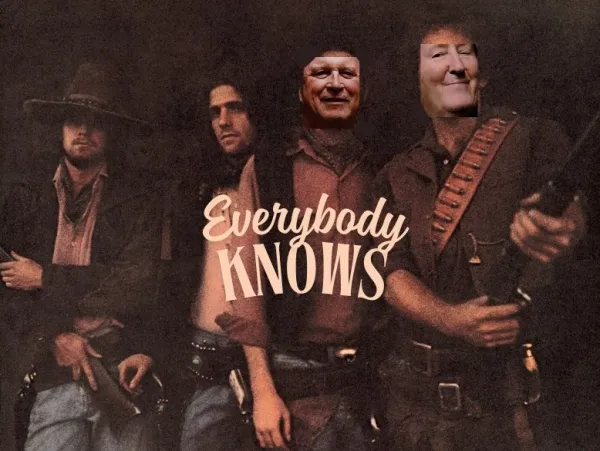
Dr. Bob Fitrakis and Dan-o Dougan play the whole Desperado album for you.
Listen live at 11pm Fridays, January 2 and 9 streaming at wgrn.org or on the radio at 91.9FM
and
Mondays at 2pm streaming January 5 and 12 at wcrsfm.org or on the radio at 92.7 or 98.3FM
Before the election in 2024, the normally moderate to liberal Washington Post, had its editorial independence eviscerated when its owner, Amazon-billionaire Jeff Bezos, blocked their endorsement of Harris and mandated the editorial policy move towards business and the right. Regular readers might still find hope in the general willingness of the editorial page to make efforts to hold some of the more egregious Trump policies and extremes to account around immigration, foreign policy, and other issues. But, with today’s end of the year editorial mouthing far right anti-poor rhetoric, bashing food stamp programs, and beating the drums for the worst of Trump’s big, bad, budget bill, it’s clear that Bezos hand is getting heavier and any continuing hope for the Post editorial policies to be different than the Wall Street Journal will only find them by degree, not distinction.
Let’s look at their bias and compare the facts. The Post editorial says:
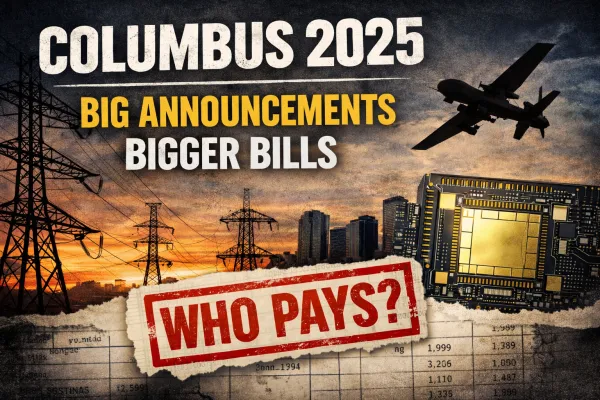
Columbus did not simply “have a year” in 2025. It ran an experiment.
The experiment was straightforward: Can a region stack national-scale industrial development on top of local-scale fragility and call it progress? It can — if the definition of progress is press conferences, ribbon cuttings and renderings that stop before the line item titled “who pays.”
A year-end recap that reads like a scrapbook misses the point. Columbus is a paperwork town pretending to be a destiny town. The only way to understand 2025 is as a ledger — what happened, what changed, and who absorbed the cost.
What follows is not a countdown. It is a map of the stories that defined Columbus in 2025.

Fill out this form to say you want to be involved.
We will send info out to those who sign up to let them know about opportunities as they arise.
Please be patient as it may take a while to get this off the ground.
Tuesday, December 30, 2pm
Attorney James M. Branum of the Military Law Task Force of the National Lawyers Guild (NLGMLTF.org) and the Oklahoma Objector Community (OKObjector.org) will be teaching a 2-hour live webinar on the topic of Illegal Orders Under U.S. Military Law. Veterans For Peace.
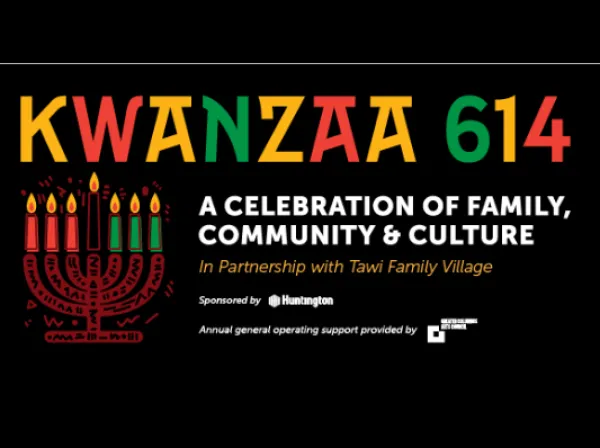
Dec 27 & 28, Noon–4 p.m. at the Ohio History Center.
Dec. 27, 6–9 p.m. at the William H. Thomas Art Gallery.
Dec. 29, 2 p.m. at the Millenium Community School.
Dec. 30, 5–7 p.m. at the All People Arts Gallery.
Tickets
Join us for the citywide Kwanzaa celebration where tradition meets creativity! This year’s program features an array of hands-on crafts and captivating performances, designed to honor and celebrate the rich heritage of Kwanzaa.

Traffic stops are one of the most common points of contact between the public and law enforcement. They are also one of the most misunderstood.
In Ohio OVI investigations, confusion is not accidental. Most people do not know what they are legally required to do during a stop, what is optional, or how standardized field sobriety tests are actually supposed to work. That lack of clarity shifts power entirely to the roadside officer, often without the driver realizing it.
The OVI Pocket Guide was created to address that imbalance through transparency, not advocacy.
Why Traffic Stop Confusion Matters
During an OVI stop, decisions are made quickly and under stress. Drivers are expected to comply, interpret instructions, and perform unfamiliar tasks, all while being observed and judged.
Most people assume that everything they are asked to do is mandatory. It is not.
Others assume that field sobriety tests are scientific measurements of impairment. They are not.
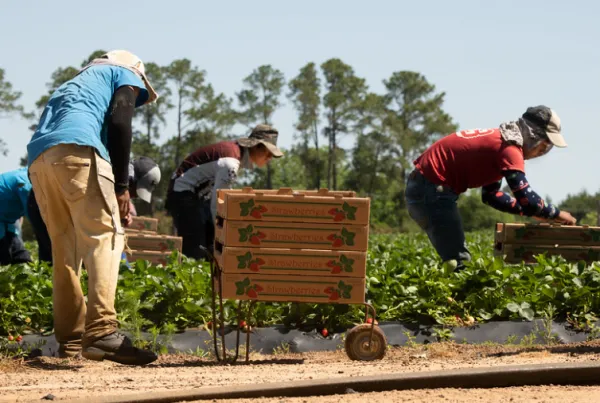
Although Donald Trump’s Department of Labor announced in April 2025 that “Trump’s Golden Age puts American workers first,” that contention is contradicted by the facts.
Indeed, Trump has taken the lead in reducing workers’ incomes. One of his key actions along these lines occurred on March 14, 2025, when he issued an executive order that scrapped a Biden-era regulation raising the minimum wage for employees of private companies with federal contracts. Some 327,300 workers had benefited from Biden’s measure, which produced an average wage increase of $5,228 per year. With Trump’s reversal of policy, they became ripe for pay cuts of up to 25 percent.
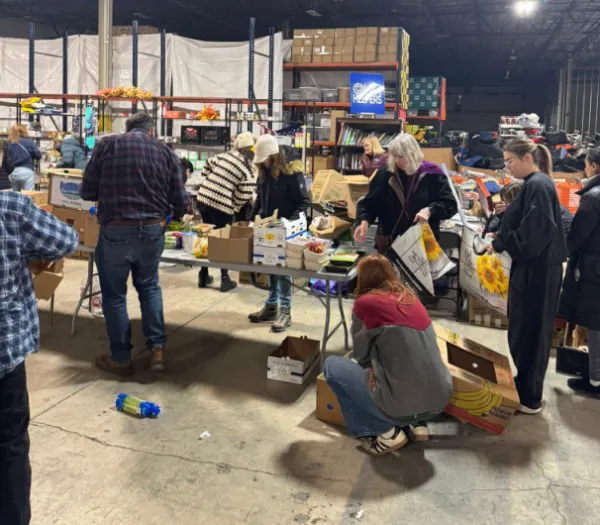
Volunteer for food delivery to those who may be sheltering in place or to help in other ways.
Get in touch with the following agencies:
Ethiopian Tewahedo Social Services (ETSS) of Central Ohio, (614) 252-5362Community Refugee & Immigration Services (CRIS), (614)235-5747Mid-Ohio Food Collective, (614) 277-FOOD (3663) Our Helpers, (614) 733-9555Groceries and meals delivered to those sheltering in place