
Book Shelf Analysis: Arthur Baker’s Looking for the Perfect Beat - Remixing and Reshaping Hip-hop, Rock and Rhythms
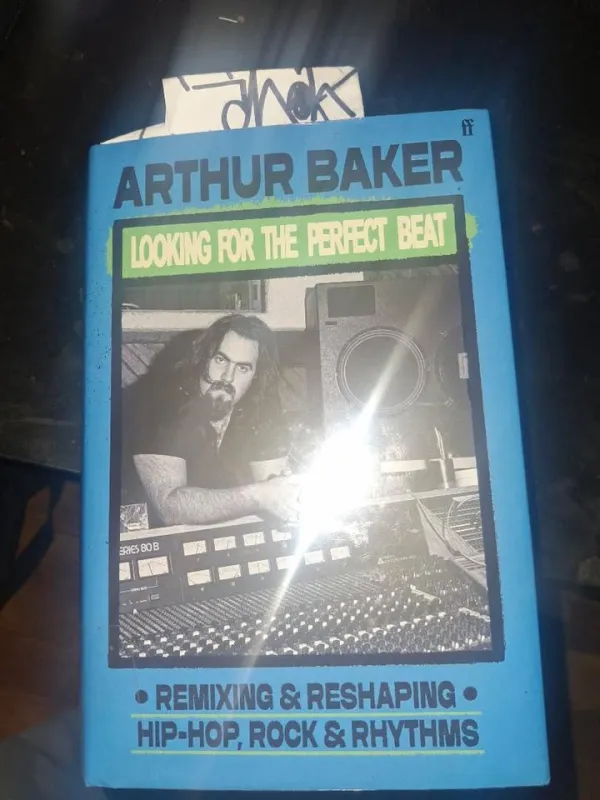
I opened Arthur Baker’s Autobiography Looking For the Perfect Beat knowing I would receive an immersive music lesson. Arthur Baker is a pioneer of both Hip Hop and electronic music. Baker produced Afrika Bambaataa’s Planet Rock.
I haven’t listened to Planet Rock for awhile because I don’t like Afrika Bambaataa’’s pedophilia.
Baker doesn’t discuss Bambaataa’s pedophilia process. Later Arthur Baker shops ideas in Harvey Weinstein’s office with Trainspotting’s Irvine Welsh. Baker doesn’t imply Weinstein sexually assaulted him or Irvine.
I still watch Weinstein produced movies like Fahrenheit 911. I realized I could read about Afrika Bambaataa.
Arthur Baker explains production in important Hip Hop. Planet Rock, and SugarHill Gang’s Rapper’s Delight popularized Hip Hop beyond NYC gyspy cabs.
Arthur Baker isn’t Black but Baker does detail an immersion in Black cultures.
Looking For the Perfect Beat story starts with a child whose heroes were Beatles, Malcolm X, MLK JR, Dylan, and JFK. Yippie.
Baker details disco into Hip Hop and electronic music. We learn about the construction of Planet Rock. Baker starts a label called Street Wise. Street Wise produces R&B sensations New Edition during the Prince and Thriller era. New Edition and Arthur Baker go their separate directions.
Baker opened doors for Marley Marl and Rick Rubin. Baker becomes involved with the movie Beat Street. Arthur Baker reveals Jane Fonda was interested in Beat Street. Harry Belafonte picked up Beat Street after people decided against Fonda. Arthur Baker understands both the cultural significance and flaws of Beat Street.
Baker’s Planet Rock, and New Edition success places him in a Madonna pop producer class. Arthur Baker tells us stories about producing Bob Dylan, Rolling Stones and Bruce Springsteen who looking for someone like Jelly Bean Benitez for 80s relevance. Arthur Baker goes from producing Planet Rock into working with his Rock N Roll idols.
If you thought Bruce Springsteen’s “Streets of Minneapolis” sounded like Springsteen imitating Dylan. Arthur Baker’s discussion about Dylan during the Born in The USA era is interesting. Arthur Baker is an East Coast Liberal.
During Looking for The Perfect Beat, Baker discusses organizing and producing an anti-apartheid South African divestment record with Steven Van Zandt. Sun City by the United Artists Against Apartheid included Run-DMC, Melle Mel & Duke Bootee, Afrika Bambaataa & Kurtis Blow, Big Youth, David Ruffin, Pat Benatar, Eddie Kendricks, Bruce Springsteen, George Clinton, Joey Ramone, Daryl Hall, Jimmy Cliff, Darlene Love, Bonnie Raitt, Ruben Blades , John Oates, Lou Reed, Bobby Womack, Linton Kwesi Johnson, Jackson Browne, Bob Dylan, Peter Garrett, Nona Hendryx , Kashif, and Bono.
Arthur Baker presented his United Artists Against Apartheid record in front of the United Nations as a statement of American artists denouncing South African human rights abuses against Black people in South Africa. I rewatched Sun City’s video which assisted in breaking the color barrier at MTV.
I remembered people viewed Bruce Springsteen as an East Coast blue-collar artist. The world blue-collar and New York City were interchangeable.
I wondered two things:
1.When did working class lose its New York labor perception?
Or
2. Is one of the reasons the Democratic Socialists of America are effective in 2026 because they embody the working stiffs who are hip?
Remember Springsteen, Dylan, Run DMC, and Joey Ramone were 1980’s blue collar chic.
I forget to mention Arthur Baker produced New Order. In parts of the 90s. I kinda lose interest in Baker’s electronic production work.
I love that Arthur Baker influenced Miami Bass. I can find amusement in Ferris Bueller’s Day Off. I don’t like some of the 90’s techno songs and jazz-Hip Hop fusions.
Arthur Baker’s Criminal Records dance releases aren’t bad. I read about some other 90’s nonsense. I’m bored for a second, and then we receive a backstory about Al Green, and Ray Charles. 90s techno reappears.
I’m bored and then Arthur Baker reunited with New Order. Bakers likes drugs. Eventually Bakers quits some drugs. If you like drugs, Baker’s book includes drugs. If you wanna quit cocaine, Arthur Baker shows it’s possible.
Techno and European culture are customary amongst Baker’s disco, R&B, Rock N Roll, and rap cultural continuum.
Arthur Baker’s Looking for The Perfect Beat starts with Baker producing Bambaataa. Looking For the Perfect Beat finishes with discussing remaking Beat Street with Nas as a creative producer after Questlove facilitates another film project.
We should be pleased for Questlove and Nas because Baker can pitch ideas without needing Weinstein. We should appreciate Nas because Nas can correct corny flaws which existed in Nas’s favorite movie Beat Street.