
Casey Was Home: A Word for Columbus on the Meade Retrial
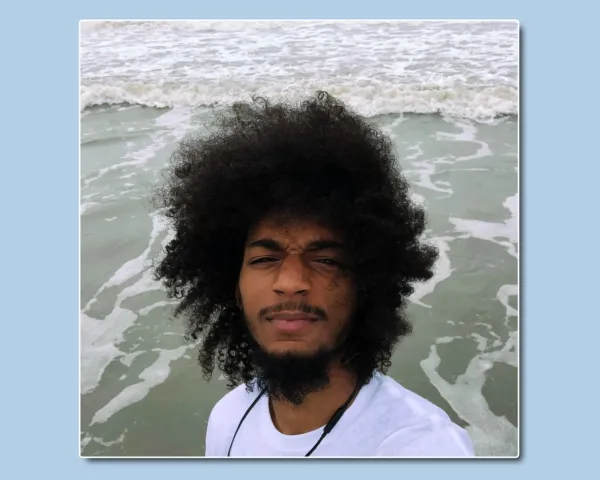
Casey Goodson Jr. was carrying a Subway sandwich.
Sit with that for a moment.
Not a threat. Not a fugitive. Not the man anybody was looking for. A 23-year-old Black man with AirPods in his ears, keys in his hand, and food in a paper bag. He was walking into his grandmother Sharon Payne’s home in Northland when former Franklin County Sheriff’s Deputy Jason Meade fired six bullets into him from behind.
Five in the back. One in the right buttocks.
Casey was at home.
That is where this story starts. And five years, one mistrial, one settlement, and one new courtroom later, that is still where this story has to start — because the people who do not want to look at the doorway have spent half a decade trying to make us look anywhere else.
They want to talk about a gun that was never fired. They want to talk about what Meade says he saw. They want to talk about fear, training, perception, split seconds, and “tragic” decisions. They want to talk about everything except the simplest and most damning fact in this case:
Casey Goodson Jr. was at his grandmother’s door.
So let’s talk about the doorway.
Because a doorway is not just architecture. It is not just wood, glass, hinges, frame, latch. A doorway is a threshold. It is the line between the outside world and the place where you are supposed to be safe. It is where you shake off the street, put down your keys, hear somebody say, “You home?” It is where Black families have taught generations of children that once you get inside, breathe. You made it.
In the church tradition many of us were raised in, the doorway is sacred. In Exodus, the blood was placed on the doorposts so death would pass over the house. The doorway marked who belonged inside and who was to be left alone. Black people know what doorways mean. We have always known what it costs to have a home, to protect a home, to reach a home, to be denied a home, to be killed at the entrance of one.
Casey was carrying his world in a paper bag.
And six bullets came in behind him.
The murder retrial of former Deputy Jason Meade continues in Judge David Young’s courtroom downtown. Meade’s first murder trial, in February 2024, ended in a mistrial after a hung jury. Franklin County later agreed to pay Casey’s family $7 million while admitting no liability.
Read that slowly.
The county wrote a $7 million check to the family of a young man whose body fell in his grandmother’s doorway — and still said, officially, that it was not responsible.
That is not just a legal posture. That is an institutional confession with its hands behind its back.
There was no body camera footage. Franklin County deputies did not yet have body cameras in December 2020. Those came later. So what remains is the deputy’s account, the family’s grief, the autopsy, the evidence, the testimony, and the physical reality of a screen door and a dead Black man.
That is what this jury is weighing.
And that is what Columbus is watching.
I am not writing this as a neutral observer. I am writing this as a Black man in Columbus who knows what it means to walk toward your own door at the end of the day. I am writing this as someone who has read too many stories that begin with a Black person somewhere they had every right to be and end with their body on the ground.
A garage. A sidewalk. A traffic stop. A bedroom. A backyard. A doorway.
The details change. The ritual does not.
And the Meade retrial is bigger than Meade.
It is bigger first because of what the defense is asking this courtroom to accept.
Meade’s attorneys have been permitted to argue self-defense — a legal strategy reportedly unusual, if not unprecedented locally, in a police violence case of this kind. That matters. Because self-defense does not merely argue that the shooting was tragic. It argues that the armed deputy was the one who needed protection.
The man with the rifle.
The man working a federal task force.
The man who fired six times.
The man whose bullets entered Casey from behind.
The defense has called this a “justified tragedy.”
That phrase deserves to be dragged into the light.
A justified tragedy.
That is the kind of phrase institutions use when they want grief without responsibility. It allows everyone to say the death was sad while nobody has to say it was wrong. It makes room for sympathy without accountability. It says: yes, a young man is dead, yes, his family is shattered, yes, his grandmother’s home became a killing scene — but perhaps the man who fired the rifle had no other choice.
That is what this trial is asking Columbus to consider.
And no, the courtroom is not the church. The rules of evidence matter. The presumption of innocence matters. The prosecution has a burden to meet. The defense has a right to defend. Meade has pleaded not guilty, and the legal question belongs to the jury.
But the moral question belongs to all of us.
Because if a Black man can be shot in the back at his grandmother’s doorway and the city is asked to see the shooter as the threatened party, then Columbus has to decide what Black presence is worth here.
Not Black excellence. Not Black achievement. Not Black respectability. Not Black history during February. Black presence.
The basic right to be somewhere.
The basic right to go home.
The basic right to be seen as a person before being processed as a threat.
This retrial is bigger second time around because it sits inside a pattern Columbus knows too well.
Casey Goodson Jr. was killed in December 2020. That same month, Andre Hill was shot and killed by then-Columbus police officer Adam Coy in a Northwest Side garage. Hill was holding a cell phone. Coy was later convicted of murder and sentenced 15 years to life in prison — the first Ohio police officer ever convicted of murder for an on-duty killing.
Then came Ta’Kiya Young, a young Black woman shot through the windshield of her car by a Blendon Township officer in 2023. Former officer Connor Grubb was acquitted.
One officer convicted. One officer acquitted. One former deputy now back on trial.
To Black families in this city, that does not feel like a system. It feels like a coin toss.
Which courtroom? Which judge? Which jury? Which week? Which version of fear gets believed? Which dead Black person is considered sympathetic enough? Which officer is seen as credible enough? Which family is dignified enough? Which community is quiet enough?
That is the terror beneath all of this.
Not only that Black people are killed. But that accountability feels like a surprise when it comes.
Casey’s mother, Tamala Payne, has said as much. After the Coy verdict, she described the shock of seeing an officer found guilty.
Think about that.
Shock at accountability.
Shock at the law applying.
Shock at the system doing the thing it claims it was built to do.
That is the emotional climate Black families have been forced to live in.
There is a reason the book of Genesis says Abel’s blood cried out from the ground after Cain killed him. It does not say the blood waited quietly. It does not say the blood deferred to procedure. It says the ground itself became a witness.
The blood of Casey Goodson Jr. is part of Columbus now. It is part of Northland. It is part of that house. It is part of this city’s public record whether officials want to speak his name or not.
The question is whether Columbus will hear it.
This retrial is bigger third because of who is showing up, who is speaking, and who is staying quiet.
The Fraternal Order of Police has defended Meade. Casey’s family and their attorney have rejected the deputy’s account, pointing to the lack of video, the lack of an independent witness to the alleged threat, and the physical evidence that Casey was shot from behind. A pistol was recovered from under Casey’s body, but the family has long maintained he was licensed to carry, the gun was not fired, and both safeties were engaged.
There are missing witnesses. There are courtroom orders. There are public signs coming down. There are elected officials who have grown quiet. There is the usual machinery of fatigue beginning to grind again, hoping that after enough years, enough delays, enough legal language, enough people will stop paying attention.
That cannot happen.
Because this case is not only about whether Jason Meade is convicted.
It is about whether Columbus can tell the truth about itself.
This city loves the language of progress. It loves murals, panels, statements, equity plans, listening sessions, police reform slogans, diversity language, and soft-focus civic branding. Columbus knows how to sound like a city that cares.
But caring is not proven by vocabulary.
It is proven when the body is inconvenient.
It is proven when the victim is a Black man with a gun he was legally allowed to carry.
It is proven when there is no body camera footage.
It is proven when the defense says “self-defense.”
It is proven when the family has waited five years.
It is proven when the public gets tired.
And it is proven in whether we still insist that Casey Goodson Jr. was a human being with a right to make it through his own door.
That is what this trial is really about.
Not whether Casey was perfect.
Not whether Black grief is palatable.
Not whether the county can write a check large enough to purchase silence.
Not whether Columbus can survive another headline.
The question is whether home means what we say it means.
I keep coming back to Tamala Payne.
Before the first trial began in 2024, she stood inside City of Grace Church on the East Side and asked supporters to pray — for the prosecution, for the judge, for the jury, and for Jason Meade.
For Jason Meade.
The man accused of killing her son.
That is not weakness. Let us be clear about that. That is not the cheap forgiveness this country loves to demand from Black mothers after their children are killed. That is not absolution. That is not surrender.
That is discipline.
That is a mother refusing to let grief make her sloppy. That is a woman who understands that hatred will not bring her son back. That is a woman who knows how Black mothers are read in American courtrooms. Too angry, they say. Too emotional. Too bitter. Too loud. Too much.
So she chose moral clarity.
She chose accountability without hatred.
That is a higher standard than this city has earned.
And we owe her more than sympathy.
We owe her attention.
So here is the charge to Columbus:
Watch this trial.
Read more than one report. Follow 10TV, NBC4, WOSU, The Columbus Dispatch, and every local outlet doing the work of documenting what happens in that courtroom. Do not let one headline do your thinking for you. Talk about it in your churches, classrooms, group chats, union halls, barber shops, break rooms, and neighborhood meetings.
Ask what “justified tragedy” means when the dead man was at his own door.
Ask what self-defense means when five bullets entered a young man’s back.
Ask what accountability means when a family has already waited five years.
And when the verdict comes, whatever it is, do not let Columbus perform its usual civic magic trick — the one where the headline fades, the officials move on, and the rest of us are expected to swallow the grief like nothing happened.
If there is a conviction, do not let the city turn it into a victory parade. One conviction does not mean justice has arrived. It means accountability happened once.
If there is an acquittal, do not let anyone tell you the moral question has been settled. Juries answer legal questions. Communities still have to answer moral ones.
If there is another hung jury, do not let exhaustion do the work that justice has not done.
Casey was home.
That has to mean something here.
Because if it does not, then home does not mean what we say it means for any of us. Not in Northland. Not in Linden. Not on the South Side. Not on Cleveland Avenue. Not on Livingston. Not in the suburbs that like to pretend they are separate from the city’s violence and its consequences.
If a Black man can be shot six times from behind at his grandmother’s doorway and the man who shot him can stand in court and call it self-defense, then nobody’s doorway is as sacred as we pretend.
But I do not believe that has to be the final word.
I do not believe Tamala Payne believes that.
I do not believe Sharon Payne believes that.
I do not believe the people who gathered in prayer believe that.
And I do not believe Columbus has to accept a city where Black people can be home and still not be safe.
So let this be the charge, the prayer, and the promise.
The charge: Pay attention.
The prayer: For Casey’s mother. For his grandmother. For his family. For the jury. For the prosecution. For the judge. And yes, following the discipline Tamala Payne modeled, for Jason Meade — that truth would be faced, not avoided.
The promise: We will not let Columbus move on quietly.
Because moving on quietly is how this city has done business for too long.
Casey was home.
Columbus needs to decide whether that still means something.