
The Crisis of Western Capitalism
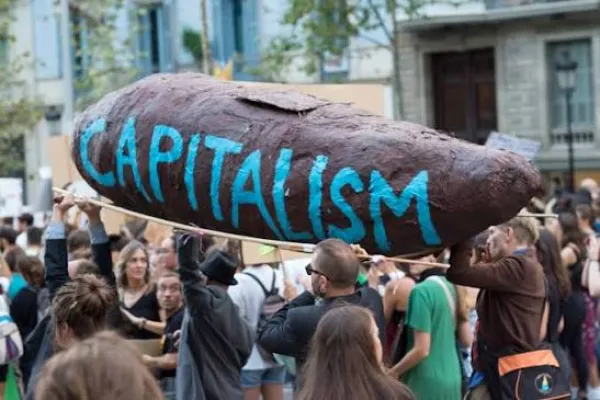

The political and economic developments unfolding across Europe, the United States, and other parts of the world may represent more than a period of political instability or the temporary rejection of particular governments. They raise a deeper question about the structural condition of contemporary capitalism and the political institutions that sustain it. The growing wave of youth protests across Europe from France to Italy, the electoral repudiation of the Trump administration in the 2026 US midterm elections, Lula's victory over the Bolsonaro political camp in Brazil, the electoral defeat of Serbia's long-dominant governing party following a prolonged student-led movement, and the mounting fiscal pressures confronting Western governments all point towards a period of profound political and economic tension.
These developments are not identical, nor do they necessarily express a common ideological project. Nevertheless, they reveal a growing dissatisfaction with existing political and economic arrangements in the Western world.
At the center of this crisis lies the erosion of the post-Cold War political-economic settlement. Following the collapse of the Soviet Union, Western liberal capitalism increasingly rested on the assumption that market liberalization, financial globalization, economic growth, and representative democracy would collectively deliver prosperity, social stability, and political legitimacy. Yet the neoliberal transformation of Western economies progressively weakened many of the social protections and institutional compromises that had previously helped sustain this arrangement. For substantial sections of society, particularly younger generations, minorities, and people of color, the promise of shared prosperity and expanding economic opportunities has become increasingly difficult to realize. Moreover, the Trump administration's America First doctrine challenged important assumptions of the post-Cold War neoliberal order, particularly its commitment to multilateralism, trade liberalization, and the institutional architecture of Western-led globalization
Widespread economic insecurity, unaffordable housing, declining social mobility, precarious employment, wealth concentration, and deteriorating public services have significantly undermined confidence in the institutions responsible for governing Western societies. These developments reveal a deeper contradiction within contemporary capitalism: economic growth and wealth creation do not necessarily translate into broadly shared prosperity. Instead, the increasing financialization of essential economic sectors, the concentration of wealth, and the growing dependence on private markets for basic social needs have intensified inequalities in access to housing, healthcare, education, and economic security. For younger generations in particular, traditional pathways toward economic independence and upward social mobility have become increasingly difficult to achieve.
The fiscal situation raises a fundamental question about the capacity of capitalist states to maintain the economic and social arrangements on which their legitimacy depends. The United States provides a striking example. The Congressional Budget Office projected a federal deficit of approximately $1.9 trillion for fiscal year 2026, equivalent to 5.8% of GDP. It projected publicly held federal debt rising from 101% of GDP in 2026 to 120% by 2036. Similarly, France faces significant fiscal pressures, with the European Commission projecting a budget deficit of 5.1% of GDP and public debt reaching 118.1% of GDP in 2026.
These fiscal pressures raise a fundamental question about the capacity of capitalist states to sustain the economic and social arrangements on which their political legitimacy depends. Governments face competing demands: maintaining public services and social protections, financing strategic investments, servicing accumulated debt, and preserving conditions favorable to private investment and economic growth. The tension between these demands increasingly constrains their political and economic room for maneuver.
This contradiction is compounded by the growing fiscal pressures confronting capitalist states, the crisis of established political parties, and the erosion of Western geopolitical dominance. Economic dissatisfaction eventually becomes political dissatisfaction.
One of the defining characteristics of contemporary Western politics is the growing disconnect between political institutions and substantial sections of the population. Traditional political parties, particularly center-left and center-right parties, have struggled to maintain their historic social constituencies. The center-left has increasingly accommodated market liberalization, financial globalization, and fiscal restraint, often at the expense of its traditional working-class constituencies. The center-right has generally defended market-oriented economic arrangements while increasingly incorporating nationalist and populist themes. This ideological convergence, despite their continuing differences on social and cultural issues, has weakened the ability of established political parties to offer fundamentally different economic alternatives. The result is a growing political vacuum in which competing movements seek to redefine the relationship between the state, markets, democracy, and society.
The resulting political vacuum has created a contested space in which competing movements seek to articulate alternative responses to the failures and contradictions of the existing order. Right-wing populism mobilizes resentment against globalization, immigration, cultural change, and established political elites. Progressive and socialist movements challenge inequality, austerity, corporate power, housing insecurity, and the concentration of wealth. Meanwhile, youth-led and anti-establishment democratic movements increasingly challenge corruption, political privilege, and the inability of established institutions to respond to popular demands.
These movements are ideologically different and often fundamentally opposed to one another. Nevertheless, they can share an underlying source of dissatisfaction: the perception that existing political institutions no longer adequately represent their interests or respond to their economic and social concerns.
These domestic contradictions are unfolding alongside significant changes in the international balance of economic and political power. The relative rise of China and other emerging economies, the fragmentation of international trade arrangements, and the growing challenges to Western geopolitical leadership have weakened the assumptions underpinning the post-Cold War international order. The Trump administration's America First doctrine reflects one political response to these developments. Rather than representing a fundamental alternative to capitalism, it challenges important institutional features of neoliberal globalization while advancing a more nationalist and unilateral approach to economic and geopolitical competition.
We may be witnessing not the imminent collapse of capitalism, but the exhaustion of a particular historical configuration of capitalism: neoliberal globalization and its associated model of liberal political governance. The fundamental crisis of contemporary Western capitalism is that it is increasingly unable to reconcile the conditions necessary for capital accumulation with the conditions necessary for democratic political legitimacy. The growing concentration of wealth, economic insecurity, fiscal pressures, political fragmentation, and geopolitical uncertainty are exposing the limitations of an economic and political order that has struggled to deliver broadly shared prosperity and maintain public confidence in its institutions.
The existing system continues to function, but its capacity to reproduce the economic foundations and social legitimacy necessary for its long-term stability is increasingly contested. The defining question, therefore, is not simply whether neoliberal capitalism can survive its current crisis, but what political-economic order will emerge from its contradictions.