
Data centers are breaking Ohio's grid. The proof has been sitting in a public document since January
This article first appeared here
This is not the conclusion of an environmental group or a community activist. This is what the grid operator wrote in its own planning document.
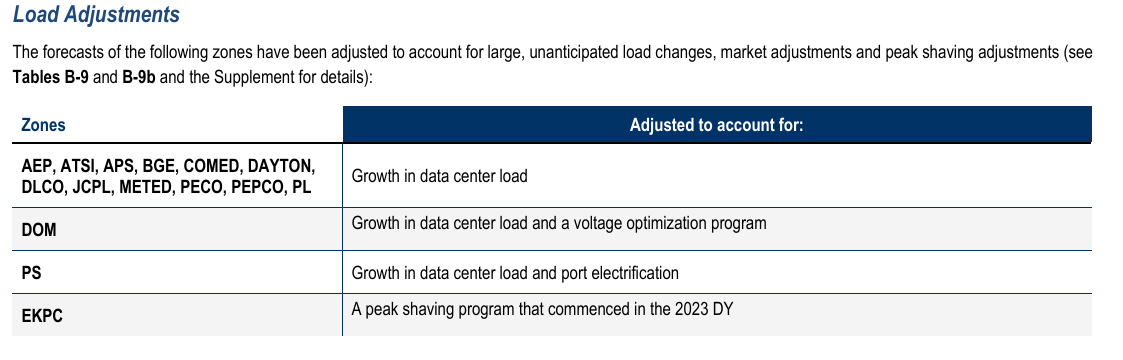
PJM Interconnection publishes an independent load forecast every year. January 2026’s edition contains a table on page five that should be required reading for every Ohio lawmaker who voted for House Bill 15, every regulator who approved fracking on state park land, and every official who has stood at a podium and described data center growth as an unqualified win for Ohio.
The table lists every zone in the PJM system where forecasts were adjusted and why. In the American Electric Power zone — central Ohio, Columbus, the heart of the state’s data center concentration — the adjustment was made to account for growth in data center load. In the ATSI zone covering Cleveland, Toledo, Akron, and Youngstown — growth in data center load. In the Dayton zone, growth in data center load. In DLCO — growth in data center load.
PJM did not editorialize. It listed the cause. Data center load growth. In zone after zone across Ohio.
The numbers attached to those adjustments tell the rest of the story. The AEP zone is projected to see summer peak load grow at 5.3 percent per year over the next decade and winter peak load grow at 5.6 percent. The Dayton zone projects 5.2 percent summer growth and 5.8 percent winter growth over the same period. The system-wide PJM average for summer peak growth is 3.6 percent. Ohio’s data center zones are growing at roughly one and a half times the regional average — and the grid operator’s own analysts are pointing at a single cause.
This is the infrastructure reality behind every data center approval, every gas plant fast-tracked under House Bill 15, and every acre of Ohio state park nominated for fracking to feed the demand. The grid operator did not speculate about it. It documented it.
And then it documented something else.
The 2026 forecast is lower than the 2025 forecast — the one that shaped the policy decisions already made. Lower by 2,564 MW for 2026. Lower by 4,414 MW for 2028. The reason, stated plainly in the executive summary, is that PJM tightened its standards. Near-term projects now require firm commitments — signed Electric Service Obligations or Construction Commitments — before their load is counted. Projects without those commitments are discounted because of their greater uncertainty. That distinction, the report states directly, “has brought large load adjustments down in the near-term forecast years compared to the 2025 Long-Term Load Forecast.”
The previous forecasts counted the load that had not been firmly committed. Ohio built energy policy — gas plant approvals, public land fracking, the elimination of community input — on numbers that did not meet PJM’s own revised standard for reliability planning.
The January report has been publicly available for four months. The fracking nominations have continued. The gas approvals have continued. The public land is being opened.
The grid operator told Ohio exactly what was happening and exactly what the numbers were worth. Ohio kept going anyway.
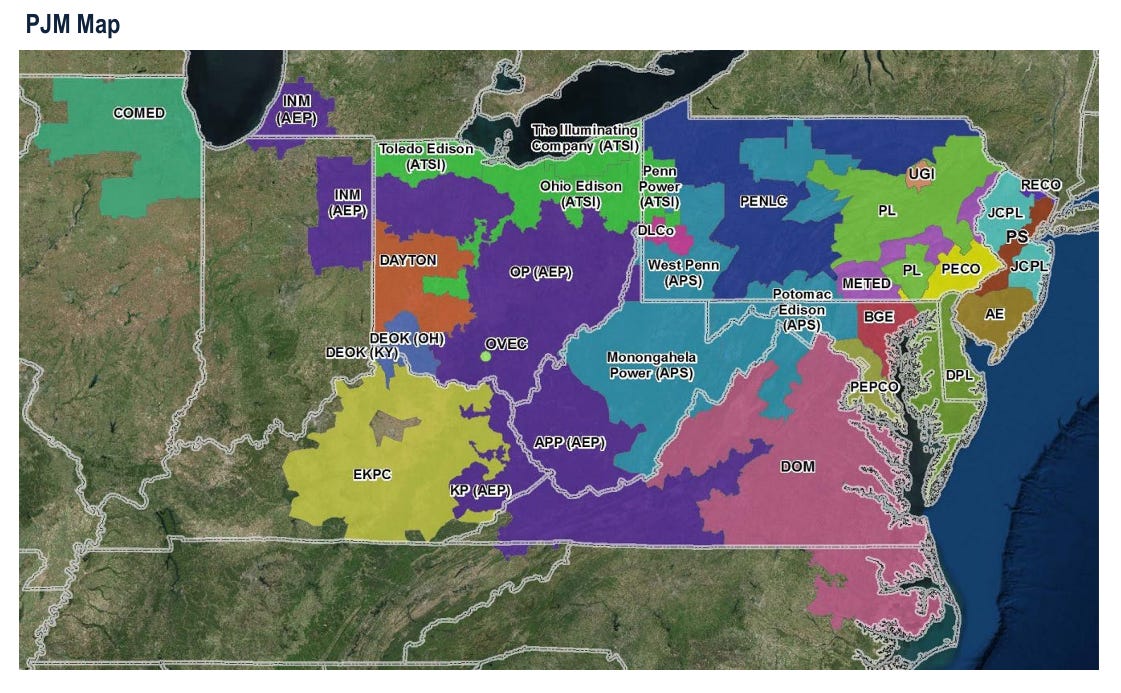
The PJM report can be viewed here: https://drive.google.com/file/d/13BpCs6W_v-3GKAa2Jkn7Gxs5oa1M8bh4/view?usp=sharing