
Don’t Condemn a Film You Haven’t Seen
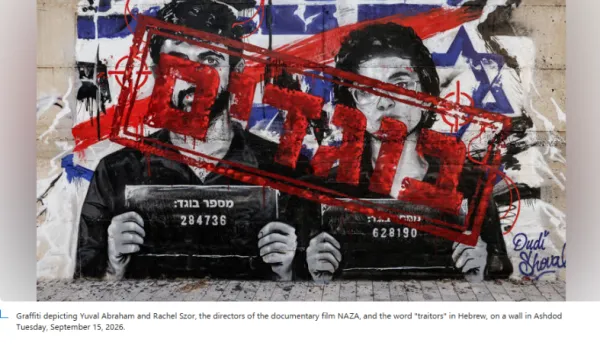
Crime Minister Benjamin Netanyahu has joined Israeli ministers in attacking the Venice-winning documentary NAZA.
Yuval Abraham and Rachel Szor are brave journalists and filmmakers. Yet they are being attacked by people who have not even seen the film—many of the same people who are quick to boast about their commitment to “freedom of speech.”
Hiding or denying the reality of what is happening in Gaza will not make it disappear, nor will it prevent the world from learning about it. Journalists and filmmakers have a right—and, some would argue, a responsibility—to document what they witness, even when their work is deeply uncomfortable for those in power.
You cannot claim to defend free expression while trying to silence filmmakers whose work you have not even watched. If there are factual errors or legitimate objections to the film, address them openly. Challenge the evidence. Debate the filmmakers’ conclusions. But attacking the filmmakers and attempting to suppress their work before people have even seen it is fundamentally at odds with the principle of free expression.
Israeli filmmakers Yuval Abraham and Rachel Szor — co‑directors of the Oscar‑winning No Other Land — received a record‑breaking 25‑minute standing ovation for their Gaza‑focused documentary NAZA at the 83rd Venice International Film Festival.
On the bright side, 43 Israeli human rights, equality, and peace organization have issued a joint statement in support of NAZA filmmakers Yuval Abraham and Rachel Szor on Tuesday following a wave of threat against them. against them.
That is the real test of free speech: whether we defend it only when we agree with the message, or whether we defend the right to speak when the message makes us uncomfortable
Mahmoud El-Yousseph is a Palestinian freelance writer and retired U.S. Air Force veteran. He writes about U.S. foreign policy, Middle Eastern affairs, and justice.