The First Collective Iftar in Columbus, Ohio
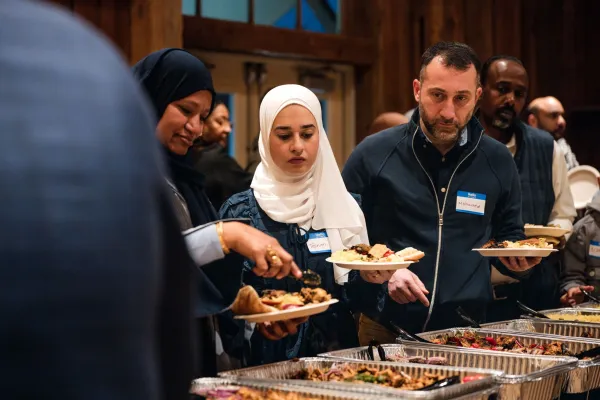
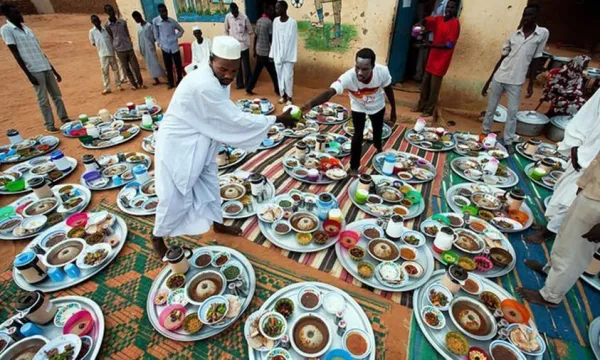
Collective iftar is the name for the evening meal that Muslims break their fast with after sunset every day during the month of Ramadan. This year, the first day of Ramadan will fall on Wednesday, February 18.
Joy McCorriston, who is a professor of anthropology at OSU, was the first person in Central Ohio to organize a collective iftar for the local Muslim community. That was right after the 9/11 terror attack and her Church St. James Episcopal Church of Columbus has been hosting such an event every year since then.
Professor McCorriston, who speaks Arabic, has also lived and worked as a consultant in Oman, Syria, and Yemen. In a personal note, years later, her firstborn son has attended the same high school with my youngest son and became good friends ever since.
I do remember receiving a group message many years ago from Dr. Asma Mobin-Uddin, who is a local Muslim leader encouraging local Muslims to attend such an event offered by St. James Church. She explained that the event "is an opportunity for non-Muslims to meet Muslims on a one-to-one basis and get to know who they are, which helps break the stereotypes that Muslim face every day." To me as a Muslim, that meant recognition and respect, for which I am grateful.
I should note here that St. James Church provides a prayer room to their Muslim guests that is not part of the sanctuary and the friendly congregants prepare meals that consist of only halal meat and beverages that contain no alcohol. The host also insured that the statues and images in the designated prayer room were cover. For me, that was the cherry on the top.
During Ramadan, Muslims abstain not only from food and drink- which are the easiest to do- but also from smoking, sexual activity, and negative behaviors such as: gossip, backstabbing, and committing sinful acts from dawn until sunset.
Former President Thomas Jefferson once held a sunset dinner here with an envoy from Tunisia to the United States, Sidi Soliman Mellimelli on Dec. 9, 1805. That is considered the first White House iftar during Ramadan. To accommodate his guest's religious obligation, Jefferson's invitation to the President's House on December 9 changed the time of dinner from the usual "half after three" to "precisely at sunset." Jefferson believed in celebration of all world religions.
Like Professor Joy McCorriston, President Jefferson had a healthy admiration for the Muslim faith. He in fact taught himself Arabic using his own copy of the Qur'an. Meanwhile, in the United States, there are several places where collective iftar is celebrated, offering a chance for Muslims and other faiths to come together and share a meal. Here are some notable locations: The White House, US State Department, and all branches of the US armed forces.
When Keith Ellison made history in 2006 by becoming the first Muslim member of Congress, the Minnesota Congressman used the Qur'an once owned by Thomas Jefferson for his ceremonial oath.
President John Adams praised Prophet Muhammad as one the of the great "inquirers after truth." It has been reported that Benjamin Franklin once declared: "Even if the Mufti of Constantinople were to send a missionary to preach Mohammadanism (old use reference to describe Islam) to us, he would find a pulpit at his service. President George Washington has also welcomed Muslims to come work for him at Mount Vernon."
Now all branches of the U.S. Armed Forces celebrate iftar during the Islamic holy month of Ramadan. I should note here that the Pentagon hosts iftar dinners for military personnel, including Muslims, to honor Muslim faith and promote diversity and equality within the Defense Department.
In the event you wonder about what prompted all this love of Muslims by our Founding Fathers, the answer is simple. It is perhaps because Sultan Mohammad Ben Abdallah of Morocco was the first world figure to recognize the US independence from Great Britain in 1777. Another reason was that our Founding Fathers were smart enough to distinguish between terrorist and Muslims.
America does not need to spend millions of dollars on public relations campaigns at Al-Jazeera and other satellite networks in the Middle East to promote a positive image. The aforementioned acts of respect and goodwill gestures I mentioned will win the hearts and minds of Muslims here and abroad.
As wise man once said, "Respect makes friends out of enemies and disrespect turns friends into enemies." At a time when other Western countries are banning Burqa, hijab, slaughterhouses (halal butcher shops), and the building of minarets, America continues to uphold religious freedom for Muslims by showing them tolerance and treating them with fairness and respect.
Mahmoud El-Youseph is a Palestinian freelance writer and retired U.S. Air Force veteran. He writes on U.S. foreign policy, Middle East affairs, and justice. Email: elyousseph6@yahoo.com