
Global Warming Is Advancing and Little Is Being Done About It
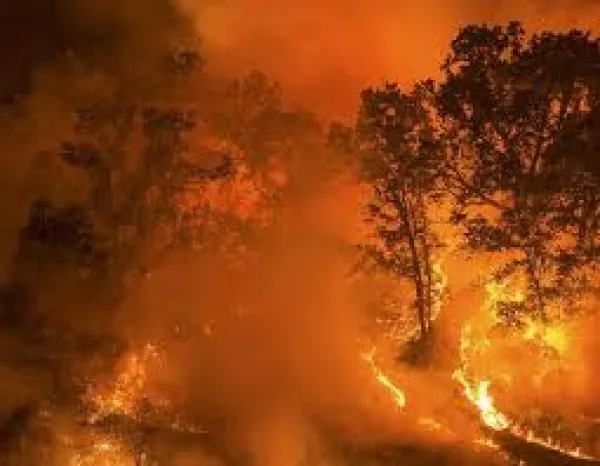
Creative commons image via Climate Adaptation and Resiliency
Brett Wilkins,a staff writer for Common Dreams, reports that the UN has sounded an alarm as the planet plunges deeper into a climate emergency, Common Dreams, Nov 9, 2026 (https://www.commondream.org/news/state-of-the-climate-2026). Here’s some of what he reports.
He leads with this quote. “‘Leaders must get serious by cutting emissions faster,’ said UN Secretary-General António Guterres in a report released as COP31 kicked off in Türkiye.
Wilkins continues. “The Earth is hurtling deeper into a climate emergency, with 2026 on track to be one of the four hottest years ever recorded, ocean temperatures and sea levels hitting record highs, and glacier melt accelerating at an alarming pace, according to a report released Monday by the World Meteorological Organization as the United Nations Climate Change Conference kicked off in Türkiye.
“The WMO’s ‘State of the Climate’ report ‘shows that the past 12 years have individually been the warmest on record, with the past four years being the top four,’ according to a summary of the 25-page publication.
“WMO further notes that “the global average surface temperature for January–September 2026 was about 1.47°C above the preindustrial average,” or right on the brink of the 1.5°C of warming beyond which scientists say the risks of catastrophic and potentially irreversible climate impacts increase substantially.
“UN scientists said last month that the Paris Agreement’s goal of limiting warming to 1.5°C this century is no longer achievable without an overshoot.” That is, without the temperature going above the 1.5 tipping point and only then with the unlikely extraordinary and concerted efforts of societies globally.
According to WMO:
“Extreme weather has made headlines throughout 2026. Behind the headlines and the statistics in this report are people who suffered the loss of loved ones, threats to their health and safety, flooded homes, failed harvests, empty shelves, lack of water, and choking air,” WMO Secretary General Celeste Saulo said in the report.
“The past four years have been the warmest in the 177-year observational record, and the heat in the oceans is breaking records for the 10th year in a row,” she continued.”
“United Nations Secretary-General António Guterres responded to the WMO report in a statement, saying: ‘We have entered a new age of climate extremes. A supersized El Niño is colliding with a planet already superheated by manmade climate change. Climate records keep falling. The human costs keep rising. And those least responsible are suffering first and worst.”
-----
Conditions are worsening
Michael Jacobs also reports on the dangerous condition of the global climate in The Conversation, Nov 19, 2026 (https://theconversation/cop31-the-world-must-start-planning-for-what-comes-next).
Jacobs cites evidence from the World Meteorological Organization that the rate at which the Earth is heating up is accelerating. One reason is the planet is becoming less ’reflective’ as “the loss of ice and snow, changes in cloud formation and (paradoxically) reductions in atmospheric pollution means that more solar radiation is being absorbed rather than reflected into space.” A United Nations Environment Programme (Unep) report explains, the best we can hope for now is to exceed 1.5°C but then limit the extent of the overshoot, peaking emissions as soon as possible and then returning to 1.5°C later in the century.” But this is like saying let the house burn down and then we’ll magically resurrect it. The term for describing the reality is “overshoot
If we pass the 1.5 target, the ensuing rise in global temperature will accelerate and it is stretching the imagination that the world will be able to subsequently reverse the high temperatures, and the massive destruction warming will cause.
Jacobs cites the United Nations Environmental Program, which informs us that the “longer temperatures remain above 1.5°C, the greater the risk of triggering irreversible changes to systems such as polar ice sheets and glaciers, ocean currents and the Amazon rainforest, which could make returning to lower temperatures impossible.”
At the same time, Jacobs informs us that there is ongoing research on cutting the flow of greenhouses gases into the atmosphere or removing carbon dioxide from the atmosphere. To cut the flow of greenhouse gases into the atmosphere would require a drastic and continuous reduction in the combustion of fossil fuels, with the aim of eliminating them. There is no substantial and successful method yet available for removing carbon dioxide from the atmosphere. Still, there are those who are not giving up. Jacobs himself seems pessimistic about these methods.
For example, he writes, “There are various potential removal methods. Some are familiar and uncontroversial, though not yet being done at anything like the required scale.” The obvious and direct method would be to phase out the burning of fossil fuels, the sooner the better.
-----
The failure of the US
Chico Harlan reports that the U.S. Is an Outlier Among Rich Nations in Slowing Climate Progress, according to U.N. Data (https://www.nytimes.com/2026/10/21/climate/united-states-climate-pledge-emissions-gap-report.html).
The scientific report from the U.N. identifies the United States as an outlier among the nations responsible for more greenhouse gas emissions that their peer nations.
Harlan writes, “The U.N.’s annual Emissions Gap Report is considered a definitive assessment of global progress on climate change. It identified the United States as an outlier among the industrialized nations that are responsible for most planet-warming pollution.
“Among the Group of 20 industrialized nations, the report noted, emissions overall had slowed down in 2025, ‘with the United States of America being the major exception.’”
“The United States’ most consequential action, in terms of the global effect on climate change, has been to abandon its pledge to cut its emissions that was made in 2024 under President Joseph R. Biden Jr.”
Harlan continues. “The Paris Agreement to fight climate change, which calls for holding temperature rise to ‘well below’ 2 degrees Celsius compared with preindustrial times, and preferably to 1.5 degrees Celsius, directed nations to update and strengthen such pledges every five years. These pledges are considered the building blocks toward reaching global goals to rein in warming.”
Trump pulls the U.S. out of the Paris Agreement
“But on the day he was inaugurated last year, President Trump announced that he would pull the United States out of the Paris agreement, withdrawing from the fight against climate change. In fact, his administration has encouraged more production and use of fossil fuels, the burning of which releases the greenhouse gases that are dangerously warming the planet.”
“Scientists emphasize that every fraction of a degree of additional warming raises the likelihood of deadlier heat waves, more powerful storms and other extremes.
“Without citing any nation, United Nations Secretary General António Guterres described a ‘leadership gap,’ and said ‘governments must go much further and faster’ on building out renewable energy and phasing out fossil fuels.
Trump intensifies the climate crisis
Harlan continues. “Under the Trump administration, the United States has withdrawn government support for wind and solar power, eliminated greenhouse gas emissions limits for fossil-fuel-burning plants, and scrapped the scientific determination that gives the government the authority to combat climate change.
“‘The Trump administration is trying to completely reverse the U.S.’s previous course, and that is being seen and felt at the global level,’ said Finn Hossfeld, a policy analyst at the NewClimate Institute who tracks major emitters.
-----
A slow-motion destruction of the earth
Tom Engelhardt views global warming as a kind of global atomic war in slow motion, Counter Punch, Nov 11, 2026
(https://www.counterpunch.org/2026/11/11/a-global-atomic-war-just-in-slow-motion). Here’s some of what he writes.
“In February 1982, in the New Yorker, Jonathan Schell imagined and described what a Russian twenty-megaton nuclear bomb (1,600 times the yield of the bomb that destroyed the Japanese city of Hiroshima at the end of World War II) might do if it hit New York City (his hometown and mine), though its radioactive fallout would have reached significantly farther. That one bomb, he wrote, ‘would probably doom upward of twenty million people.’ He then described just what that nightmare might be like in all too vivid detail. (‘If the wind was blowing at 15 miles an hour, fallout of lethal intensity would descend in a plume about 150 miles long and as much as fifteen miles wide.’)
Engelhardt’s main point: “In many ways, climate change might be considered the equivalent of nuclear weapons already going off around this planet of ours, just in remarkably slow motion.”
“And yet so many years later, on a planet growing ever hotter ever faster and, in weather terms, ever more violent, we and our leaders still largely haven’t absorbed what’s happening, not truly. And because that potentially world-ending time frame is indeed proceeding in what might be considered slow motion (at least in comparison to the nuclear hell of atomic weaponry, although it’s happening far too fast for our world), it’s hard even to take in. Still, it’s important for us to start imagining that, in some strange sense, the equivalent of a slow-motion atomic war has already broken out on this planet of ours and the fallout (so to speak) is heat, heat, and more heat (and, of course, increasing weather chaos).
“Unfortunately, even so many years after Schell wrote that passage, because climate change is relatively slow, it simply hasn’t gotten the end-of-world attention it deserves. And yet, so many years later, the devastation is indeed beginning to be felt. Only recently, for instance, as a British Guardian — a rare news outlet that actually has a ‘climate crisis” section — headline put it, Heat killed ‘staggering’ 50,000 people in Europe’s cities this summer, scientists warn.’ (‘Hot weather marked by relentless heatwaves killed nearly twice as many people as it did in each of the two next most dangerous years.”) Yes, 50,000 deaths and, remember, that’s just in Europe (and it’s only going to get ever worse)!
“And the major power that’s still pouring fossil fuels into the atmosphere in a stunning fashion without, in the age of Donald J. Trump, making the slightest effort to promote green energy, is, of course, my country, the (increasingly dis-)United States of America.” Meanwhile, he is “slashing the budget and staff of, and taking a wrecking ball to, the agency in the government that has focused on the climate, the National Oceanic and Atmospheric Administration (NOAA). In that sense, though he’s seldom portrayed this way, he’s quite literally the president from hell.”
-----
A short history of COP
Nicolas Eliades provides a “short history of COP.” the international climate conference (https://theecologist.org/2021/sep/16/short-history-cop). Eliades has been working in international, political and organizational communications, including journalism, for well over 20 years, spanning four continents. Here are the key points from his “short history.”
“COP, or the Conference of the Parties, traces its origins to the United Nation’s first major Conference on the Environment and Development. The parties are the national and intranational governments of the world.”
It emerged in 1992Emerging from the Cold War, 1992 saw a world seemingly poised to start a new era in global development and cooperation, in which the environment as an international concern began to take root, or so it was thought.
The Rio Earth Summit in 1992 established the United Nations Framework Convention on Climate Change (UNFCC), with the mission to raise global public awareness on related issues. One of its principal objectives “was to stabilize the concentration of greenhouse gases (GHG) in the Earth’s atmosphere in order to prevent risks to the climate system, a concern touted by scientists since at least the 1970s.
Eliades continues. “The COP was created as the convention’s supreme body and as an association of all member states, with the intention of having regular annual meetings to be attended by heads of state, ministers, environmental experts and non-governmental organizations (NGOs).
“Germany. Here, the Berlin Mandate was established, collecting a series of indefinite commitments and initiatives which countries could pick and choose from according to their needs and capabilities.”
“COP2, in Geneva (Switzerland), laid down ‘binding quantitative targets’ limiting GHG emissions by industrialized countries and indicating precise reductions (agreed by consensus) to be revisited the following year in Kyoto, Japan.
The Kyoto Protocol
“At Kyoto, in 1997, binding targets were set for GHG for 37 countries, establishing what would come to be known as the Kyoto Protocol, which would enter into force in 2008, with an expiration date of 2012.”
The US and China don’t ratify the agreement
“However, two of the largest emitters, China and the United States, refused to ratify the agreement, largely condemning it to failure. What followed between 1998 and 2006 were nine conferences of little consequence, as the parties “finalised” the details of the Kyoto protocol in the run-up to 2008, resulting in a loss of nine years in a race against time.
------
COP31, another failure
Julia Conley reports on the reaction of the UN chief to COP31, Nov 11, 2026
(https://www.commondreams.org/news/cop31-guterres). Julia Conley is a senior editor and staff writer for Common Dreams.
“Fossil fuels must go the way of the dinosaurs, but that won’t happen on its own. The dinosaurs did not have a lobby, but fossil fuels do,” said UN Secretary-General António Guterres.
“At his last United Nations Climate Change Conference as secretary-general, António Guterres on Wednesday emphasized that he ‘will not stop telling the truth
about how the fossil fuel industry and the wealthy governments that continue to hand out oil and gas subsidies are allowing the sector to reap massive profits while people around the world suffer from the worsening impacts of the climate emergency.
“‘The last four years were the hottest ever, and fossil fuel interests keep making a killing while killing our planet,’ the secretary-general said bluntly.
“‘Climate disasters are pounding lives, livelihoods, and economies across the globe,’ he added. ‘This is the path to mutually assured destruction.’”
An emergency that doesn’t stop worsening
Conley continues. “Guterres spoke two days after the World Meteorological Organization (WMO) released its ‘State of the Climate’ report at the conference, known as COP31, which is being hosted by the Turkish government in Antalya this year. The report warned that while the past 12 years have been the Earth’s warmest on record, the trend has particularly accelerated since 2022.
“The impacts have been brutal, with more than 1,500 people killed this year in Nepal and Tibet after a glacier collapsed and caused sudden catastrophic flooding, an estimated 200,000 people killed across Europe by extreme heat over the past years, and tens of thousands of acres scorched by wildfires across Europe and in the COP31 host country this summer.”
The last-ditch hope that rising global temperatures can be reversed
“Last month,” Conley writes, “the UN released a report finding that avoiding a global temperature rise over 1.5°C above preindustrial temperatures is no longer possible. Experts now say governments must work toward a goal of ensuring that the overshoot is only temporary, just over a decade after the warming limit was agreed to in the Paris Agreement at COP21.
“On Wednesday, Guterres emphasized,” Conley points out, “that the failure to avoid passing the 1.5°C limit comes as planet-warming emissions from the oil, gas, and coal industries have continued climbing—and as already wealthy companies’ profits have soared.
“Meanwhile, those same companies have spent hundreds of millions of dollars on lobbying in an effort to delay a transition away from fossil fuels and toward renewable energy sources.”
“‘The brutal truth is that the climate crisis is outrunning us,’ said Guterres Wednesday. ‘Emissions in 2025 reached all-time highs. Heat records keep shattering.’”
“Guterres called on governments to tax oil and gas companies’ windfall profits, like those the industry has reported since US President Donald Trump joined Israel in launching an illegal war in Iran. Since the conflict began in February, global energy prices have soared.
“Last month, ExxonMobil reported $17.5 billion in adjusted earnings for the third quarter of 2026, while Chevron reported $10.4 billion. British company Shell earned $10.8 billion from July-September, and the French firm TotalEnergies brought in $9.1 billion.
“The companies have reaped profits while the global Loss and Damage Fund, which experts and developing countries say needs about $400 billion annually from wealthier governments in order to help poorer countries adapt to emergency and repair damages, is woefully underfunded.
“‘Those who profit most from fossil fuels must help foot the bill for the damage they have caused,’ said Guterres. ‘In the last quarter alone, the nine largest oil companies pocketed $95 billion in profits. Meanwhile, the Loss and Damage Fund has received around $600 million. That is what these companies made in about 14 hours. It’s time for governments to tax these windfall profits—and use them to help vulnerable countries recover. Polluters must pay.’”
It is difficult to believe that US oil, gas, and coal corporations will pay or that the Trump government will do anything constructively. The final report from COP31 doesn’t even mention fossil fuels or phasing them out.
-----
Will Democrats make a positive difference on the climate crisis?
Michael E. Mann, a famous climate scientist, has hope that Democrats will use their enhanced power in coming years to meaningfully address the climate crisis (https://thebulletin.org/2026/11/democrats-stayed-quiet-on-climate-now-its-time-to-act). He urges readers to share the article. Here’s what he writes.
“The blue tsunami in the midterm elections swept Democrats to power in both houses of congress, key governorships, and state houses. Although inflation and the cost of fuel were at the top of voters’ minds, bipartisan concern over data centers—driven by fears of soaring electricity rates, heavy water consumption, and increased reliance on fossil-fuel energy—helped power victories for democratic candidates, underscoring the role that energy and climate played in the election.
“After being urged to stay quiet about climate while campaigning, I hope that Democrats will recognize the unprecedented opportunity this provides for re-engaging on climate action, making it a central feature of their legislative agenda as they take power early next year. After all, actions speak louder than words.”
Affordability
“Democrats have a clear mandate from the voters, if they can connect the dots for the public. Voters made it clear that affordability and government corruption were the defining issues for them. But as popular political figures like New York City Mayor Zohran Mamdani recognize, the climate crisis is an affordability issue.
through the entire economy, raising the costs of most goods and services. Those higher prices, as I’ve discussed elsewhere, were a consequence of the corrupt policies of the Trump administration and enabled by the rubber stamp of a Republican congress—policies which I presaged would follow from a second Trump presidency as it sought to implement Project 2025.
Trump’s tariffs
“Foremost among those policies were Trump’s tariffs. He sought to boost the fossil fuel industry by penalizing renewable energy, such as solar panels from China, while using trade threats to force foreign nations to buy American energy.
“Meanwhile, sweeping tariffs on foreign steel and aluminum inflated the cost of energy infrastructure. Ultimately, these supply chain strains—combined with retaliatory foreign tariffs—further drove up energy prices.
Trump’s assault on domestic renewable energy
“Then there’s Trump’s assault on domestic renewable energy. The administration has systematically targeted the renewable energy sector by halting major offshore wind projects, clawing back billions in federal clean energy funding, and eliminating key tax credits in an aggressive effort to favor the fossil fuel industry. By taking the least expensive sources of energy out of the mix available to consumers, Trump has further driven up energy costs.
More extreme weather events
And we haven’t even mentioned the impact of extreme weather events, made more frequent and more damaging by human-caused warming, that destroy infrastructure, kill crops, and disrupt supply chains and distribution systems, further driving up prices. A recent UN report found that Trump’s dismantling of US climate policy, including his withdrawal from the Paris agreement, noticeably bumped up planetary warming by an additional 0.1 degrees Celsius. That might sound like a small amount, but as I told the AP, it would shave about $1.2 trillion from the global economy.
Trump’s war on Iran
“Last but certainly not least is Trump’s misguided war of choice against Iran that, despite an ever-shifting list of supposed reasons, was ultimately about maintaining access to Middle Eastern fossil fuels. The war drove up energy prices for all of us but increased profits for American fossil fuel companies—something he misguidedly chose to boast of in the waning days of the election.
“Our fragile fossil fuel-based economy leaves us exposed to volatility and conflict, making an urgent, accelerated transition to renewable energy essential for both economic stability and planetary survival. The ongoing conflict involving Iran under the Trump administration exemplifies the deep vulnerabilities and geopolitical dangers of global reliance on fossil fuels. Cutting funding for the senseless ongoing war on Iran would be a critical first step for the new congress.
But what can they do legislatively? Trump after all, wields veto power for ostensibly two more years.
“Quite a lot, actually. Jake Bittle of Grist, for example, argues that newly empowered Democrats now have leverage to counter the Trump administration’s attempts to roll back federal climate regulations and can use budget oversight to compel federal agencies to release clean energy funding.
This will require true leadership. And if the senior institutionalists, like presumptive Senate Majority Leader Chuck Schumer and House Speaker Hakeem Jeffries, aren’t up to the challenge, they should move aside and let others step forward.
“I think they might find some willing colleagues in the freshman class. Consider, for example, William Lawrence, part of a new generation of younger, and more environmentally conscious progressives. Lawrence was co-founder of the climate activist group known as the Sunrise Movement. He prevailed in a razor’s-edge House of Representatives race in central Michigan, ousting incumbent Republican Tom Barrett in Michigan’s 7th Congressional District. Lawrence made opposition to data centers a focal point of his campaign. He has called for a national moratorium on data centers.
Take up fight against data centers
“There are many reasons that people oppose data centers. There are concerns over massive electricity and water consumption that drive up local utility bills, the chronic noise and air pollution from operations and backup generators, minimal creation of permanent local jobs, and broader skepticism toward the artificial intelligence boom. And of course, there is concern about the increasing carbon footprint and climate impact that comes with them. Opposition to the rapid growth of data centers is one of the few issues in modern American political history that unites citizens across the political spectrum. According to USA Today, “Data centers were on the ballot across the nation. They got crushed.”
“A November 2026 national survey by USC Annenberg revealed that 77 percent of Americans believe the government is doing too little to regulate data centers. That’s miracle level bipartisan appeal. The only other things in America that garner that level of public support are Tom Hanks and a moratorium on robocalls.
“A data center regulation bill could be the gateway to a broader climate and energy legislative agenda in the new congress. Democrats, however, would need to deal with the problematic Bipartisan American Affordability and Jobs Act (BAAJA) bill currently under consideration, a bill that is highly problematic from a climate and environmental standpoint because it guts foundational environmental laws to fast-track and “lock in” major fossil fuel infrastructure and gas-powered AI data centers.
“Hakeem Jeffries has already signaled a bit more willingness to fight the BAAJA bill since the midterms results came rolling in.
“Democrats could instead pirate” BAAJA’s most popular ratepayer protection mechanisms while aggressively stripping out or replacing the environmental rollbacks, as they prepare the prospective new data center bill.
“They could use fast-track parliamentary rules immediately after the new Congress convenes on January 3 to get the prospective new data center bill placed on Donald Trump’s desk by the second week of January. Dare him to veto it. And dare Republicans to sustain the veto if he does.
“We’ve already lost two critical years under Trump and GOP congressional control, and when it comes to delay, the climate crisis is most unforgiving.
“There is no time to waste. So how about it, Dems?”
-----
Concluding thoughts
Michael Mann takes the position that there is time – not much - to curtail and reverse the climate crisis. His view as a respected climate scientist should be heeded. At the same time, the evidence is hardly encouraging. The results of COP31 are depressing in their failure to support the phase out of fossil fuels. And as Mann points out the Democrat victories in the midterms mostly did not feature such a phase out. Meanwhile, Trump continues to be a booster for fossil fuels and considers any policy designed to reduce our dependence on them a hoax. Have we already run out of time to fix the problem?