
How Safe is US Voting?
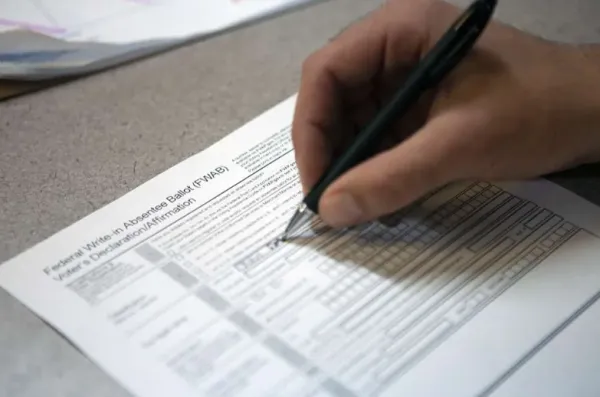
With all of the self-serving disinformation coming from down low and up high about the security of voting in the midterm elections, it’s fair to ask, “what’s the real deal?” I tuned into a webinar presented by SciLine and organized by the American Association for the Advancement of Science, who are also the publishers of Science magazine. The webinar was entitled, “Detecting and Preventing Election Fraud” and featured three experts whgo were professors from the University of California at Berkeley, Caltech, and the University of Pennsylvania.
The main takeaway from the experts is that it’s exceptionally difficult to steal an election, and it would take a lot of conspirators working together seamlessly to do so. That’s not to say that human errors don’t happen, but that’s different than fraud.
On mail ballots, the key protection is assuring that the state checks the signature to make sure it aligns. Even if that sounds tedious, it is pretty much fail safe, all things being equal. The same can be said of mail ballots in general, because they are physical, can be counted, and when things don’t match up, they can be recounted.
The experts really were negative on touch screen voting machines. They also believed that voting machines that were connected to the internet were almost asking to be hacked, as well as anything in the process that would ever allow remote access. Any glitch in the machine, or what one of them called a “single point of failure,” could throw out whole batches of votes.
Where there was total consensus from the experts was the need to do what they called “risk limiting audits” both before the votes and reconciling the tabulations from the machine count with what the election observers note are the number of people that have come into vote. This allows checking to make sure there weren’t glitches and to reconcile any other issues. Having a way to produce paper ballot reports also seemed to be important. It seems not every state makes these kinds of audits mandatory and some, I they cited Georgia as an example, claim they do them, but aren’t really set up to do them correctly or to catch bad configurations in the machines. This audit system began in Colorado in 2007 and, sadly, has only be adopted by about fifteen states to their reckoning, and even so, imperfectly.
I found their endorsement of provisional ballots informative. They were huge advocates of asking and completing provisional ballots, where this is available, whenever there is a question of your voter registration, whether you were voting in the right polling place, or whatever. They firmly maintained from their research, direct observations, and interviews with election officials that these votes are reconciled and counted. This has often been a question in some offices and kitchen tables that I frequent, so it was reassuring to hear their conviction.
The experts spent a lot of time debunking some common conspiracies which usually simply reflect anomalies. One they cited that may be frequent in the coming US midterm elections focused on claims that spikes in normal voting were fraudulent in general or in specific cases, when it may simply reflect campaign-directed GOTV efforts or rising voter enthusiasm and intensity. Current reports for example have 75 percent more early voters in Texas and 50 percent more in Kansas for example. Neither fraud nor error, that’s just democracy stirring.
Don’t let a bunch of nonsense keep you from voting. Some may try to argue otherwise or monkey with it, but all eyes are on this, and it all seems to be in good shape at this point, so “just do it!”