
Madison, Wisconsin Police officer kills Black man: What else is new?
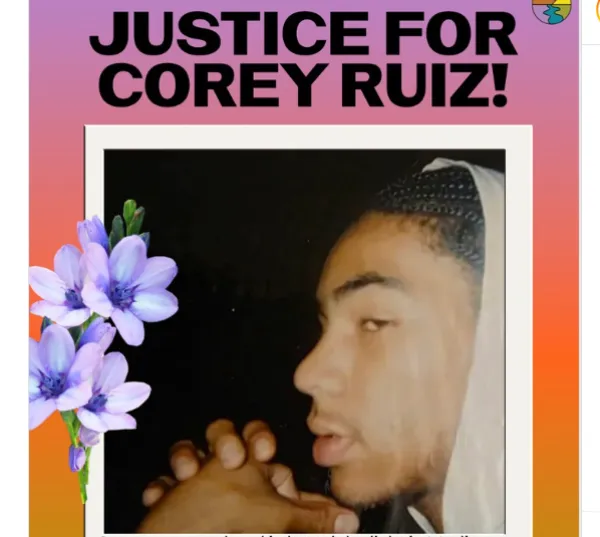
Police officer Kiel Baitinger-Peterson of the Madison Police Department in Wisconsin shot and killed Corey Ruiz, a 38-year-old Black man in broad daylight on Wednesday July 22, 2026. Ruiz was suspected of scoping out parked cars for the purpose of committing theft.
Police-community relations have been a scholarly interest of mine for nearly thirty years. There have been few high-profile killings of citizens on which I have not written or commented over the past twenty years. By high profile killings I mean those that have garnered the attention of national media like the New York Times, Washington Post and major networks.
This particular killing was captured on video, but not on any of the officers’ body worn cameras because Madison police officers reportedly don’t wear cameras. If not for the presence of cellphone warriors, this killing like many others before the advent of this technology would have gone unnoticed by those outside of Madison, Wisconsin.
Video footage shows Ruiz being surrounded by four officers three of whom were trying to subdue Ruiz when Baitinger-Peterson seemingly frustrated with Ruiz’s noncompliance unholstered his service weapon and fired shots into Ruiz’s body killing him. Baitinger-Peterson was reportedly injured by the knife wielding Ruiz prompting him to draw his weapon and fire.
This shooting death is unlikely to play out any differently than most officer use of extra-legal force incidents that result in the death of a civilian. “Officer Baitinger-Peterson feared for his life” and/or “Officer Baitinger-Peterson responded in accordance with his training” and/or “Officer Baitinger-Peterson used a level of force commensurate with the threat” or “Ruiz represented an existential threat to the officers, thus Baitinger-Peterson had no choice but to shoot.” Such are the kinds of statements the public should be expected to hear uttered by police officials in defense of Baitinger-Peterson as the investigation unfolds.
Did Ruiz pose the kind of threat that warranted being killed? Ruiz was in the grasp of three officers while being in the crosshairs of a fourth officer who was prepared to tase him before being preempted by her colleague Baitinger-Peterson who believed deadly force was necessary. In the days following the killing of Ruiz, the Madison police department refused to release Baitinger-Peterson’s identity. Only after the Wisconsin Department of Justice got involved was the officer’s name released.
As of this writing Baitinger-Peterson and his colleagues have been placed on administrative leave. The district attorney has yet to decide whether to file charges against Baitinger-Peterson. That decision will be made depending on what the investigations reveals. “The Wisconsin Department of Justice Division of Criminal Investigation is charged with leading the investigation with assistance from the Dane County Sheriff’s Office, Wisconsin State Patrol and Sun Prairie Police Department,” stated the Wisconsin Department of Justice.
Protests erupted in response to Ruiz’s killing, but there is no evidence that said protests, vigils and demonstrations spread outside of Madison, which may suggest that this killing hasn’t received the kind of national media attention it deserves. Unless three things come into being, the public can expect little will change when it comes to policing:
1) police officers being slapped with lengthy prison sentences such as the one received by Minneapolis police officer Derek Chauvin
2) the end to qualified immunity and
3) the settlements that the victims’ families are awarded from civil suits be drawn from the police pension fund and/or police agencies’ budgets.
Until these things happen, I am not hopeful that Americans will see significant changes in the way policing is conducted in this country.
Judson L. Jeffries PhD, MPH, is Professor of African American and African Studies at The Ohio State University.