
Mississippi Rising: Meet Rev. Stern's: The African American Minister Who Bunked With The Most Infamous Head Of The KKK
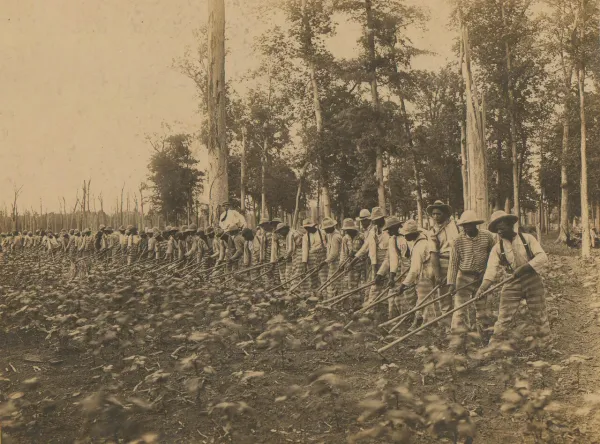
Mississippi Department of Archives and History - Mississippi State Penitentiary (Parchman) Photo Collections, Public domain, via Wikimedia Commons

Today, James Stern is now an executive producer at Columbia Pictures, an Author signed by Abundant publication a t book deal and a two movie-deal co-executive deal. ( Unfortunately, James Stern has passed under mysterious circumstances. I wrote this release in 2017.)
In the storm of race relations, James Stern has always been the peacemaker. He’s a rebel with a cause, a fierce community leader always willing to fight for the underdog. So, it’s really no surprise to him that when he landed in medical Unit 31 of a Mississippi State Penitentiary bunking up with the notorious Klansman Edgar Ray Killen. A Southern Baptist preacher and segregationist, Killen is now serving a 60-year sentence for manslaughter in the 1964 murders of three voting-rights activists in Neshoba County, Mississippi. The civil rights workers were registering black voters when they were abducted and killed. The case inspired the 1988, award-winning movie, “Mississippi Burning,” starring Gene Hackman and Willem Dafoe.
Since both Stern and Killen are preachers which is why, perhaps Killen felt he could bear his soul to this black man. Perhaps, the 89-year-old inmate (MDOC #112906) wants to live out the rest of his remaining days under house arrest, free from prison bars. Whatever the case, Stern shared the same prison medical facility with Killen from July 2010 to November 2011, until the day he was paroled. Stern, a California native, wasn’t familiar with the history of Mississippi’s civil rights murder cases or Killen’s infamy until other inmates clued him in. “I heard that man talk every day,” said Stern. Over the course of their “friendship,” Killen admitted to murdering 32 individuals; plus fingered other people involved in the killings who are still alive.
But Sterns is not asking you to take his word for it, he has a collection of notes and letters, all penned by Killen, confessing to his bad deeds like a Catholic sinner as well as letters from his wife, Betty Jo Killen. Handwriting experts Russell R. Bradford of San Pedro, Calif. and Curt Baggett of Richardson, Texas have both provided affidavits, verifying to the authenticity and validity of the Killen’s handwritings. Also, according to Stern, Killen gave him the intellectual-property rights to his story and granted him power-of-attorney over his estate, including a 41-acre plot in Neshoba County where Killen claims to have committed the other murders.
Stern believe the writings of Killen are important because it provides a window into the mind of a segregationist who masterminded one of the most tragic hate crimes during the Civil Rights Era. As Americans reflect on the dark, turbulent years of the Civil Rights Monument, Killen’s letters are important artifacts into the past as Americans peel back the layers of race relations.
A Boy ‘n the Hood Stern was born and raised in the tough neighborhood of Watts in Los Angeles A former community activist, Stern, 49, has always been a peace broker to the segmented fractions of the community. Unlike some of the kids in Watts, Stern had options. His father, George Stern, was the largest landowner in Watts, owning duplexes, single-family homes, and apartment buildings. (In 1995, the family sold all the land in Watts and moved to Bel Air Crest.) The elder Stern sent his son to college, and James Stern received a bachelor’s degree in theology from the private, Christian college, Biola University in La Mirada, Calif. along with additional studies from the Grace Bible Institute in Long Beach, Calif.and New Providence Theological Seminary in Los Angeles. A natural computer whiz, he also took classes in computer science at El Camino College, a community college in Torrance, Calif., a suburb of Los Angeles.
Still, growing up in the 1980s, Stern watched as his friends and family died of crack cocaine and drive-by shootings while friction with warring gangs – that is, the Crips and the Bloods – escalated. He knew all the drug kingpins by name, like “Freeway” Ricky Ross and Michael “Harry O” Harris of death row records. Yet, he stayed clear and neutral of any gang-related activity. And when he finished his seminary studies, he returned home with a vow to make a difference in his community.
As a licensed and ordained minister, Stern served as an associate pastor of the Tabernacle of Faith Baptist Church and New Providence Baptist Church in the Los Angeles area. His position in the church allowed him to exercise his community activism in the streets. Book smart and street-wise, he used his influence to help the community – like leading a fund-raising drive at the Los Alamitos Race Course in 1991 to raise money for the 2,000 laid off teachers from the Los Angeles Unified School District. (For the 1991-1992 budget, the school district was trying to balance its $3.9 billion budget, and made $241 million in cuts.)
In 1992, a month after the Rodney King Riots, Stern facilitated a summit between black gang members and Korean-American merchants, in an effort to soften race relations and open up dialogue about the two communities working together in business. He encouraged the Korean-American merchants to hire and offer employment opportunities to the black people in the communities they serve. This was an important step in bridging the gap between Koreatown and South Central LA because when the riots erupted after the Rodney King verdict, Korean-American-run business in black neighborhoods were looted and torched.
That same year, after much negotiation and intervention, the Bloods and Crips called a truce. And born out of the truce was the formation of Hands Across Watts, a non-profit to help gang members with job training, childcare and recreational programs in the neighborhood. Again, Stern led the way, endorsing the organization’s fundraising plans and asking for Corporate America’s support. He told the LA Times, “(Businesses) should put their money where their mouth is,” Stern said, quoted in an article, dated July 4, 1992. “If you don’t help them now, you may have some problems later.”
In Jail Without No Bail As a community leader, Stern had a special touch as a “race relations specialist.” However, some of his business dealings raised eyebrows with the authorities and landed him in jail. He wanted, and enjoyed fast money. And he had a bad habit of bouncing checks. From 1989 to 1998, Stern was in and out of California state prisons for a variety of white-collar crimes. Short sentences. Minimum security. Never a threat of violence to anyone.
In 2000, he formed a community banking system in collaboration with a local chapter of the National Association for the Advancement of Colored People (NAACP) and Goleta National Bank to help people who were unable to open a banking account because they’re listed in ChexSystems. ChexSystem is a reporting agency that identifies a risky bank customer to financial institutions due to bounced checks, failure to pay, and/or fraud. Anyone in this database is “blackballed” from opening a traditional bank account for several years. ChexSystems has come under fire for its unfair reporting, which disproportionately affect low-income households, minorities and immigrants.
Stern found himself listed in the ChexSystems database, and sued Deluxe Corp., the former owner of the reporting agency as well as the nine banks who used the database at the time, including Bank of America and Wells Fargo. His suit alleged discrimination, racial profiling and unfair business practices. Instead of monetary damages, he simply wanted the company to fund a bank literacy program to help millions of potential customers learn about basic banking procedures.
He scored a major business deal when his Community Banking Program was acquired by the Cyber Group Network Corp. to provide a Cyber Group Network (CGN) FDIC-approved ATM card for individuals unable to open checking or saving bank accounts. With this deal, Stern retained his title as the founder and president of the newly-formed CGN Community Banking Program. His tenacity and new business venture helped thousands of people to enjoy the banking conveniences of having an ATM card to handle everyday financial transactions that most people take for granted.
I love making good trouble, making news, making a difference