Mustafa Farhat Was Eight. He Was Not a Combatant
Mustafa was eight years old. He was not a combatant.
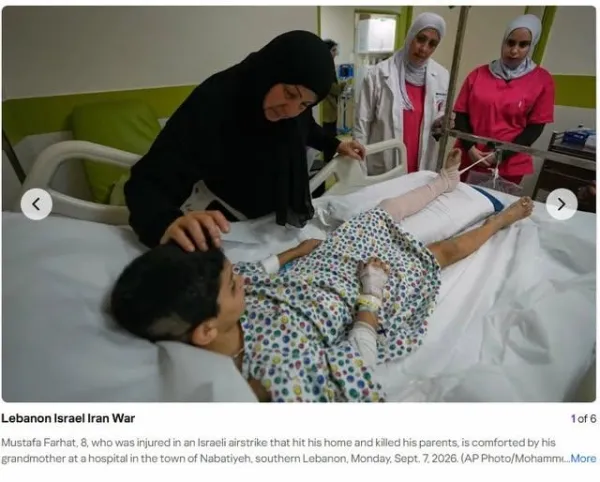
Israeli forces carried out two airstrikes early Monday, September 7, on Kfar Rumman, a village in southern Lebanon, killing at least 12 people and wounding others, including children, according to Lebanese authorities. Among those caught in the attack was eight-year-old Mustafa Farhat, who was injured when an Israeli strike hit his home and killed his parents.
He did not choose this war. He did not carry a weapon. He did not launch a rocket or send a drone across a border. He was a child who should have been thinking about school, playing with his siblings and growing up surrounded by his family. Instead, Mustafa is now facing life without his parents, with his grandmother left to care for him. That is what a military strike means when it lands on a family home.
The killing of civilians—especially children and their families—cannot simply be dismissed as an unfortunate consequence of war. It demands accountability.
When an attack strikes a residential building and children and other civilians are killed or wounded, there must be an independent examination of what happened and whether the attack complied with international humanitarian law.
Israel has said that its strikes were aimed at Hezbollah targets, including a person allegedly involved in transferring weapons. But a military assertion does not end the matter. International humanitarian law requires parties to a conflict to distinguish between civilians and military targets and to take precautions to protect civilians. Where there are credible allegations of violations, there must be an independent investigation and accountability. And Kfar Rumman is not an isolated story.
Israel committed 10,000 ceasefire violations in Lebanon
Since the November 27, 2024, ceasefire agreement between Israel and Lebanon, Israeli strikes and other military actions have continued across southern Lebanon. The Arab American Institute has cited more than 10,000 Israeli ceasefire violations, attributing that figure to United Nations reporting. UNIFIL, the United Nations peacekeeping mission in Lebanon, has also repeatedly reported incidents involving Israeli forces that have endangered civilians and peacekeepers.
Why is this not receiving the attention it deserves?
Lebanon is home to communities that have already experienced decades of displacement, poverty and war. Among them are Palestinian refugees and Syrian refugees, many of whom have themselves been displaced by conflict. UNRWA estimates that approximately 222,000 Palestine refugees were residing in Lebanon as of February 2025, while approximately 248,000 Palestine refugees and family members accessed UNRWA services. Lebanon has 12 recognized Palestinian refugee camps. UNHCR says the Lebanese government estimates that approximately 1.5 million Syrian refugees are living in Lebanon. Many of these people have already lost their homes once. Some have been forced to flee more than once.
I know this reality personally
Last November, Israel struck Ain al-Hilweh Palestinian refugee camp, the very camp where I was born and raised. At least 13 people were killed and dozens wounded in the November 2025 attack, according to Lebanese authorities and subsequent reporting. Israel said it was targeting a Hamas facility.
Israel committed a new massacre in Ain al-Hilweh Palestinian refugee camp in Lebanon
For me, Ain al-Hilweh is not simply a location on a map. It is home. It is where I grew up.
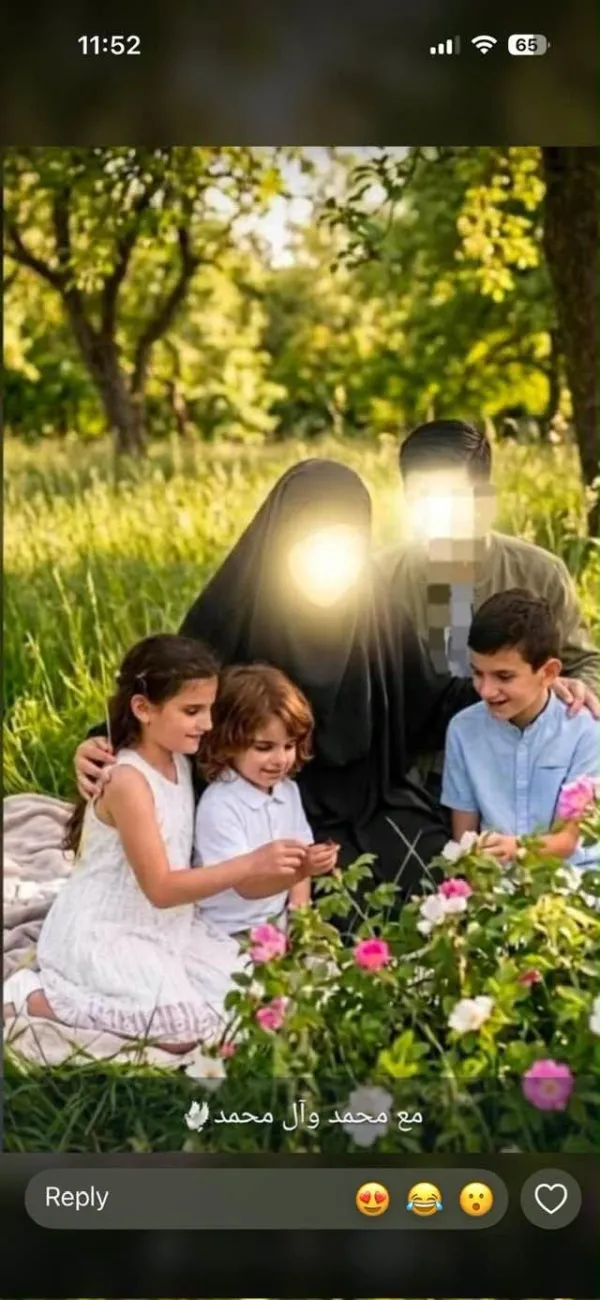
And now I am watching another Lebanese family lose parents and children to an airstrike. That is why the photographs of Mustafa's family are so difficult to look at.
One photograph shows a family together in an ordinary moment: parents and children surrounded by flowers and sunlight. Other shows three of the children standing together, holding balloons.
Then there is Mustafa. In the hospital, injured and being comforted by his grandmother.
The contrast should stop us.
Before the bombing, they were a family.
After the bombing, Mustafa became an eight-year-old survivor carrying a loss no child should have to carry.
We should not have to know whether a dead child was Lebanese, Palestinian, Israeli, Christian, Muslim, Sunni, Shi'a or Druze before deciding that the child's life mattered.
Children are not combatants.
Families are not military targets.
And the death of civilians should never be normalized as simply another day's casualty count.
The world should demand an independent investigation into what happened in Kfar Rumman. If violations of international humanitarian law occurred, those responsible should be held accountable.
Mustafa Farhat was eight years old.
He was not a combatant.
He deserved to grow up.
Mahmoud El-Yousseph is a Palestinian American freelance writer and retired U.S. Air Force veteran. He writes about U.S. foreign policy, Middle Eastern affairs and justice