
No Government Should Have the Power to Kill
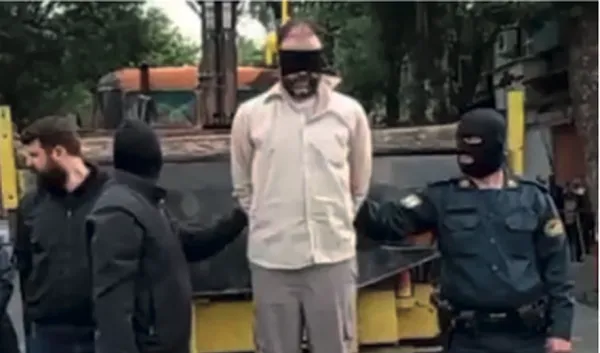
The death penalty is not justice. It is the deliberate, calculated killing of a human being by a government that claims moral authority through law. Every execution is an assertion that the state possesses not only the power to govern life, but the authority to extinguish it. The consequences of granting governments that authority are visible around the world today.
According to Amnesty International, at least 2,707 people were executed across 17 countries in 2025 — the highest figure recorded in more than four decades. Executions rose by 78% in a single year. Iran alone carried out at least 2,159 executions, more than double its previous year’s total and roughly 80% of all recorded executions worldwide.
The global rise in executions was not driven by justice systems becoming more effective or societies becoming safer. It was driven largely by authoritarian governments using death as an instrument of fear, repression, and political control. No country illustrates this more clearly than Iran.
The Islamic Republic of Iran has transformed execution into a machinery of state terror. Under the language of religion and legality, the regime uses the death penalty to silence dissent, intimidate protesters, punish minorities, and preserve its grip on power. Charges such as “enmity against God” and “corruption on earth” have become political weapons rather than legal principles. Demonstrators, journalists, activists, and dissidents are routinely treated not as citizens with rights, but as enemies to be eliminated.
The purpose is not justice. The purpose is obedience.
Mass execution is not a sign of state strength. It is often evidence of political insecurity. Governments that rely on fear, public hangings, and death sentences to maintain control reveal not confidence in their legitimacy, but anxiety about losing it.
Since the Woman, Life, Freedom uprising in 2022, Iranian authorities have sharply escalated executions as a means of suppressing unrest and preventing future resistance. Human-rights organizations have documented repeated allegations of torture, forced confessions, denial of legal counsel, and rushed trials in Revolutionary Courts designed to produce predetermined outcomes rather than impartial justice.
When a government kills political prisoners, it exposes the true nature of capital punishment. The death penalty ceases to be about public safety and becomes what it has always risked becoming: a tool of state violence against inconvenient people.
Iran’s judiciary no longer functions merely as a legal institution. In political cases, it increasingly operates as an extension of authoritarian power. Executions are carried out publicly, confessions are broadcast on state media, and death sentences are used to send a message to millions of citizens: dissent can cost you your life. Amnesty International reported that Iran carried out at least 11 public executions in 2025 alone.
The death penalty depends on a dangerous fiction — that the state can kill fairly, rationally, and without corruption. History repeatedly proves otherwise.
No justice system is infallible. Witnesses lie. Prosecutors conceal evidence. Police extract confessions through intimidation or torture. Courts are influenced by politics, ideology, and public pressure. A prison sentence can be reversed. An execution cannot. Once the state kills an innocent person, the error becomes permanent because the victim can never be restored.
Even in democracies, capital punishment reflects inequality more than justice. The poor are sentenced to death more often than the wealthy because they cannot afford powerful legal defenses. Minorities are disproportionately condemned. Prosecutors seek death unevenly depending on race, geography, and politics. The system claims neutrality while repeatedly producing unequal outcomes.
Supporters of the death penalty often argue that some crimes are so horrific that execution is the only proportionate punishment. Others claim executions deter violence and provide closure to victims’ families. But decades of evidence have failed to show that executions reduce violent crime more effectively than life imprisonment. If killing prisoners does not meaningfully protect society better than permanent incarceration, then what remains is not necessity, but vengeance institutionalized through law.
And vengeance is a dangerous foundation for justice.
The contradiction at the center of the death penalty is impossible to ignore: governments condemn killing while systematically organizing killing themselves. The state teaches that murder is wrong by preparing gallows, execution chambers, and nooses with bureaucratic precision. As Albert Camus observed, the death penalty is “the most premeditated of murders.”
Execution also fundamentally denies the principle of human dignity. A civilized society should recognize that human worth does not disappear even after terrible crimes. Punishment may remove liberty in order to protect society, but execution destroys the individual entirely. Life imprisonment restricts existence; the death penalty extinguishes it.
This is why opposition to capital punishment extends across political, religious, and philosophical traditions. Human-rights advocates reject it because it violates the sanctity of life. Religious leaders reject it because redemption becomes impossible once life is destroyed. Philosophers reject it because no government should possess irreversible authority over life and death.
History gives humanity every reason to fear that power.
The rise in executions in 2025 should alarm anyone who believes in human dignity, freedom, or the rule of law. Iran’s execution campaign demonstrates how quickly the death penalty becomes a mechanism for authoritarian control once governments decide certain lives are disposable. Mass execution is not a sign of state strength. It is often evidence of political insecurity — a government attempting to preserve authority through fear because it no longer trusts legitimacy alone.
A state that claims the authority to kill dissidents, protesters, and political opponents inevitably places its own survival above justice itself.
The death penalty does not heal victims’ families. It does not resurrect the dead. It does not create a more just society. What it creates instead is a system in which governments claim the authority to decide whose life still has value and whose does not. History shows how easily that power becomes corrupted by fear, ideology, prejudice, and political repression.
A society committed to justice should seek accountability without abandoning humanity. The state may have the authority to imprison, but it should never possess the authority to kill.