
No Kings, No Clerics, No War: From One Pit Into Another
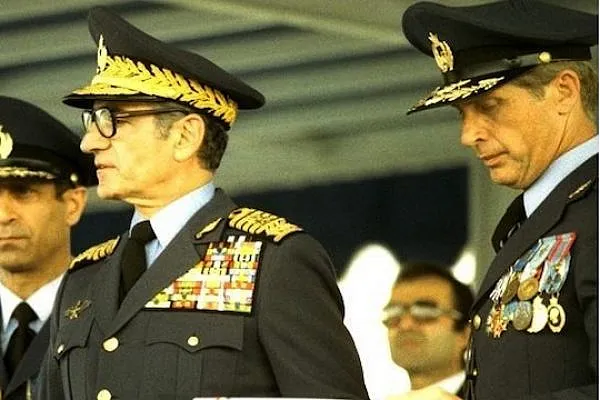
Savak via 972 magazine
The recent resurgence of monarchist politics around Reza Pahlavi—son of the former shah of Iran—particularly following the war involving the United States, Israel, and Iran, has intensified debates about the future of political opposition to the Islamic Republic. For many Iranians, opposition to the current system has long been rooted in demands for democracy, political pluralism, social justice, and freedom from authoritarian rule. The central question, therefore, is not simply how to oppose the Islamic Republic, but what kind of political order should replace it.
For more than four decades, Iranians have resisted a deeply repressive state through labor organizing, feminist movements, student activism, minority struggles, journalism, and mass protest movements. Thousands have been imprisoned, tortured, killed, or forced into exile for demanding political freedoms and democratic accountability. Many critics of the monarchist revival argue that these struggles were never intended to culminate in the restoration of another centralized and hereditary political order. As an Iranian proverb suggests, it is like escaping one pit only to fall into another.
From this perspective, the revival of monarchism represents not a democratic alternative, but an attempt to rehabilitate an authoritarian political tradition under the language of national salvation and stability. A democratic future for Iran cannot be built through nostalgia for monarchy or externally supported political projects disconnected from grassroots movements inside the country. Instead, the demands expressed across major protest movements have consistently centered on a secular and pluralistic political system grounded in popular sovereignty, civil liberties, and institutional accountability.
Part of the support for Reza Pahlavi among segments of the Iranian diaspora can also be understood in the context of deep frustration with the Islamic Republic, the fragmentation of opposition movements, and the absence of a widely accepted alternative leadership structure. For some supporters, Pahlavi represents less a demand for the literal restoration of monarchy than a symbolic rejection of the current system and a desire for political stability, secular governance, and national cohesion after decades of repression, economic crisis, and uncertainty. This support has also been shaped by revisionist interpretations of the Pahlavi era that emphasize modernization, state secularism, economic development, and relative social freedoms while downplaying authoritarian repression, censorship, political inequality, and the role of institutions such as SAVAK.
In addition, many diaspora Iranians remain deeply distrustful of ideological opposition organizations, particularly groups associated with the revolutionary politics of 1979, armed movements, or factional exile politics, which they view as ineffective, internally divided, or disconnected from broader society. For some, nostalgia for pre-revolutionary Iran is therefore tied not only to monarchy itself, but to memories—whether lived or inherited—of a more internationally connected, socially open, and economically stable society compared to the conditions that emerged after the revolution.
Ironically, a common feature shared by both the current ruling system and the resurgence of monarchist politics is their reliance on paternal and personalized conceptions of political legitimacy centered around “savior” figures. In the Islamic Republic, political authority is grounded in the doctrine of Velayat-e Faqih (Guardianship of the Islamic Jurist), a particular interpretation of Twelver Shia Islam that became the ideological and constitutional foundation of the post-1979 state. Under this framework, the Supreme Leader functions as the highest religious and political authority, exercising extensive influence over the military, judiciary, state media, foreign policy, and major strategic institutions. Although the Islamic Republic contains elected bodies, their legitimacy remains constrained by conformity to the ideological authority of the ruling jurist and clerical establishment rather than deriving exclusively from popular sovereignty.
Critics of the contemporary monarchist revival argue that it reproduces a similar logic in secular form. In their view, monarchist politics often derives its symbolic authority less from democratic organization or grassroots participation than from dynastic inheritance, media-driven image construction, and support from foreign political networks. From this perspective, both systems subordinate democratic pluralism to paternal models of leadership in which legitimacy becomes concentrated around a singular figure presented as the guardian or savior of the nation.
These concerns are closely tied to broader historical anxieties about personality-centered politics in Iran. Many Iranians remain skeptical of political movements organized around charismatic “savior” figures because of the historical memory of Ruhollah Khomeini and the aftermath of the 1979 Revolution. Prior to the revolution, Khomeini presented himself as a figure who would defend freedom, justice, pluralism, and political participation. For many Iranians, however, those promises were followed by the consolidation of clerical rule and the suppression of political dissent. This experience contributed to enduring distrust toward movements built around charismatic leadership without strong democratic safeguards and institutional constraints.
Some observers compare these concerns to the political trajectory of Abdel Fattah el-Sisi in Egypt. Sisi initially rose to power amid widespread frustration with instability and political polarization, presenting himself as a figure capable of restoring national order. His rise, however, was followed by the consolidation of an expansive security state, intensified repression, and severe restrictions on political opposition. For critics of monarchist revivalism in Iran, the Egyptian example reinforces fears that political movements centered on restoring stability through a dominant national figure can ultimately weaken democratic development rather than strengthen it.
The renewed visibility of monarchist politics has also been amplified by diaspora media ecosystems and social media networks. Critics argue that coordinated online campaigns, influencer networks, and algorithmic amplification have helped construct an image of broad national legitimacy around Pahlavi that does not necessarily reflect Iran’s fragmented and contested political reality. The disproportionate visibility of monarchist narratives has often overshadowed grassroots democratic organizations, labor activists, feminist movements, student organizers, and ethnic and religious minority groups that have operated inside Iran under severe repression for decades.
Some scholars and observers have also questioned the organizational substance of Pahlavi’s initiatives. In recent years, he has introduced projects such as the Phoenix Project, the New Covenant initiative, and the “Iran Prosperity Project” (IPP), presenting them as frameworks for political transition and national reconstruction. Many scholars and political activists, however, have dismissed these initiatives as media-driven campaigns lacking organizational continuity, institutional depth, and meaningful roots inside Iran. Some critics have additionally raised concerns about the consistency of Pahlavi’s commitment to pluralism, pointing to rhetoric in which segments of the opposition were characterized as “enemies” or “separatists.”
At the same time, critics argue that some networks of royalist cyber activists and monarchist supporters have engaged in harassment campaigns, intimidation, and online attacks against other dissident groups, journalists, activists, and political organizations outside Iran. These accusations have reinforced concerns among opponents who argue that parts of the monarchist movement reproduce authoritarian political tendencies while claiming to oppose authoritarianism itself.
Concerns about foreign alignment have further intensified these criticisms. In 2023, Reza Pahlavi visited Israel, met with Israeli officials including Prime Minister Benjamin Netanyahu and then-Intelligence Minister Gila Gamliel, and publicly emphasized cooperation between Iranian and Israeli opposition to the Islamic Republic. During Israel’s 12-day war with Iran, Gamliel published statements and social media posts expressing support for regime change in Tehran while directly referencing Pahlavi. Following Israeli strikes on Iran, Pahlavi released messages encouraging supporters inside the country to mobilize against the government during the military confrontation.
For many critics, this alignment crossed a major political and moral threshold. They argue that opposition to the Islamic Republic does not justify support for military actions that result in Iranian civilian casualties, nor should war be treated as an opportunity for political transition. Critics further contend that democratic legitimacy cannot emerge from external military pressure or wartime destabilization, particularly in a region with a long history of foreign intervention and imposed political outcomes.
At the core of these debates lies a larger question about the nature of democratic transition in Iran. The rejection of the Islamic Republic does not automatically resolve the problem of authoritarianism. For many Iranians, genuine democratic transformation requires more than replacing one ruling ideology or political elite with another. It requires institutions capable of protecting civil liberties, minority rights, political participation, and accountability regardless of who holds power.
A democratic future for Iran therefore requires more than the rejection of authoritarian rule; it requires the construction of durable institutions capable of preventing the concentration of power in any individual, dynasty, military structure, or clerical authority. Such a framework would need to be grounded in a secular constitution, free and competitive elections, an independent judiciary, freedom of expression and association, protections for ethnic and religious minorities, gender equality, and meaningful decentralization of political power. A successful transition would also depend on strengthening independent civil society, labor organizations, professional associations, and local democratic institutions so that legitimacy emerges from broad public participation rather than charismatic leadership or foreign sponsorship. Only a system built on pluralism, accountability, and the rule of law can prevent the reproduction of authoritarianism under different names.
The future of Iran cannot be built through war, foreign-backed political engineering, dynastic restoration, or paternal authoritarianism presented in democratic language. A democratic political order can emerge only through participatory politics, independent civil society, and the collective struggles of ordinary people inside Iran rather than through foreign missiles, imported political figures, or the concentration of legitimacy around any single individual or inherited political identity.