
This Is Not an Evacuation. It Is Forced Displacement
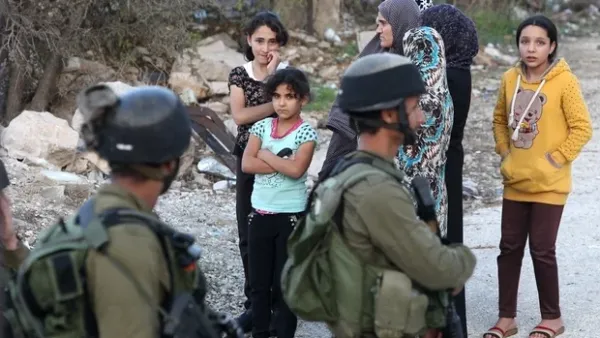
Israeli Prime Minister Benjamin Netanyahu ordered security forces to cordon off Hebron and prepare for a wider closure of the West Bank. Photo credit: Middle East Eye.
Last Friday, Israeli forces began demolishing buildings and forcibly displacing Palestinian families in Al-Khalil (Hebron), in the Israeli occupied West Bank. Reports indicate that more than 250 families were ordered to leave their homes. Residents reportedly were forbidden from taking their vehicles or belongings and were allowed only one bag of clothing per family.
Source: Online Palestine English
The operation followed an attack by two Palestinian gunmen at a military checkpoint near Hebron that killed two Israeli soldiers and wounded others. The gunmen were also killed. Prime Minister Benjamin Netanyahu vowed to impose a lockdown and destroy buildings in the area.
The attack was deadly, but how can the actions of two gunmen justify demolishing homes and uprooting hundreds of families, many of whom had no connection to the attack?
This is not simply an evacuation. It is forced displacement and raises grave concerns about collective punishment, which is prohibited under international humanitarian law and can constitute a war crime.
There is also a troubling double standard. Palestinian residents and rights advocates have repeatedly criticized Israeli authorities for failing to adequately hold violent Jewish settlers accountable for attacks on Palestinians. Yet when Palestinian gunmen commit a deadly attack, entire communities face sweeping restrictions, displacement, and the destruction of homes.
In America, we recognize a fundamental principle: guilt is not inherited, and people should not be punished for crimes they did not commit.
Meanwhile, Gaza faces another threat to civilian survival. Online Palestine English reported that flour shortages and restrictions on commercial shipments were putting the territory's remaining bakeries at risk of closure. According to the head of Gaza's Bakers Association, only seven of the 20 bakeries remained operational, and they could close within 48 hours without new flour supplies. The shortages have already forced several bakeries to shut down, threatening access to bread as food prices soar and humanitarian needs grow.
Source: Online Palestine English
These shortages raise urgent concerns about the use of starvation as a method of warfare. Civilians must not be deprived of food as a means of pressure or punishment.
Whether in Hebron or Gaza, Palestinian civilians deserve protection, dignity, and access to the basic necessities of life. The international community must condemn collective punishment, demand accountability, and insist that Palestinian lives and rights receive the same protection afforded to everyone else.
Mahmoud El-Yousseph is a Palestinian freelance writer and retired U.S. Air Force veteran. He writes about U.S. foreign policy, Middle Eastern affairs, and justice.