
Once We Had a Dog… A Tale of Loyalty, Power, and the Price of Serving the Master
Before you read this piece—and I hope you will enjoy it—I want to make three points.
First, Arabs love parables. It is almost in our DNA. We use stories and metaphors, often without explaining exactly what they mean. We tell the story. We make the comparison. And then we leave the rest to the reader or the listener.
Second, before anyone thinks this is an attack on dogs, it is important to understand that dogs carry somewhat different cultural meanings in different societies. What follows is a cultural note, not a judgment about dogs.
And third, the story at the heart of this piece was written by my friend Nayef Lemon, a former mayor of a beautiful city in southern Jordan and a former member of the lower house of the Jordanian Parliament. I asked his permission to use and adapt his story for this article, and he graciously agreed. So, thank you, Nayef.
Now, about the dogs.
In many Western societies, dogs are beloved companions. They are members of the family. They are loved for their loyalty, affection, and companionship.
In traditional Arab life, particularly in villages and pastoral communities, dogs were also familiar animals, but their relationship with people was somewhat different. Dogs had jobs. They guarded homes. They protected livestock. They accompanied shepherds. They assisted in hunting.
In other words, their value was often connected to what they did.
That reality found its way into Arabic language and literature. Dogs could symbolize loyalty and vigilance. But they could also be used metaphorically to describe obedience, aggression, humiliation, or unquestioning service to a master.
Islamic tradition also recognizes useful roles for dogs, particularly in hunting, guarding, and protecting livestock. Qur’an, the holy book of Islam, tells the story of the Companions of the Cave, whose dog remained faithfully at the entrance to their cave. At the same time, Islamic jurisprudence has particular rules regarding ritual cleanliness after contact with a dog’s saliva. These practices influenced Muslim attitudes toward keeping dogs inside the home, particularly simply as pets.
None of this should be understood as encouraging cruelty toward dogs. Quite the opposite. Islamic teachings emphasize kindness toward animals, and well-known Prophetic traditions tell of people receiving God’s mercy because they showed mercy to a thirsty dog.
So, the dog in this story is both a dog and something else.
It belongs to the village. But it also belongs to the world of metaphor.
The story is about loyalty, usefulness, power, privilege, masters, and those who spend their lives serving them.
In other words, this story is not really about dogs.
Which brings us to our dog.
As you read, you might want to envision some very important people—or at least people who consider themselves very important. You may recognize some who occupy the airwaves these days, whether on CNN, Fox News, or Newsmax. You may think of others whose reels and videos occupy our feeds in the Arab world or elsewhere.
I will leave that part to you. You imagine.
Yes, once we had a dog.
It wasn’t one of those pampered dogs.
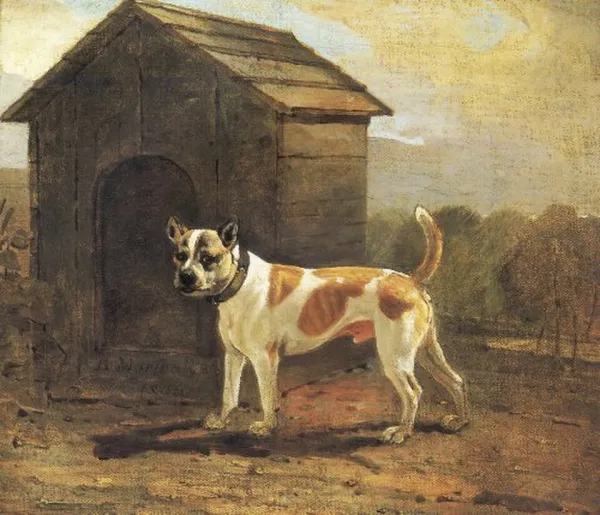
It was a lowly, scruffy mongrel—not the kind dog lovers would proudly show off, walk around with, kiss, hug, or cuddle. To be fair, he seemed to consider himself somewhat civilized.
Whenever the season came for heading out into the open country and staying in traditional tents, he refused to come with us. He preferred hunger and staying behind in the village without his owners to venturing out into the wilderness.
We didn’t take particularly good care of him either. After all, he didn’t provide us with many essential services.
His bark wasn’t frightening. He never attacked anyone. If one of the boys threw a stone at him, he would make a sound closer to a scream than a bark, spin around in circles, and bite at his own tail.
Technically, we could say we had a dog. Although he was probably closer to a cat.
But some of our relatives and neighbors had dogs far more imposing and assertive than ours.
They barked fiercely. They prowled around. They ran. They charged. Sometimes they attacked.
And after every performance, they would look back at their owners, trying to determine whether the master was pleased.
Perhaps there would be a reward: A crust of bread. A bone. Some scraps of food.
And whenever they were rewarded, they became even more enthusiastic. They barked louder. They ran faster. They charged at passersby and anyone unfortunate enough to use the road.
Usually, they stopped short of biting. Terrorizing and intimidating people was enough.
Some dogs, however, became so vicious that they actually confronted people and bit them. Dogs of this kind usually met tragic ends. Sometimes their own owners got rid of them because the dogs dragged them into feuds, disputes, and problems they no longer wanted.
At other times, those who had been attacked took matters into their own hands.
Either way, the dog eventually paid the price.
And then there were the old dogs.
They had lost much of their ability to move and bark. They would lie stretched out in the shade, growling and grumbling from where they lay.
They still tried to play some sort of role. Perhaps they wanted to please their owners. Perhaps they wanted to remind them of what they had once been capable of doing in their younger days.
But their owners were no longer impressed. They were thrown a little food and given very little attention.
That is often the lot of the ordinary mongrel, even after spending years performing tasks his owner needed and depended upon.
The pampered dogs—the dogs of ornament, status, and prestige—are another matter entirely.
They receive the highest levels of care and attention. They are given the finest food and the softest places to sleep. They are taken for walks. They are groomed. When they become sick, they receive the best treatment.
They are kissed, hugged, and cuddled. They lounge grandly in luxury cars and enjoy comforts our village dog could never have imagined.
We know of no role these dogs play in guarding homes or accompanying flocks of sheep. Perhaps they perform other duties. Perhaps very important duties. Perhaps those duties are simply not publicly disclosed. We cannot say for certain.
Still, dogs remain dogs, no matter how different their breeds, types, or pedigrees may be.
And according to some traditions, a vessel from which a dog has drunk is washed seven times—one of them with dirt.
That is the story of our friend’s dog—and of all those other dogs, including the fortunate ones who somehow found themselves on the higher rungs of society.
Some are fed scraps. Others dine well.
Some sleep in the dust. Others sleep on cushions.
Some stay outside the gate. Others ride beside their masters in expensive cars.
Some earn their keep by guarding the house.
Others earn it by barking at whoever their master points to.
But eventually, they all discover the same thing.
As long as the dog is useful, the master remembers him.
As long as he can bark, intimidate, attack, entertain, defend, flatter, or simply make his master feel important, there will be food in the bowl. Perhaps even a hand upon his head.
Then comes the day when the bark grows weak. The legs slow down. The teeth are no longer sharp. The tricks no longer amuse. The master calls, and the dog can no longer perform as he once did.
And suddenly, all those years of loyalty count for very little.
The scraps become fewer. The hand that once stroked him begins reaching for another dog. A younger one, perhaps. A louder one. One more eager to please.
The old dog waits, perhaps believing that loyalty should be repaid with loyalty.
But that is where the old dog made his mistake. He confused his loyalty to the master with the master’s loyalty to him. They were never the same thing.
The master valued the dog because the dog was useful. And once that usefulness disappeared, all those years of barking, running, attacking, defending, and pleasing the master became memories.
The dog may spend his entire life learning who his master is, never realizing that the master always knew exactly what the dog was: Useful. Until he wasn’t. And then one day, the bowl goes to another dog. The master moves on.
And before long, no one even remembers that once…
We had a dog.
Does any of this ring a bell? Just wondering…