
Opposing War in Iran Is Not Supporting Tyranny
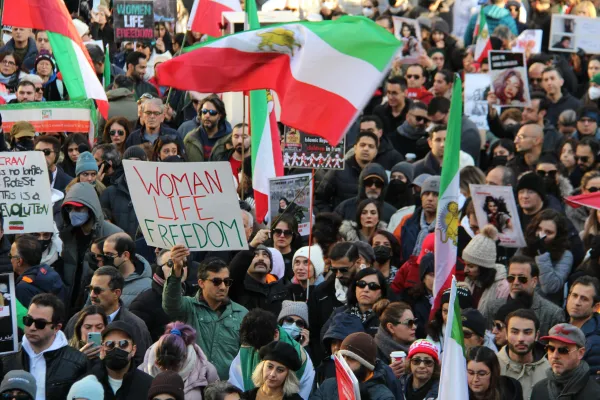
Iranian people, credit Sima Ghaffarzadeh, pexels.com
Opposing the ongoing war against Iran by the United States and Israel is not the same as supporting the Iranian regime. This distinction is critical, yet often deliberately obscured. The conflict, which began in late February 2026, is framed by Washington and Tel Aviv as a response to security threats, but its deeper aim is coercion: to force the regime in Tehran to accept a regional order shaped by American and Israeli interests. Rejecting this war is not an endorsement of authoritarianism—it is a rejection of the false notion that freedom can be delivered through bombs and missiles.
Some political currents—conservative Christian Zionist networks, pro-Israel advocacy organizations along with defense industry lobbying groups in the United States which recently described as “Plutozionism”, and segments of the Iranian diaspora aligned with Reza Pahlavi—promote the idea that military intervention in Iran is a path to regime change. By framing war as liberation, they suggest that foreign force can shortcut decades of internal struggle. This is a dangerous illusion.
Historical experience suggests that foreign military intervention more often entrenches authoritarian rule than dismantles it. In countries such as Iraq, Libya, Syria, and Afghanistan, external intervention has frequently fueled instability, strengthened hardline elements, and enabled regimes or armed factions to mobilize nationalist sentiment, suppress dissent, and cast themselves as defenders against foreign aggression.
Pro-Pahlavi groups and individuals, in presenting this war as a path to freedom, effectively serve as instruments of U.S. and Israeli strategic interests. Their vision of Iran often harkens back nostalgically to the era of Reza Pahlavi’s father, when the monarchy ruled with an iron fist and subordinated Iranian sovereignty to foreign influence, particularly American and Israeli agendas—until it was overthrown by the 1979 revolution. By romanticizing this past, they overlook the fundamental lesson of Iranian history: authoritarian regimes imposed or protected by external powers rarely foster genuine democracy, and external coercion cannot replace the agency of the Iranian people themselves.
The reality is that the Iranian people have been fighting for freedom and democracy for more than forty years. From mass protests to acts of civil defiance, they have resisted authoritarian rule, demanded political reform, and sought civil liberties—all under extraordinary risk. Their struggle is internal and organic; it cannot be imposed from abroad without undermining the very movement it seeks to support. War may, in fact, entrench the regime, giving it cover to silence dissent and justify repression.
The objectives of the United States and Israel are fundamentally different from the aspirations of Iranians. Diplomatic demands and military pressures—such as dismantling nuclear capabilities, limiting missile programs, and relinquishing strategic regional control—reveal a pursuit of geopolitical dominance, not genuine support for democratic transformation. The war prioritizes submission over justice, control over freedom, and compliance over self-determination.
Meanwhile, the human costs of this war are mounting. Civilian casualties, widespread destruction, regional instability, and global economic disruptions—particularly in energy markets—fall hardest on ordinary people, not political elites. The conflict is already destabilizing the region and deepening humanitarian suffering, showing that war is a blunt instrument with consequences that far outweigh its claimed strategic benefits.
Opposition to the war is therefore a principled stance. It defends the agency of the Iranian people, respects their decades-long struggle for democracy, and rejects a strategy that conflates coercion with liberation. Supporting the Iranian pursuit of freedom does not mean endorsing the regime; it means recognizing that meaningful change must come from within.
This war serves neither Iranians nor Americans. It lacks congressional authorization and broad international backing, raising serious questions about its legitimacy. It is fueled by a manufactured crisis, whispered from Netanyahu to Trump. Rather than responding to an immediate and widely recognized security threat, it appears driven by strategic calculation and coercive aims. The consequences—civilian casualties, regional destabilization, and wider global insecurity—underscore the human and political costs of such an approach. Opposing it, therefore, is not only a principled stance but a necessary one.
In short, opposing this war is not defending tyranny—it is defending democracy itself. The Iranian people are not pawns in a geopolitical chess game. Their fight for dignity, liberty, and self-determination demands solidarity that empowers them, not bombs that enforce submission. True support for Iran’s future lies in amplifying their struggle, not imposing external agendas.