
From the People’s Game to a Global Commodity: Capitalism and the Transformation of Soccer
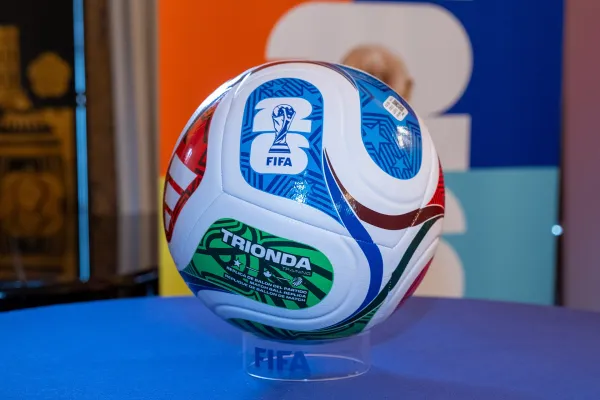
FIFA World Cup 2026 Draw Reception UKinUSA from Washington, D.C., USA, CC BY-SA 4.0 <https://creativecommons.org/licenses/by-sa/4.0>, via Wikimedia Commons
Soccer was once known as “the people’s sport.” It required little equipment, could be played almost anywhere, and belonged as much to factory workers and neighborhood children as to professional athletes. For generations, it symbolized community, accessibility, and collective identity. In the twenty-first century, however, soccer has evolved into a vast global industry intertwined with international markets, media conglomerates, and corporate sponsors. The soaring prices associated with the 2026 World Cup illustrate a troubling reality: attending the world’s most celebrated tournament is becoming increasingly unattainable for ordinary fans. In many respects, capitalism has transformed what was once considered the world’s most universally accessible sport.
Historically, soccer’s appeal lay in its simplicity. A ball and an open space were enough to play. Clubs emerged from working-class neighborhoods, immigrant communities, and local organizations that viewed the sport as a source of pride, solidarity, and belonging. Stadiums served as communal gathering places where social and economic differences faded in the face of shared loyalty to a team. Soccer’s global popularity grew precisely because of this accessibility. Unlike sports that required costly equipment or specialized facilities, soccer flourished in both affluent nations and developing countries. It was a game that truly belonged to everyone.
That accessibility began to erode as commercialization accelerated in the late twentieth and early twenty-first centuries. Broadcasting rights became multibillion-dollar commodities. Sponsorship agreements tied clubs to multinational corporations, while elite teams transformed into global brands that marketed merchandise and entertainment across continents. Ownership increasingly shifted from local communities to wealthy investors, private equity firms, and sovereign wealth funds. Soccer was no longer merely a sport; it had become a highly profitable product within the global entertainment marketplace.
The 2026 FIFA World Cup, co-hosted by the United States, Canada, and Mexico, exemplifies this transformation. Ticket prices for many matches have reached levels that place attendance beyond the reach of countless lifelong supporters. In some cases, attending the tournament has become a luxury experience reserved for the wealthy rather than a celebration open to all fans. A Category 1 ticket to the World Cup final was priced at $10,990 when FIFA released a new batch of tickets in April. For international supporters traveling from outside North America, the total cost of attending the final could easily exceed $10,000 once airfare, accommodations, meals, and local transportation are included.
For those seeking a premium experience, FIFA has offered front-row seats for as much as $32,970. When attending a single match requires an expenditure comparable to a year's rent or a substantial portion of an average worker's income, participation becomes a privilege rather than a shared cultural experience. Corporate hospitality packages and premium seating occupy growing portions of stadiums, catering to affluent consumers and business clients while limiting access for ordinary supporters. The fans who built the culture of the sport are increasingly excluded from its grandest stage.
The 2026 World Cup also demonstrates how globalization has exposed soccer not only to market forces but also to political forces that shape who can participate in the sport's most important event. Debates have emerged over which nations should be permitted to participate, reflecting ongoing geopolitical conflicts and diplomatic tensions. At the same time, questions have been raised about whether the United States, as a host nation, will be able to guarantee timely visa access for players, referees, journalists, and supporters from every qualifying country. While FIFA promotes the World Cup as a global celebration that transcends political divisions, concerns surrounding travel restrictions, immigration policies, and international relations demonstrate that the tournament is becoming entangled in broader political debates. As a result, access to the World Cup is shaped not only by economic barriers but also by political considerations beyond the control of the sport itself.
This trend reflects a broader pattern of capitalist influence. Profit maximization shapes decisions about scheduling, sponsorships, media rights, and tournament expansion. Matches are often scheduled to accommodate global television audiences rather than local supporters. Clubs undertake international preseason tours to expand brand recognition and capture new markets. Players themselves have become valuable financial assets, bought and sold in transfer markets worth billions of dollars. Although these developments have increased soccer’s visibility, profitability, and global reach, they have also widened the gap between the sport’s commercial elite and its grassroots foundations.
This raises a fundamental question: what happens when the people’s sport becomes increasingly inaccessible to the people? If soccer is experienced primarily as a luxury product rather than a communal activity, it risks weakening the passion and sense of belonging that have long fueled its global appeal. The atmosphere that makes soccer unique is created not by corporate sponsors or VIP guests, but by generations of devoted supporters whose loyalty has sustained clubs and competitions through triumphs and setbacks alike.
Under a capitalist model, fans are increasingly viewed not as members of a sporting community but as consumers whose value is measured by their spending power.
Today, describing soccer as “the people’s sport” carries a measure of irony. Millions still play the game in streets, parks, and local fields around the world, yet the highest levels of competition are increasingly governed by market forces. The extraordinary cost of attending events such as the 2026 World Cup reveals how deeply commercialization has reshaped the sport. What was once a game celebrated for its accessibility is increasingly becoming a premium entertainment product.
The future of soccer may depend on whether the sport can balance commercial success with the accessibility and communal spirit that made it the world's game in the first place.