
Power Before Liberty: A Critique of Iranian Monarchism
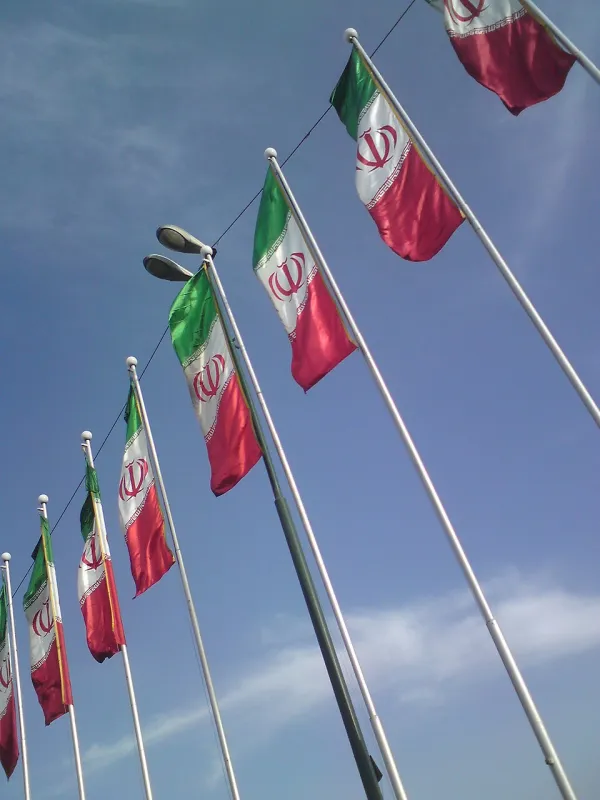
In recent months, Iranian opposition politics has increasingly been dominated by monarchist currents presenting themselves as democratic alternatives to the Islamic Republic. Their rhetoric emphasizes national unity, historical continuity, legitimacy, and liberation from clerical rule. Yet beneath the democratic language lies a deeper tension—one that has less to do with policy preferences than with the meaning of freedom itself. The question is not whether monarchists oppose the Islamic Republic. It is whether they oppose unconstrained power.
Calls for foreign-backed regime change, demands for exclusive recognition as the legitimate voice of the Iranian people, and systematic harassment of rival dissidents are not incidental excesses. They are signals. They point to a conception of politics in which authority must be unified, dissent disciplined, and legitimacy established prior to consent. What is being contested is not the existence of domination, but its rightful owner.
Political conflict is often framed as a struggle between tyranny and freedom. The framing is comforting—but misleading. History shows that many movements resist who rules without resisting the idea of unchecked rule itself. They speak the language of liberty while resisting the limits that liberty requires. As a result, rulers fall, faces change, and the structure of power remains intact.
It would be a mistake, however, to ignore the role of material inequality and external power in shaping revolutionary politics. Extreme economic concentration, class domination, sanctions, foreign intervention, and geopolitical pressure distort political choice and often force movements into defensive centralization. Societies marked by poverty, dependency, and external threat do not deliberate under fair conditions. Yet acknowledging these constraints does not resolve the central problem. Material injustice and foreign coercion explain why power is seized; they do not justify why it remains unconstrained once seized. History shows that inequality and external pressure are routinely invoked not only to defeat old rulers, but to silence new rivals and indefinitely postpone accountability. The appeal to necessity becomes permanent, and emergency hardens into structure.
This pattern is not unique to Iran. It is one of the most persistent features of revolutionary politics.
The French Revolution offers one of the earliest examples. It began with demands for liberty and popular sovereignty, yet many of its leaders never believed that freedom meant restraint on power. Robespierre did not view terror as a tragic necessity but as an instrument of virtue. Unity was valued over pluralism, moral certainty over dissent. The monarchy fell, but power was not limited—it was recentered. Absolute rule was no longer justified by bloodline, but by righteousness. Napoleon’s dictatorship was not a betrayal of the revolution so much as its logical continuation.
The Russian Revolution followed a similar trajectory. The Bolsheviks opposed Tsarist autocracy, but they never supported political freedom as such. Lenin rejected pluralism, competitive elections, and independent institutions outright. Power was to be exercised by a revolutionary vanguard on behalf of the people, with freedom deferred until society had been reshaped. Tyranny was rejected only as bourgeois tyranny—not as domination itself. What emerged was not liberation, but a one-party totalitarian state.
The same logic appeared in many anti-colonial movements. Colonial rule was rightly condemned as illegitimate and humiliating. Yet in cases such as Zimbabwe under Mugabe, Algeria after independence, or Vietnam after foreign withdrawal, sovereignty replaced subjugation without securing citizen autonomy. Power was centralized, dissent was managed, and liberation hardened into authority. The foreign ruler vanished; the machinery of domination endured.
Iran’s own 1979 revolution illustrates the distinction with particular clarity. The uprising united liberals, leftists, and Islamists against an authoritarian monarchy, but the faction that ultimately prevailed never regarded democracy as a final system. Legitimacy flowed not from popular consent but from divine authority and guardianship of the “correct” moral order.
Taken together, these cases reveal a crucial distinction. Tyranny concerns who rules; freedom concerns how rule is constrained. Opposition to a tyrant does not imply commitment to liberty. One can resist oppression while fully accepting unconstrained power—so long as it is exercised by the “right” people.
This distinction exposes the central problem with contemporary Iranian monarchism. Monarchist politics does not begin with the question of institutional restraint; it begins with the question of rightful authority. Legitimacy is grounded not in procedures that bind rulers, but in historical continuity, national symbolism, or personal inheritance. Democracy, when invoked, functions less as a system of limitation than as a mechanism of ratification.
This is why monarchist discourse treats pluralism as fragmentation, dissent as sabotage, and uncertainty as danger. Rivals are accused of weakening the nation, aiding the regime, or sowing chaos. Unity is elevated to a moral imperative, while constitutional safeguards are deferred to an unspecified future. Authority must first be consolidated; restraint can come later.
History suggests the opposite. When power is consolidated in the name of restoration, it rarely volunteers to limit itself. Monarchism, even in its constitutional vocabulary, carries a pre-democratic logic: the ruler precedes the rules. Elections are imagined as confirmations of a settled hierarchy, not as instruments capable of overturning it.
The difference between a movement that seeks freedom and one that seeks power can be revealed by a single question: would you accept rules that could remove you from power? If the answer is no—if elections, courts, and opposition are acceptable only when they affirm your authority—then opposition to tyranny is merely situational. It rejects domination only when domination is exercised by others. Freedom begins where power agrees to bind itself.
Contact: Nader Rahimi
Email: nrahimi@bu.edu