
Proximity
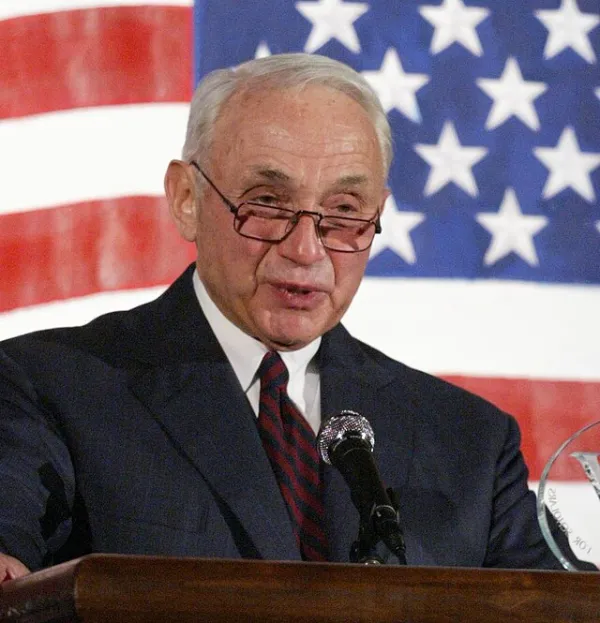
For decades, if you moved inside the corridors of American Jewish leadership, one name surfaced again and again.
On fellowship diplomas.
On donor walls.
On the resumes of rabbis, federation executives, nonprofit leaders, and Israeli public officials.
Wexner.
Inside institutional Jewish life, the name carried weight. It signaled seriousness. Investment. A belief that Jewish leadership deserved real resources.¹
Outside those corridors, the name may mean almost nothing.
And that difference matters.
Because proximity functions differently depending on where you stand.
For the unaware, Leslie Wexner is the founder of L Brands, the retail empire behind companies such as The Limited and Victoria’s Secret, and for decades one of the most influential and well-funded architects of Jewish leadership development in North America.
He is scheduled to testify before the House Oversight Committee on February 18, a development that places renewed public scrutiny on his relationship with Jeffrey Epstein.
I. The Relationship
Leslie Wexner met Jeffrey Epstein in the late 1980s. Reporting reconstructs the introduction through Wexner’s financial adviser, Harold Levin, who later warned him not to trust Epstein.²
The warning did not hold.
Within a few years, Wexner granted Epstein sweeping power of attorney over his personal finances. Not informal access. Legal authority.³
“Why would one of the most powerful retail magnates in America grant that level of control to a man with such an opaque resume, and what did that decision enable?”
What we know is this: the relationship elevated Epstein. With Wexner’s authority behind him, Epstein gained credibility, access, stature. He moved in elite circles not as a fringe figure but as someone representing enormous wealth.⁴
Proximity made him powerful.
Wexner has said he severed ties in 2007, calling Epstein’s conduct “abhorrent,” and has stated that Epstein misappropriated significant funds from him.⁵ No criminal charges have ever been filed against Wexner in connection with Epstein’s crimes.
And yet the story does not simplify.
After Epstein’s 2019 arrest, internal FBI documents described Wexner in draft materials as a “co-conspirator” or “unindicted co-conspirator,” while also noting limited evidence.⁶
Recent document releases have renewed scrutiny about how authority and assets unwound, and how deeply entangled the relationship had been before it ended.⁷ Wexner is scheduled to testify before the House Oversight Committee on February 18, two days after this article is published, which makes this an urgent moment to consider what proximity has meant, and what it has cost. Silence in advance of that testimony would be its own statement.
So which is it?
Peripheral or central?
Deceived or complicit?
Naïve benefactor or something more morally complicated?
The public record refuses to resolve cleanly.
When narratives refuse to resolve, people freeze, and leaders often retreat behind the word ‘institution’ as though it were weather instead of a series of human decisions.
The silence is not neutral. It is a choice.
And choices, especially by leaders, shape culture.
II. When Proximity Gets Physical
Proximity in this story is not abstract.
Maria Farmer has alleged in sworn filings that she was assaulted by Epstein and Ghislaine Maxwell inside a residence owned by the Wexners in New Albany. Wexner has not been criminally charged in connection with Epstein’s crimes and has denied wrongdoing. The allegation remains just that, an allegation, but it places proximity not only in financial documents but in physical space.⁸
In unsealed civil litigation, Virginia Giuffre alleged under oath that Epstein trafficked her to Wexner multiple times. No criminal charges resulted from that claim, and federal investigators have stated that they lacked sufficient corroboration to pursue charges against high profile men beyond Epstein and Maxwell.⁹
And beyond Epstein, Wexner has fought a subpoena connected to the Ohio State Richard Strauss sexual abuse litigation during the period he chaired the Board of Trustees. A federal judge rejected his motion to quash and ordered him to testify.¹⁰
None of this establishes criminal guilt, but it deepens proximity, and proximity carries moral consequence.
III. Inside, Outside: My Proximity
If you are not embedded in Jewish institutional life, by which I mean federations, seminaries, national leadership programs, and major communal nonprofits, the name Wexner may mean little. The philanthropic infrastructure of Jewish leadership is largely invisible from the outside. Inside, it is not invisible at all.
As a college Hillel president, still in the closet, I watched peers move toward elite rabbinical and leadership tracks that felt off limits to me. I did not even consider certain fellowships. I had already absorbed the message that Jewish leadership, at its highest levels, was not built with someone like me in mind.
I never applied for the Wexner Fellowship in those early years. It did not feel like rejection. It felt like realism.
Once I was in rabbinical school, openly gay, the outsider message became explicit. I was told that being out might jeopardize relationships between our Rabbinical College and other institutions, that I could be a liability, that I needed to be contained.
In other words, authenticity carried institutional risk.
That moment clarified something for me. Institutions do not only form leaders. They protect access. They calculate exposure. They weigh influence against manageability.
If I was being evaluated in those terms, I doubt I was the only one.
Over time, I noticed how certain credentials were brandished not only as opportunities but as distinctions. Fellowship names conferred aura, signaled entry into important rooms, and sometimes hardened into hierarchy. The subtext was subtle but real. This is what formation looks like. This is what serious leadership looks like.
I admired the scale and seriousness of what Wexner-backed programs built. I still do. I also felt ambivalent about what prestige can do to humility and what proximity to power can quietly demand in return.
For me, what has remained is a life with one foot inside and one foot outside the system, close enough to see how influence circulates, far enough to feel its edges, fully comfortable in neither place. I have benefited from this ecosystem, as many of us have. I have also stood at arm’s length from it. Both are true.
And that is one reason why proximity, for me, is not theoretical.
IV. The Mirror
It would be easier if this story were simple.
It is not.
Jewish tradition speaks of yetzer ha’tov and yetzer ha’ra, the impulse to align with our highest values and the impulse to align with our basest drives. Both reside in the same human being.
Leslie Wexner invested deeply in Jewish leadership and also granted extraordinary authority to a man who exploited children. Both are true.
He has been named in civil complaints connected to alleged abuse occurring on property he owned. He has denied wrongdoing. No criminal charges have been filed.
What makes this story difficult is not simply the existence of harm but its coexistence with extraordinary investment in Jewish leadership. These realities sit side by side; they do not cancel each other out, they intensify each other.
Rabbi Danya Ruttenberg reminds us that teshuvah requires naming harm plainly, accepting responsibility without deflection, making restitution where possible,…and restructuring systems so that the harm cannot recur, for example, changing who holds power, who conducts investigations, and how survivors are heard.¹¹
Waiting for perfect clarity can become its own form of avoidance.
Proximity carries responsibility.
V. What Survivors Hear
The CDC reports that at least one in four girls and one in thirteen boys in the United States experience sexual abuse in childhood.¹²
I am one of them.
I write as a survivor of assault as a young teenager. Survivors do not demand perfection. We look for courage. We look for signs that power will not automatically protect itself.
Recently, during a congressional hearing, Attorney General Pam Bondi was asked to address victims seated behind her. She did not. She did not turn toward them. She ignored them.¹³
For some, it was procedural.
For survivors, it was familiar.
Trauma research calls this institutional betrayal, when institutions fail to respond supportively and compound harm.¹⁴
Legal innocence and moral inquiry are not the same thing. The absence of criminal charges does not erase patterns. When multiple survivors describe harm connected to the same networks of power, even if courts do not produce convictions, leaders do not get to hide behind legal technicalities. Listening is not a verdict. It is a moral obligation. To dismiss repeated testimony simply because it falls short of prosecution standards is to confuse the courtroom with the conscience.
If Jewish spiritual leaders cannot be seen wrestling honestly with power what do survivors conclude? If our spiritual institutions cannot show that they know how to listen and act differently, survivors learn that proximity to power still outweighs proximity to harm.
VI. A Call-In
Many of you reading this are Wexner Fellows. You were shaped by these programs. You built friendships, careers, and communities through that network. You carry gratitude. You also carry influence.
That is not a reason for shame.
It is a reason for leadership.
An entire leadership ecosystem was built on the premise that Jewish life deserves serious, thoughtful, morally capable leaders. We were selected for discernment, for moral intelligence, for the capacity to hold complexity.
This is the kind of moment that tests whether that formation means what we said it did.
I do not write this from a place of purity. It is quite likely that I would have applied for and sought to be part of the Wexner Fellowship had I not internalized, early on, that I was an outsider. I have admired what these programs built. I have benefited from the same communal ecosystem. I am not outside proximity.
And this is not only about us.
There are survivors sitting in our pews and classrooms who are watching how we handle power.
What matters now is whether we are willing to sit with proximity in public and name what we know and what we do not know.
Trust is shaped in moments like this, and this is how it is broken.
What we do next becomes part of who we are.
Epilogue
This article was meant to name the challenge and the proximity. To do so without offering a path forward feels incomplete.
In a companion essay, I will attempt to outline what response and teshuvah might require of us. Not absolution. Not certainty. But movement toward integrity.
Others have begun raising these questions. I am grateful for that. I hope more of us, especially those of us who are men and who hold institutional authority, will be willing to step into this conversation publicly. Leadership in moments like this is not about perfection. It is about courage and responsibility.
If we are willing to face what is difficult together, we may yet move from being largely frozen toward responsibility, and perhaps, over time, toward restoration.
Original at Substack: Thanks for reading The Deep End! This post is public so feel free to share it.