
The Ritalin-Adderall Boom Thirty Years Later
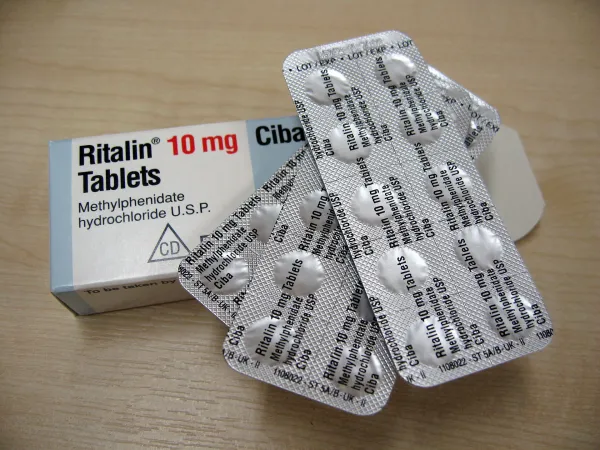
Photo by Adam, Creative Commons Attribution 2.0 Generic license, unmodified
Exactly thirty years ago on May 15th,1996, the New York Times published a front-page lead to a report of a boom in Ritalin production and use in children which was raising ethical questions in some quarters. The story was based upon an article I had published earlier that month in the Hastings Center Report (a bioethics journal).
I had been in practice for more than a dozen years as a behavioral pediatrician (I wrote my first Ritalin prescription in 1980) when in 1993 I noticed a clear uptick in the number and type of children being referred to my office for the evaluation of attention-deficit/hyperactivity disorder (ADHD). Heretofore, the children I had seen for this problem were at least six years old and no older than eleven or twelve. Now the children were much younger and older and had fewer symptoms and impairment than the previous generation of hyperactive kids. My experience was confirmed by the Bureau of Narcotics Control in Sacramento who reported a tripling of prescription rates for methylphenidate (Ritalin) and dextroamphetamine (Dexedrine). Adderall (an amphetamine salts combination) was introduced only in 1996.
That New York Times story put me in reporters’ Rolodexes (remember them?) for a couple of years when they wanted an expert who prescribed but didn’t necessarily think Ritalin was the answer to all kids’ problems. I also was the closing speaker that year, in December 1996, to the Drug Enforcement Administration (DEA)’s first national conference on stimulant prescriptions for ADHD. I’ve been on the Ritalin/Adderall beat, so to speak, ever since.
Prescription stimulants can be highly effective and even life-changing for some patients with significant ADHD symptoms. But the effects of stimulants are not limited to persons with ADHD. They will improve focus, improve efficiency and performance (in sports as well) for virtually anyone. While criteria for ADHD sound fairly straightforward, the line between a variation of normal and disorder is very blurred and subjective. And with adults it’s most often based upon self-report.
Ritalin is a Schedule II controlled substance, as is all the stimulant drugs for ADHD. The DEA authorizes a national quota on each generic drug for which drug manufacturers in the United States are limited to producing. In 1997 the DEA quota for methylphenidate was 13,827 kilograms. In 2026 the total was 78,258, an increase of 465 percent.
Amphetamine production in 1996 was 2280 kilograms. In 2026, 85,286 kilograms were authorized mostly for Adderall and Adderall XR – extended release. Vyvanse, a combination of an amino acid and amphetamine didn’t exist in 1996. In 2026, 51,290 kilograms were authorized. If you add up all the stimulant production for 2026 you get 226,411 kilograms (250 tons), the approximate equivalent of 664 mg. of legal speed or about a month’s supply of a daily 20 mg. Adderall tablet for every man, woman and child in America.
The great growth in stimulant production is mirrored by the increase in the number of children and adults diagnosed with ADHD (stimulants are also prescribed for narcolepsy but the amount is miniscule). In 1997, an estimated 4 million or 6.1 percent of children under 18 were diagnosed with ADHD. In 2022, 7.1 million or 11.4 percent received the diagnosis, an increase of about 75 percent. But the enormous increase in use in stimulants has been for the adult diagnosis of ADHD, which in 1996 was just becoming recognized. The best estimates of adults currently with ADHD are 15.5 million, 6 percent or 1 in 16 adults in the U.S.
Thirty years later there was another DEA event on prescription stimulants. Last week the DEA held a nationwide webinar for 3000 professionals called The Rise in Stimulant Prescribing. Katie Laughery, a DEA official, detailed five characteristics of an abuse epidemic that both the opioid and stimulant drugs share in this country. However, the prescription of opioids has significantly declined in the last several years while rates of stimulant prescriptions continue to rise.
The last time anyone took a close look at prescription stimulant abuse was in 2015-2016. Then approximately a projected 400,000 adults met criteria that constituted addiction to prescription stimulants. Rates of prescription stimulants have only continued to rise in the last ten years so that number is undoubtedly higher.
A difference between opioid and stimulant abuse is stimulants alone rarely lead to an overdose death. But half of the opioid victims also had stimulants in their blood when they died. Stimulant addiction whether to methamphetamine, cocaine or Adderall leads to very erratic behavior and has many physical consequences. And unlike for the opioids there is no medical treatment or substitutes for stimulant abuse/addiction.
Back in 1996 I was aware of adult ADHD, and I worried about a potential abuse problem. Historically there had been three waves of prescription stimulant abuse since amphetamine was synthesized in 1929. The last previous epidemic was in the 1970s and 1980s when women were prescribed amphetamines by their doctors for dieting and weight control (it really didn’t work). Many women became addicted. The prescribing patterns of doctors only changed with high negative publicity in doctors being sued and/or losing their licenses. An activist DEA commissioner and an increasingly vocal feminist position about body image were also critical in halting the epidemic.
No one knows exactly how much money is being made by the drug industry though estimates of sales of $10 billion in 2024-25 have been suggested. Thirty years ago, America debated whether stimulant prescribing for children was expanding too quickly. Today similar questions confront us but on a vastly larger scale. Now the market includes millions of adults, billions in corporate revenue, and stimulant production levels unimaginable in 1996. It will be much more difficult this time around to get a handle on America’s love of legal speed.
Lawrence Diller, M.D. has practiced behavioral/developmental pediatrics in Walnut Creek, CA for the past forty-five years. He is the author of several books and multiple articles on children and psychiatric medications. See his website docdiller.com for a full bibliography.