
Ryan Clark and the Politics of Blackness
Former Pittsburgh Steelers All-Pro safety and Super Bowl champ Ryan Clark was recently fired from his job as an analyst for ESPN. The news caught many in the sports world by surprise and has become a topic of conversation within some African American circles. To add insult to injury, Clark was notified of his release midway through his segment. When he did not return after a break in the action viewers were left wondering what occurred.
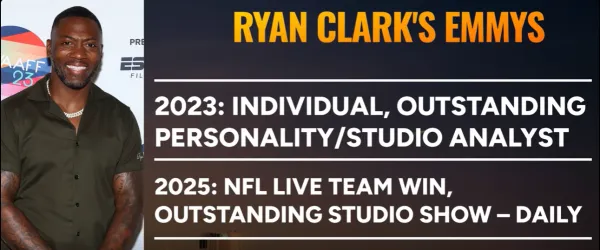
The Emmy award winning analyst’s dismissal from a job he held for eleven years has many people scratching their heads. Was Clark’s firing racially motivated? Given the number of other employees (many of whom are nonblack) that were let go, the racial argument is a difficult but not impossible one to make. Was it merely a cost-cutting-move? Had Clark fallen out of favor with the brass? Did someone have an axe to grind? These are the kinds of questions that have been floated since Clark’s abrupt departure from ESPN.
While being interviewed on the Pivot Podcast by co-hosts and former NFL players Fred Taylor and Channing Crowder, Clark revealed a conversation he had with Stephen A. Smith (who took him to lunch) and disclosed that a certain executive may have had a dislike for him. But why? Clark was dedicated to his craft. He is articulate and was always professional in his presentation. Some considered him among the best football analysts in the business. Some comments he has made on air over the years may have struck certain audiences as controversial, yet few can deny they were always intellectually sound and based in fact.
Some are convinced Clark’s firing is an example of buck-breaking, a term commonly associated with slavery and Jim Crow which meant resorting to physical and psychological dominance over rambunctious and uppity Black men for the purpose of keeping them in line. Rambunctious Black men were those who were apt to plot an escape or an uprising or question the way things were done on the plantation. Uppity is a reference that was thrown around during the Jim Crow era to describe those black men who walked erect and with head held high. They were often financially successful and/or were not in the habit of genuflecting in the presence of white men. They were polite and respectful to those they encountered regardless of race, but they bowed and shuffled to no white man.
For years, white men crafted and promulgated the narrative that the reason so many Black men were lynched was because of their lust for white women. White men would have the world believe that Black men were risking being put to death for the temporary pleasure of white flesh. The freedom-fighting giant and suffragist that was Ida B. Wells-Barnett dispelled that myth as her research disclosed that most Black men were lynched because white men deemed them either rambunctious or uppity. White men couldn’t stomach the idea of Black men who thought for themselves and were not just doing for themselves and their families but prospering while doing so. Anyone who conducts research on lynching in America without consulting Wells-Barnett’s groundbreaking 1895 manuscript The Red Record is doing him or herself a disservice. Wells-Barnett’s work remains housed in the Special Collections and Archives department at Fisk University where it has been for decades.
The thinking among some within the African American community is that Clark’s firing just goes to show how in the 21st century whites, in this case white executives, are willing to tolerate a dignified and prideful Black man so long as he knows his place and remains there which includes showing the appropriate level of deference. He may have informed opinions about worldly matters especially as they pertain to race or racial oppression, however he knows to keep his thoughts to himself or risk the sting of the lash which is presented in forms considered acceptable to a 21st century white majority. He is expected to smile that Colgate cheese-eating-grin showing as many teeth as possible, laugh heartedly even in the absence of humor and present himself in an accommodating and unassuming manner, meaning in a way that white men find nonthreatening to their false sense of manly security. These are the kind of African Americans many whites find palatable and are willing to keep around for as long as they are deemed useful. Rare is a Black person who is unaware of these dynamics.
“Go along to get along”, “don’t rock the boat” are adages often heard among African Americans who function daily in majority white spaces. There are consequences for rocking the boat and the consequences for rocking the boat often look significantly different (translation: harsher) when done by someone Black than when done by someone white. It is for this reason many African Americans are forced to present a face to the white world that resembles that which Ohio native Paul Laurence Dunbar waxed poetically about in his 1895 poem We Wear the Mask:
We wear the mask that grins and lies,
It hides our cheeks and shades our eyes,--
This debt we pay to human guile;
With torn and bleeding hearts we smile,
And mouth with myriad subtleties.
Why should the world be over-wise,
In counting all our tears and sighs?
Nay, let them only see us, while
We wear the mask.
We smile, but, O great Christ, our cries
To thee from tortured souls arise.
We sing, but oh the clay is vile
Beneath our feet, and long the mile;
But let the world dream otherwise,
We wear the mask!
“Go along to get along” and “don’t rock the boat” are not just adages but survival strategies that many Black folks have employed since time immemorial. Every Black person does this to some extent. In the minds of some African Americans this keeps them safe and in the good graces of whites or so they think. However, the minute a Black man expresses himself in a way that gives some whites the impression he’s a race man the clock starts counting down to his eventual removal. The minute a Black man begins to point to racial matters in a manner that makes those whites who can hire and fire uncomfortable he becomes expendable. The minute he begins to challenge white decisionmakers in ways that some find strident or less than genteel he is viewed as incorrigible and impossible to work with at which point his fate becomes a fait accompli.
Whether any of these dynamics played any part in Clark’s firing is difficult to know for certain, but these are the kinds of conversations that are being had in some quarters of the African American community.
Judson L. Jeffries, PhD, MPH, is professor of African American and African Studies at The Ohio State University.