
Settler Violence Has to Stop on the West Bank
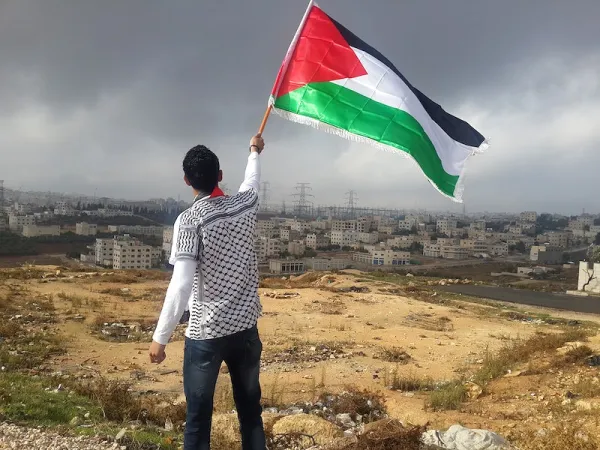
Perhaps it is too much to hope, but maybe we’ve hit an inflection point over state sponsored attacks by Israeli settlers in the West Bank. There are signs Israeli elites are sending a message to the government that a line has been crossed, even as its policy and performance has been to abet the activity with its military and guns.
Grabbing at straws, the following have all emerged recently:
- A meme has gone global of a settler viciously beating a Palestinian’s 18-month-old dog with two sticks without rhyme or reason.
- Nimrod Novick, a former senior adviser to the late Israeli prime minister Shimon Peres, a distinguished fellow with the Israel Policy Forum, a member of the leadership of Commanders for Israel’s Security and a fellow with the Economic Cooperation Foundation, argued in the lead editorial in The Economist that “settler violence is undermining Israel’s security, its moral fabric and its global standing.” The online headline called Israel’s actions, “terror.”
- Israel’s president, Isaac Herzog, delivered an unusually harsh indictment of what he described as “a terrible process of brutalization” creeping into Israeli society including a surge of “mob” violence by Jews against Palestinians in the occupied West Bank and the abuse of detainees in Israeli custody.
- After condemnation by European nations of released videos, even the hardline prime minister, Netanyahu, chastised his far-right minister for threatening and abusing members of humanitarian flotillas trying to provide support for beleaguered Palestinians after they were arrested, but before being deported back to their home countries.
These are telltale signs that Israel’s establishment, long sidelined by the current ultraright government, is finally reacting with some horror over Israel’s policies encouraging settler violence and colonialism, as well as its diminished statute in global affairs because of its militarism and lack of boundaries in attacks on Gaza and civilians after the Hamas massacre. Despite these signs, it’s hard to be too hopeful for peace. As the Wall Street Journal reported,
"Israel now holds around 59 percent of the enclave, up from 53 percent at the start of the U.S.-brokered cease-fire in October, people familiar with the matter said. The increase came as Israeli troops moved the so-called yellow line, which marks the division of territory, deeper into Hamas’s zone of control, the people said. In at least one spot, Israel moved the line forward a few hundred yards to intersect with Salah al-Din Road, Gaza’s main north-south artery."
In the West Bank, one on-the-ground report after another indicates that the settlers seizing Palestinian land, attacking them in their homes and fields, and forcing them to move is fully supported by not only the Israeli government, but the Israeli military. The presence of armed, uniformed Israeli soldiers backing illegal settler activity and brutality plants the seeds as Novik argued for worse division and enmity for the future from displaced and exploited Palestinians. Reports from our affiliate, the Palestinian Struggle Support Committee, working with villages in the West Bank, are disheartening.
Until the Israeli government and military start policing and protecting peaceful Palestinian families in the West Bank and protecting them from settlers, as Novik argues “settler violence is undermining Israeli security, its moral fabric and its global standing.” The same can be said about finally establishing limits in Gaza as well. This isn’t out of control, but state policy. The policy needs to change not just in the talking points, but on the ground.