
A Shadow Settlement: The $1.776 Billion Question of Accountability
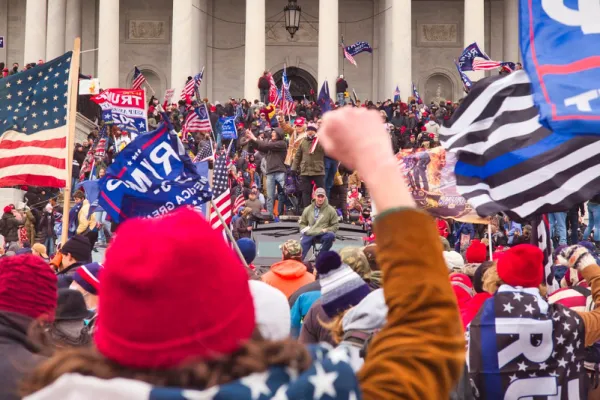
Photo by Brett Davis
Corruption, greed, and the strategic misuse of executive pardons have converged in a chilling display of unaccountability, exemplified by the recent, secretive dismissal of a $10 billion IRS lawsuit in favor of a $1.776 billion "Truth and Justice Commission" fund. This multi-billion dollar slush fund, drawn directly from the Treasury Department’s permanent Judgment Fund without congressional oversight, is managed by an executive-appointed committee that operates in total shadows, signaling a dangerous shift where public assets are repurposed to insulate political allies from the consequences of the January 6th insurrection.
In a move that has drawn sharp condemnation from legal experts and lawmakers, President Donald Trump has filed to dismiss his $10 billion lawsuit against the IRS and the Treasury Department. While the dismissal closes one legal chapter, it opens a far more troubling one: a reported $1.776 billion "President Donald J. Trump Commission" fund, finalized by his Department of Justice.
The $1.776 Billion "Independence" Fund
The specific figure—1.776 billion—is no coincidence. It serves as a calculated nod to the year 1776, a date central to the patriotic imagery Trump plans to center in this summer’s 250th anniversary celebrations. Yet, critics argue this "patriotism" masks a darker reality: a multi-billion dollar slush fund drawn from the Treasury Department’s Judgment Fund—a permanent appropriation that requires no congressional approval. This fund would be administered by a commission of five members, all appointed by the Attorney General and removable by the President without cause. With no obligation to disclose its decision-making processes, the commission faces almost zero oversight.
While the settlement reportedly bars Trump from receiving direct payments, entities associated with him are not excluded, and the fund is widely expected to compensate those the administration deems "victimized" by the government, including those prosecuted for their roles in the January 6th attack on the U.S. Capitol.
A Legacy of January 6th
The specter of January 6th looms large over this arrangement. On that day, a mob of Trump’s supporters, spurred by his "stolen election" rhetoric, breached the Capitol, assaulted over 174 law enforcement officers, and forced lawmakers to flee for their lives. By creating a fund that could effectively reward those involved in that insurrection, the administration is accused of turning the levers of justice into tools of personal retribution and political patronage.
Nearly 100 House Democrats have already filed an amicus brief, labeling the settlement a "blatant self-dealing" maneuver. As Representative Joe Neguse and others have pointed out, there is no meaningful distinction here between Trump the President and Trump the private citizen—a conflict of interest that strikes at the very heart of government accountability.
The Cost of Disloyalty
The administration’s reach extends far beyond the IRS settlement. In the political arena, the cost of opposing Trump continues to rise. In Louisiana, Senator Bill Cassidy—one of the seven Republican senators who voted to convict Trump during his second impeachment trial—recently lost his seat in the Republican primary. His defeat was driven by a coordinated effort from Trump’s political machine, marking the end of a career for a lawmaker who dared to challenge the former President’s role in the January 6th insurrection. In Kentucky, the primary race involving Representative Thomas Massie has seen a staggering $32.6 million poured into the contest, making it the most expensive House primary in U.S. history.
Who is Watching?
We are witnessing a profound erosion of transparency. With the "1776" fund being orchestrated in secret and billions in "dark" campaign money flooding the primaries to oust dissenters, the mechanisms of accountability are being systematically dismantled. The question remains: who is paying attention? When the Department of Justice can be used to settle personal litigation with taxpayer money, and when the primary process can be weaponized with tens of millions of dollars to punish political independence, the American people are being asked to foot the bill for their own disenfranchisement. In the face of such clear corruption, silence is not just an oversight—it is complicity.
As we continue to track these developments and the intersection of executive power and accountability, do we see a path forward for citizens to reclaim the transparency necessary to sustain our republic?
Miss Cynthia Brown is the founder of the Heartbeat Movement Inc., Chair of the Protecting Ohioans Constitutional Rights Committee and the Ohio Coalition for Police Accountability and Transparency OCEQI.ORG