
Shadow Wars and Strategic Miscalculations: How the U.S. and Israel Misjudged Iran
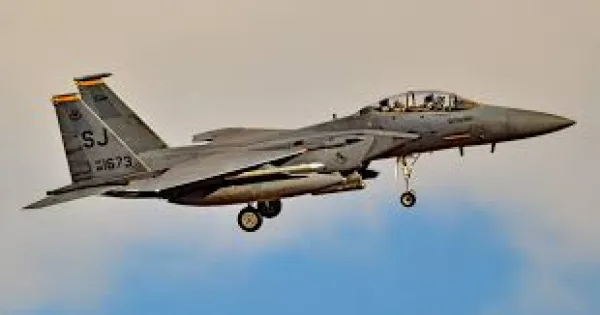
F-15E: Tomás Del Coro from Las Vegas, Nevada, USA, CC BY-SA 2.0 <https://creativecommons.org/licenses/by-sa/2.0>, via Wikimedia Commons
Overnight on April 3, 2026, the war between the United States and Iran entered a dangerous new phase. An F-15E Strike Eagle was shot down over Iran, with images of its wreckage quickly circulating online. On the same day, an A-10 Warthog was struck by Iranian fire over the Persian Gulf; its pilot managed to reach Kuwaiti airspace and was rescued.
The fate of the second crew member from the downed F-15E remained uncertain. While one pilot was recovered after a seven-hour rescue effort involving U.S. helicopters—one reportedly hit by small arms fire—Washington offered no clear statement on whether the missing airman had been killed, captured, or was in hiding, even as U.S. aircraft continued operations over the crash site.
Two days later, on April 5, the Pentagon and CIA reportedly launched a high-risk rescue mission. U.S. accounts described special operations aircraft entering Iran to extract the downed airman. Iranian media, however, portrayed a far more ambitious operation. According to these reports, four U.S. C-130 Hercules aircraft from the elite 160th Special Operations Aviation Regiment—the “Night Stalkers”—along with Delta Force personnel, were deployed to an abandoned airstrip in the Mahyar Plain near Isfahan. Fighter jets and drones supported the mission, which allegedly aimed to strike key Iranian missile installations and a heavily fortified underground enrichment site.
The landing zone was highly sensitive, near major missile bases and within reach of one of Iran’s most secure nuclear facilities, deep within mountainous terrain and largely inaccessible to conventional airstrikes. Each Hercules aircraft reportedly carried deployable MH-6 and AH-6 “Little Bird” helicopters, enabling rapid, precise assaults.
According to Iranian accounts, the operation unraveled immediately. Local security forces, reportedly alerted by intelligence and civilian reports, approached the site. Before U.S. helicopters could become operational, Iranian commandos opened fire. Simultaneously, Iranian air defenses engaged U.S. aircraft, forcing a withdrawal. The two remaining Hercules planes were targeted by heavy machine-gun fire during landing, preventing further action. Faced with exposure and escalation, U.S. forces aborted the mission. Surviving personnel were evacuated, and remaining equipment destroyed to prevent capture.
Iranian narratives framed the episode as a dramatic failure, likening it to the 1980 Tabas Desert incident, another aborted U.S. operation on Iranian soil. A secondary diversionary mission nearby also reportedly failed to change the outcome.
What is clear, despite competing narratives, is that the episode represents a dangerous escalation. A mission that may have begun as a personnel recovery effort appears to have carried far broader strategic ambitions.
Mounting pressure—both abroad and at home—combined with reports of downed aircraft and a failed operation inside Iran, quickly shaped the U.S. political response. The illusion of a quick, decisive victory—and even the prospect of regime decapitation—began to unravel. On the morning of April 7, 2026, Donald Trump took to social media, urging Iran to agree to a deal by a self-imposed deadline and warning that “a whole civilization will die tonight” if the conflict continued. The statement signaled not strength, but strain—an indication that developments on the battlefield were not unfolding as planned.
By April 8, the tone had shifted. Trump accepted a tentative two-week ceasefire between the United States and Israel based on a reported Iranian 10-point proposal. In a subsequent post, he framed the decision as a success, claiming that the U.S. had “already met and exceeded all military objectives.”
Reflecting on the ceasefire, a stark narrative emerges. Iran did not initiate the war; it remained defensive and, by its own account, preserved its territory, population, and resources. For Benjamin Netanyahu, however, the stakes were existential. This was intended to be a decisive confrontation—one that would eliminate key adversaries, consolidate Israeli dominance, and advance a long-articulated vision of regional supremacy. That ambition now appears severely diminished, if not altogether unviable.
The coming weeks are critical, as an outcome of this scale is unlikely to pass without significant regional and global repercussions. The United States and Israel will seek to reinterpret events to preserve credibility, while segments of Arab media—particularly in the Gulf—may attempt to downplay Iran’s claims of success. Yet these narratives matter less than the broader perception taking hold.
The United States and Israel inflicted significant military, economic, and civilian costs, yet they fell short of their central objectives. They did not defeat Iran, did not affect regime change, did not destabilize the country internally, and did not fully impose their will in strategically vital areas such as the Strait of Hormuz. In that sense, the ceasefire is not merely a pause—it signals a shift in the regional balance of power and raises fundamental questions about the reliability of longstanding security alignments.
The war has also deepened divisions within the Iranian opposition—especially in the diaspora—forcing a reassessment of political assumptions and strategies. For many Iranians, war is associated not with liberation as some advocated, but with destruction, displacement, and long-term national setback. Yet opposition to conflict does not imply support for the government; many remain sharply critical of the Islamic Republic due to repression, economic mismanagement, and social restrictions. As a result, a large segment of society holds a dual stance: opposing both the regime and foreign military intervention.