
Simulated Democracy: Money, Maps, and Manufacturing Representation
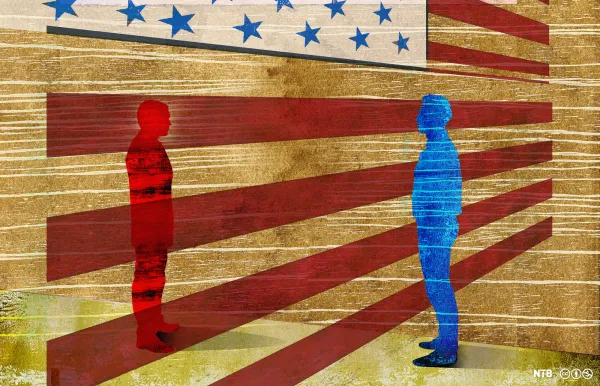
Gerrymandering can ensure victory in an election. creative commons image Roy Scott | Credit: Ikon Images
In the United States, democratic legitimacy has increasingly been undermined by structural distortions embedded within the electoral system itself. For decades, political influence has been shaped not only by voters, but also by lobbying networks, corporate financing, and concentrated donor power, enabling organized economic interests to exert disproportionate influence over public policy. As a result, many scholars and observers have characterized the American political system less as a fully representative democracy and more as a plutocratic or post-democratic order, in which formal democratic institutions persist while substantive political power becomes increasingly concentrated among economic elites.
More recently, American democracy has been described by some critics as “Plutozionism,” a term used to characterize the convergence of American plutocracy—government influenced heavily by wealthy elites—and intense, often right-wing, pro-Israel advocacy within U.S. politics. These efforts have increasingly targeted competitive Democratic primaries in attempts to suppress voices critical of the Israeli government, regardless of party affiliation.
For example, individuals such as Miriam Adelson and her late husband Sheldon Adelson have been significant political donors, contributing hundreds of millions of dollars to Republican causes and advocating for policies such as the relocation of the U.S. embassy to Jerusalem. Other major donors have included technology leaders such as Larry Ellison.
Critics argue that these efforts often involve manufacturing or exaggerating concerns about antisemitism in order to silence legitimate policy debate or criticism of Israeli government actions, particularly regarding the conflict in Gaza. The heavy spending by a small number of individuals is viewed by some critics as a form of “buying” political loyalty and undermining the democratic process, in which policy decisions may align more closely with donor interests than with public opinion, particularly as younger Americans’ views on Israel continue to shift.
The pro-Israel lobbying network, heavily financed by interest groups and major donors, aims to cultivate a political consensus that marginalizes progressive or pro-Palestinian voices within Congress. Critics argue that these organizations increasingly rely on direct electoral spending rather than traditional grassroots organizing. During the 2024 election cycle, for example, pro-Israel interests reportedly spent more than $100 million to influence campaigns.
More recently, however, political conflict has increasingly centered on another mechanism of democratic distortion: partisan redistricting and the manipulation of electoral geography.
Gerrymandering represents a particularly significant development because it does not suppress elections outright; instead, it reshapes electoral conditions in ways that can predetermine political outcomes. Through strategic district design, political parties are able to reduce electoral competition, dilute opposing voting blocs, and preserve institutional power independently of shifts in public opinion. In such systems, elections continue to occur, but the relationship between votes and political representation becomes increasingly artificial.
Recent redistricting conflicts across the United States illustrate this dynamic clearly. As of 2025–2026, Republican-controlled states including Texas, Florida, Missouri, North Carolina, Ohio, and Tennessee have pursued mid-decade congressional redistricting efforts designed to strengthen Republican advantages in the House of Representatives. These efforts have included restructuring districts to reduce electoral competitiveness, fragment opposition voting blocs, and reinforce existing partisan control.
In Texas and Florida, aggressive redistricting strategies have been used to fracture minority communities and weaken opposition representation by dispersing concentrated voting populations across multiple districts. In Tennessee, the Democratic-leaning 5th Congressional District was divided in a manner that substantially reduced the electoral influence of urban Democratic voters. In Mississippi and Tennessee, critics have argued that heavily Black regions, including portions of the Mississippi Delta and Memphis, were strategically “cracked” into multiple districts in order to dilute collective political influence.
Similar conflicts have emerged in Alabama and Louisiana, where legal disputes over majority-Black districts and Voting Rights Act protections have intensified debates surrounding democratic representation itself. In Alabama, courts allowed the reinstatement of a congressional map criticized for diluting Black voting power after a newly established majority-Black district had briefly altered the state’s political balance. In Louisiana, redistricting disputes became intertwined with emergency election procedures and broader conflicts over the weakening of federal voting protections.
At the same time, Democratic-controlled states have increasingly engaged in similar mid-decade redistricting efforts in response to Republican gains. California, New York, and Virginia have all pursued or considered revised maps designed to improve Democratic electoral competitiveness. Democratic officials in states such as Illinois, New Mexico, and Oregon have likewise explored potential adjustments in response to evolving judicial rulings and partisan map changes elsewhere.
The significance of these developments extends beyond ordinary partisan competition. The growing normalization of mid-decade redistricting by both major parties reveals a deeper structural transformation within modern democratic systems. Political competition increasingly occurs not only through persuasion of voters, but through manipulation of the institutional framework through which votes are translated into representation.
Elections formally remain intact, yet the conditions determining electoral outcomes are increasingly engineered in advance.
This reveals an important principle: authoritarian tendencies in modern states often emerge not through the elimination of democratic institutions, but through their gradual hollowing out. Elections may continue, opposition parties may formally exist, and constitutional procedures may remain intact, while the capacity of citizens to meaningfully direct political authority steadily erodes.
Modern authoritarianism, therefore, should be understood less as the abolition of democracy than as its simulation. The defining political struggle of contemporary democracies is no longer merely securing the right to vote, but preserving the authenticity of political representation against institutional, economic, and informational systems capable of manufacturing, fragmenting, or neutralizing public consent.