
“Vineyard Columbus Offers ESL Classes for Immigrants and Refugees.”
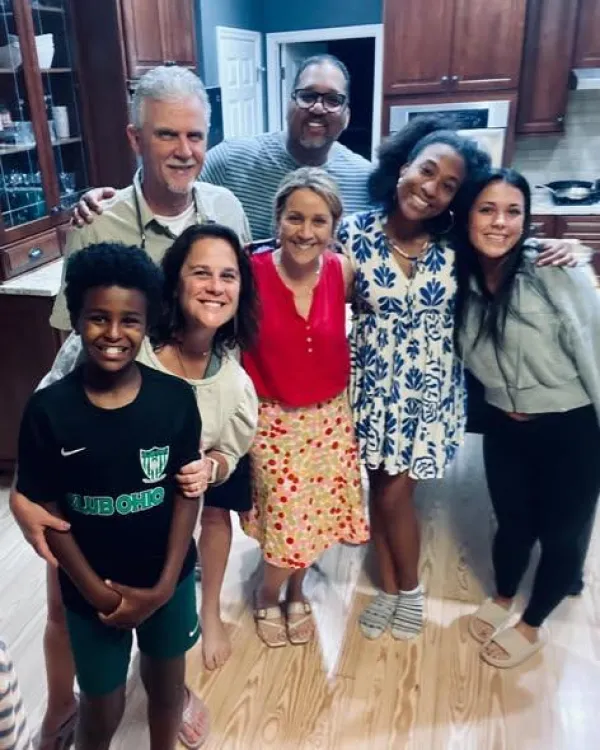
Vineyard Columbus offers free English as a Second Language (ESL) classes to immigrants and refugees for the love of Christ. Photo credit: Vineyard Columbus website.
Yesterday, I visited Vineyard Columbus, located in Westerville, just northeast of Columbus, to inquire about English as a Second Language (ESL) classes for my new daughter-in-law, Sara. When I arrived, I was greeted by Zainabu, the receptionist, who is originally from Sierra Leone. Despite being relatively new to the United States, she spoke fluent English with an African accent.
If you haven't heard of Vineyard Columbus, you may soon. It is a large church with multiple campuses throughout Central Ohio and a diverse congregation.
Adjacent to the church is the Vineyard Community Center, a facility that offers a variety of programs and services to the surrounding community. These include educational opportunities, recreational activities, and other forms of community support.
The Vineyard Columbus facility is modern and impressive. It reminded me of the Noor Islamic and Cultural Center in Hilliard, Ohio. Like Noor, Vineyard serves a diverse community and provides opportunities for people from different backgrounds to come together. The church also offers online services and Spanish-language worship services. Beyond its religious mission, it demonstrates a commitment to serving the broader community, including immigrants and refugees.
That brings me to the reason for my visit.
Free English Classes for Immigrants and Refugees
Vineyard Columbus offers English as a Second Language classes through its Community Center. The program helps immigrants and refugees improve their English listening, speaking, reading, and writing skills. Classes are taught by volunteers and are free of charge.
Students come from a variety of backgrounds, including African, Latino, Asian, and Middle Eastern communities. For many newcomers, learning English is an important step toward finding employment, pursuing education, communicating with their children's schools, and becoming more comfortable in their new country.
The Community Center also offers other educational and community services. These programs provide valuable assistance to newcomers who are working to build new lives in Central Ohio.
My wife Hanaa, who has approximately 20 years of experience teaching ESL, was so impressed by the program that she decided to volunteer her time and expertise. Beginning next week, she plans to teach English at the center one day a week. The center is only about a 10-minute drive from our home.
Her decision is a small but meaningful way of giving back to an organization that welcomes people from different countries, cultures, and religious traditions.
ESL Class Information
For immigrants and refugees interested in learning English, the following contact information may be helpful:
- Location: Vineyard Community Center, 6000 Cooper Road, Westerville, OH 43081
- Morning classes: Historically offered on Mondays, Wednesdays, and Thursdays, with some schedules listing Fridays. Please confirm the current schedule.
- Evening classes: Tuesdays; confirm the time with the center.
- Cost: Free.
- Registration: Advance registration may be necessary, and space is limited.
- Email: esl@vineyardcolumbus.org
- Phone: 614-259-5238
Prospective students should contact the center directly to confirm current class schedules and registration availability.
'We Do It for the Love of Christ'
Toward the end of my visit, I jokingly asked whether immigrants and refugees were expected to pledge to convert to Christianity in exchange for receiving these services.
The response was both reassuring and revealing. The center's executive director replied, in essence, that conversion was certainly not a requirement. As the director explained, "We do it for the love of Christ."
That answer stayed with me.
As a Palestinian and a Muslim, I appreciated the sentiment behind those words. Helping people learn English, adjust to a new country, and improve their lives is a meaningful act of compassion. Such assistance becomes even more significant when it is offered without making a person's religious beliefs a condition of receiving help.
Jesus taught his followers to love their neighbors as themselves. The Bible repeatedly emphasizes compassion, generosity, and care for those in need. At its best, this spirit of service extends beyond religious, ethnic, and national boundaries.
Muslims, too, are taught to value compassion, charity, and care for one's neighbors. Although Christians and Muslims have important theological differences, we share an understanding that helping others and treating people with dignity are worthy pursuits.
This is why I believe it is important to give credit where credit is due. When a Christian church opens its doors to immigrants and refugees, including Muslims, and provides practical assistance without demanding religious conformity, that effort deserves recognition.
My wife's decision to volunteer at Vineyard Columbus is one small example of how people of different backgrounds can contribute to their communities and build bridges of understanding. She will share her teaching experience with newcomers, while the organization provides a welcoming place for them to learn and grow.
In a time when immigrants and refugees can face uncertainty, suspicion, and challenges adapting to life in America, initiatives like these offer a welcome reminder that kindness and generosity can bring people together.
We may worship differently, but we can still serve our neighbors together. That is a lesson worth recognizing, appreciating, and sharing.
Mahmoud El-Yousseph is a Palestinian freelance writer and retired U.S. Air Force veteran. He writes about U.S. foreign policy, Middle Eastern affairs, and justice.
"Reach out for those who ignored you, give to the one who deprived, and forgive those who oppressed you." ~ Prophet Mohammad (Peace be upon him)