
War Against Iran and the Coming Economic Catastrophe
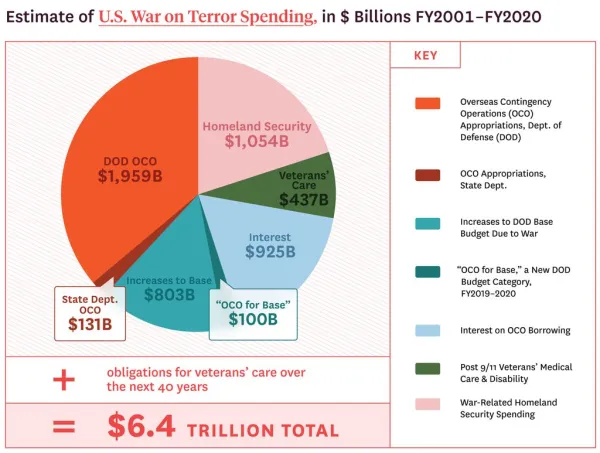
Many Americans understand that that the country has been on an economic precipice because the debt and deficit appear to be unsustainable. Currently, America pays over one trillion dollars in interest on debt. Just two months ago, the national debt exceeded 38 trillion. Two months later it is now 39 trillion.
Social Security, SNAP benefits, Medicaid, Medicare and all programs meant to benefit the citizens, are under constant attack as a result of the national debt.
Inflation is largely the result of borrowing, so that inflation is similar to a tax on working Americans while having no effect at all on the Ruling Class.
The national debt is a result of one thing and one thing only, which is the cost to maintain and expand Empire through violence (wars) and economic coercion.
On the day that the America/Israeli Empire attacked Iran (2/28/2026) White House economic adviser Kevin Hassett estimated that the war in Iran had cost the U.S. more than $12 billion so far.
It should be noted that Iran has said the cost of ending the war is reparations, as they expect to be reimbursed for the damage done. I am predicting that, rather than accept defeat, the Empire will end itself (and maybe the entire planet) by using a nuclear weapon against Iran.
Since the American people will have to bear the brunt of the inevitable economic collapse via inflation, worldwide recession, and breakdown of the social safety net, I asked ChatGpt to breakdown the costs of the American/Israeli Empire on Iran. The following is the response from ChatGpt, with no edits from this author, although emphasis is mine. (date March 20th, twenty one days into the war)
The True Cost of the U.S.–Iran War: From Billions to Trillions
As the United States’ military conflict with Iran unfolds in early 2026, public attention has largely focused on the immediate costs of missiles, airstrikes, and troop deployments. Early estimates—ranging from $10 billion to nearly $20 billion within the first weeks—have dominated headlines. But these figures represent only a fraction of the war’s real cost.
A broader accounting, incorporating damage inside Iran and the global economic shock triggered by the conflict, reveals a far more consequential reality: the total cost of the war is already trending toward the multi-trillion-dollar range.
Early Military Spending: A Rapid Burn Rate
In its opening phase, the war has proven extraordinarily expensive. U.S. forces burned through billions of dollars in precision munitions and operational costs within days. Estimates suggest a daily expenditure approaching $1 billion, with some analyses placing peak daily costs even higher.
Within the first one to two weeks, total U.S. spending reached approximately $10–18 billion. If current operational tempo continues, near-term costs could rise to between $50 billion and $200 billion within months. Historical comparisons suggest that prolonged engagement could ultimately push total U.S. expenditures into the $200 billion to $500 billion range—or beyond.
Iran’s Losses: Destruction and Economic Disruption
While precise figures remain incomplete, the scale of damage inside Iran is already substantial. Thousands of strike targets—including military installations, energy infrastructure, and industrial sites—have been hit.
Based on comparable conflicts, early estimates place physical destruction between $50 billion and $150 billion. If the war intensifies, total infrastructure losses could climb to $200 billion or more.
Even more significant are the broader economic consequences. Iran faces disruptions to oil exports, industrial production, and currency stability. These pressures, compounded by tightening sanctions, could produce economic losses in the range of $100 billion to $300 billion in the short to medium term.
Taken together, Iran’s total losses—physical and economic—are likely already in the range of $150 billion to $600 billion.
The Global Shock: Where Costs Multiply
The largest and least visible component of the war’s cost lies in its global economic impact.
The conflict has disrupted a critical artery of the global energy system. With oil prices rising roughly 50 percent and key shipping routes under strain, the war has triggered one of the most significant energy shocks in decades.
Economic modeling suggests that a shock of this magnitude could reduce global GDP by approximately 1 percent. Given a global economy of roughly $105 trillion, that translates into a loss of about $1 trillion annually if conditions persist.
Additional ripple effects include:
- Trade disruptions and higher shipping costs, estimated at $200 billion to $500 billion
- Inflationary pressure on fuel, food, and consumer goods, costing households globally an estimated $300 billion to $800 billion
- Financial market volatility and reduced investment, adding another $200 billion to $600 billion in losses
Altogether, the global economic burden of the conflict is likely already in the range of $1.5 trillion to $3 trillion if sustained over a year.
A System-Wide Total
When these components are combined, the scale of the war becomes clearer:
- U.S. military spending: $50 billion to $500 billion (projected)
- Iran’s losses: $150 billion to $600 billion
- Global economic impact: $1.5 trillion to $3 trillion
This produces a total estimated cost of approximately $1.7 trillion to over $4 trillion under current trajectories.
Debt and the U.S. Fiscal Position
The war is also unfolding against a backdrop of historically high U.S. debt. At the outset of the conflict in early March 2026, national debt stood at roughly $38.8–$38.9 trillion. Within weeks, it crossed the $39 trillion threshold.
While only a portion of that increase is directly attributable to war spending, the conflict is accelerating deficit growth and will likely add substantially to long-term debt through both direct expenditures and rising interest costs.
The Hidden Costs Yet to Come
History suggests that early estimates dramatically understate the full financial burden of war. The conflicts in Iraq and Afghanistan, initially projected to cost tens of billions, ultimately exceeded $2 trillion each when long-term factors were included.
Those hidden costs—veteran care, equipment replacement, interest on borrowed funds, and prolonged economic disruption—have not yet fully materialized in the current conflict. But they will.
Conclusion
The visible costs of the U.S.–Iran war—missiles launched and targets destroyed—amount to tens of billions of dollars. The real cost, however, is measured in trillions.
It is being paid not only by governments, but by global consumers through higher energy prices, by businesses through disrupted supply chains, and by economies through slowed growth.
In modern warfare, the battlefield extends far beyond the conflict zone. And increasingly, the largest price is not paid where the bombs fall, but across the global economy that absorbs the shock.
Editor note: $39,000,000,000 (39 billion dollars)
The average salary for an American worker is $100,000.