
The Weight of the System: Institutional Bias and the Case of Karmelo Anthony
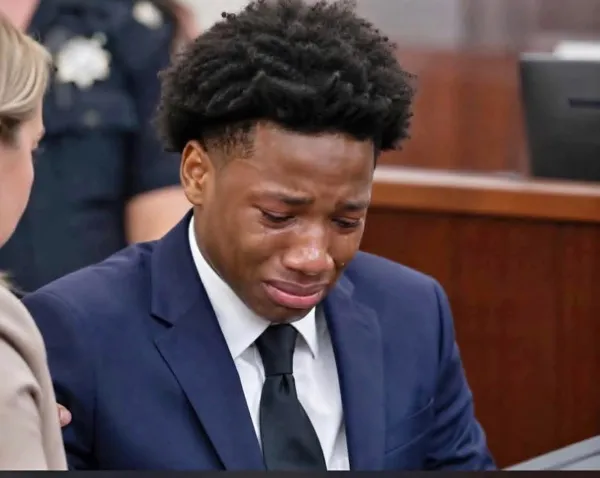
In the American legal system, we are told that the scales of justice are balanced and blind. However, as a Black woman witnessing the stark realities of the Texas carceral system, it has become increasingly difficult to ignore the pattern of selective application that suggests these scales are anything but impartial. The ongoing saga of Karmelo Anthony is a profound case study in whether a Black youth, facing an adversarial environment, ever truly stands a chance.
As I was growing up, my late grandmother, Mrs. Willie Mae Brown, would always remind us of a foundational truth: "There are two laws—one for Blacks and one for Whites." Her wisdom wasn’t just an observation; it was a survival manual. It was a stark acknowledgment that the Constitution’s promise of "equal protection" has historically functioned as a luxury, not a universal guarantee.
A Conflict of Concern
The situation surrounding Karmelo Anthony’s current placement is alarming. Following his 35-year sentence for the death of Austin Metcalf, Anthony was transferred to a facility within the Texas Department of Criminal Justice where, reportedly, a member of the Metcalf family serves as the warden. This is more than an administrative oversight; it is a profound failure of institutional integrity. Regardless of whether formal protocols were followed, placing an incarcerated individual in a facility where the warden shares the surname of the victim he was convicted of killing creates an environment fraught with the appearance of retribution. When a system removes the barriers intended to protect an inmate from personal interest and bias, it signals that the safety and rehabilitation of that individual have been abandoned in favor of a culture of punishment.
The Survival Narrative
Critics have rightly pointed to the proceedings of this case as a modern echo of historical injustices. We are forced to ask: Does a Black youth in this climate have the right to experience fear—and act on it—before being destroyed by a white body? If Anthony is ultimately forced to serve his sentence, the narrative of "law and order" will be deployed to justify his incarceration as a victory for justice. Conversely, had the outcome been different, we would almost certainly see an immediate, coordinated attempt to discredit the jury, the judge, and the defense, with critics claiming the system is "broken" because it failed to produce the outcome they demanded. The reality is that for those who do not believe in due process for Black youth, the only "acceptable" ending is a cage. Anything less is viewed as an affront to their worldview. This case was never just about a verdict; it is about the white imagination’s refusal to accept Black survival.
The Appellate Road Ahead
As we look toward the appeals process, we must be clear-eyed about the landscape. The Texas judiciary, including the Court of Criminal Appeals, is deeply conservative. When we discuss an appeal, we are not simply presenting legal arguments; we are engaging with a court system that is often ideologically tethered to a "tough on crime" mandate. In this political climate, the judiciary often prioritizes a rigid adherence to precedent and state authority, often at the expense of substantive justice or the nuanced constitutional protections required to ensure a fair trial for a Black defendant. The hurdle here is not just proving legal error; it is overcoming a judicial philosophy that is increasingly comfortable with the status quo.
Conclusion: A Call for Scrutiny
We cannot allow the noise of political rhetoric to drown out the necessity of accountability. We must continue to watch closely, document the inconsistencies, and demand that the state explain why the treatment of Karmelo Anthony deviates from the standard of equal protection. If justice is to exist, it must be more than a slogan. Until our institutions can prove that they treat every life with equal value—and that they can protect the human rights of every individual, regardless of the victim or the political pressure—we must remain the Fourth Estate, the watchdogs holding the line. Given the current conservative lean of the Texas appellate courts, how can we best leverage public oversight and strategic legal pressure to ensure that Karmelo Anthony's right to due process is not lost to political convenience?
Cynthia Denise Brown is the founder of the Heartbeat Movement Inc., founder and Committee Chair of Protecting Ohioans’ Constitutional Rights, and founder of The Ohio Coalition for Police Accountability and Transparency, oceqi.org.