
When Military Power Fails to Become Political Power
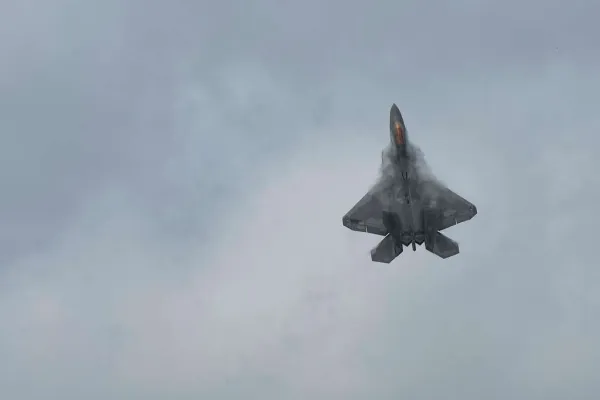
Nearly six months into the war with Iran, the conflict appears to be settling into a stalemate. Although the United States has demonstrated overwhelming airpower and has inflicted enormous damage on Iran’s military capabilities and civilian infrastructure, however the central problem for Washington is becoming increasingly difficult to ignore: airpower alone has not been enough to force Tehran to accept the American demands.
This is the uncomfortable reality facing the Trump administration. The United States can continue bombing Iran, destroy more infrastructure and impose greater costs on the Iranian state. But none of that necessarily translates into political capitulation. Iran can absorb punishment and still refuse to surrender on the fundamental issues that brought the two sides to war in the first place. And that is where the limits of American military power become apparent.
According to multiple media reports, Gen. Dan Caine, chairman of the Joint Chiefs of Staff, has privately warned senior Trump advisers that the United States needs to find an off-ramp from the conflict. The concern inside the military establishment is not simply that the war has become expensive or difficult. It is that the remaining military options for escalation could produce consequences that are difficult for Washington to control, while airpower by itself is unlikely to deliver President Donald Trump’s stated political objectives.
In other words, the question facing Washington is no longer simply “How much more can we destroy?” It is increasingly “What can we realistically achieve by destroying more?” That is a very different question.
Iran's Internal Struggle
The situation inside Iran also is becoming equally complicated. While the outside world tends to view the Iranian leadership as a single, unified entity, the reality appears to be far more fragmented. A fierce struggle for power is taking place among different factions within the regime, and the Supreme Leader’s apparent absence from the public political battlefield has only intensified speculation about who is actually making the strategic decisions.
Different factions are invoking the Supreme Leader’s authority to justify competing political positions. Some elements within the regime appear to be looking for some form of renewed engagement or negotiation with Washington. Others, particularly the more hardline factions, see the continuation of the war as an opportunity to consolidate their political and institutional power. This means that the Iranian leadership is fighting two wars at the same time: one against the United States and its allies, and another inside the regime itself.
For Washington, that creates a particularly difficult dilemma. A military campaign designed to weaken the Iranian state could simultaneously strengthen the very factions least interested in compromise. The longer the war continues, the more the conflict risks becoming a mechanism for internal political consolidation rather than a path toward an American victory.
The War Is Also Changing the Arab States' Calculations
But perhaps the most important consequence of this war may not be occurring in Tehran or Washington at all. It may be occurring in the capitals of the Gulf. For decades, the security architecture of the Gulf has rested heavily on the assumption that American military power ultimately guarantees the security of America's Arab partners. Saudi Arabia, the United Arab Emirates, Qatar, Bahrain and others have hosted American military forces, naval facilities and air bases precisely because they believed that a serious threat to their security would also become a serious American security concern.
The Iran war has shaken that assumption.
The Gulf states have watched the conflict and drawn a potentially uncomfortable conclusion: American protection does not necessarily mean that American and Arab security interests are identical. From the perspective of many Arab governments, Washington's overriding priority during the conflict has been the protection of Israel. That has raised a fundamental question in Gulf capitals: What happens if, in a future conflict, the interests of Israel and the Arab states diverge? The answer is no longer as obvious as it once appeared.
The Gulf monarchies are therefore beginning to think beyond the traditional American security umbrella. They are not necessarily abandoning Washington, but they are increasingly interested in having alternatives — additional security relationships, regional partnerships and their own deterrent capabilities.
A New Regional Security Architecture?
That is what makes the new defense agreement between Saudi Arabia, Turkey and Pakistan so significant. On Friday, the leaders of the three countries signed a defense agreement stipulating that an armed attack against one of them would be regarded as an attack against all three.
On the surface, this is a conventional defense arrangement. But politically, its significance is much larger. Saudi Arabia is effectively signaling that it wants to play a more independent role in defining the future security architecture of the Middle East. Turkey brings its military weight and NATO experience. Pakistan brings one of the region's most significant conventional militaries — and, importantly, a nuclear deterrent.
The alliance therefore sends messages in several directions at once. It is a warning to Iran that Saudi Arabia does not intend to remain strategically exposed. It is a signal to the United States that its Gulf partners are no longer willing to depend exclusively on Washington. And it is also a message to Israel that the regional balance is changing and that Arab states are increasingly prepared to develop their own security arrangements.
This does not necessarily mean that Saudi Arabia is turning its back on the United States. Riyadh still has enormous economic, military and strategic ties with Washington. Nor does it mean that Turkey and Pakistan have suddenly become part of a unified anti-Iranian bloc.
But the direction of travel is unmistakable. The old assumption that the United States would remain the unquestioned security guarantor of the Middle East is beginning to weaken.
The Bigger Question
And this may ultimately become the most consequential outcome of the Iran war. Wars rarely end simply when the bombing stops. They end when the political order created by the war becomes clear.
The United States may eventually find an off-ramp from the conflict. Iran may survive the campaign without accepting Washington's demands. Internal struggles inside Tehran may eventually determine who emerges stronger. And the Gulf states may continue building security partnerships that reduce their dependence on Washington.
If that happens, the United States could achieve enormous military superiority over Iran while simultaneously losing some of its political leverage over the wider Middle East.
That would be the paradox of this war: America may win the air war and still lose part of the regional order.
The real measure of the conflict, therefore, will not simply be how much Iranian infrastructure was destroyed or how many military targets were hit. It will be whether Washington can translate that overwhelming military advantage into a sustainable political settlement — and whether America's traditional allies still believe that their security is best served by depending on the United States. Six months into the war, neither question has a clear answer.
The Interceptor Problem
There is another constraint on the American military that may be even more important than the limits of airpower itself: the shrinking supply of air-defense interceptors. The United States may still have overwhelming offensive capabilities, but modern war is not only about how many bombs and missiles you can launch. It is also about how many incoming missiles you can afford to intercept.
That is becoming a serious problem.
Recent estimates suggest that the United States has already consumed a very large share of its Patriot and THAAD interceptor stocks during the war. CNN reported that fewer than 827 Patriot interceptors and fewer than 278 THAAD interceptors remained in U.S. stockpiles, figures that sources said were broadly consistent with internal government assessments. This creates an uncomfortable strategic paradox for Washington. The United States can destroy Iranian missile launchers, air-defense systems and military infrastructure. But Iran does not have to match American firepower. It only needs to continue launching enough missiles and drones to force the United States and its allies to expend scarce defensive interceptors.
And the economics can be brutal.
A relatively inexpensive Iranian drone or missile can force the United States to use an interceptor costing millions of dollars. The United States may win every individual engagement and still find itself steadily depleting the inventory required to defend its forces and allies. That becomes particularly dangerous if the war expands. The Gulf states have already been warning Washington about this problem. Their concern is straightforward: if Trump decides to escalate again, Iran is likely to retaliate against American bases and Gulf infrastructure. But if the United States and its Arab partners are running short of high-end interceptors, they cannot assume that every Iranian missile can simply be shot down.
And that changes the political calculation.
The question for Washington is therefore not simply whether it has enough aircraft to bomb Iran. It is whether it has enough defensive missiles to protect American troops, Gulf allies and critical infrastructure while continuing the war.
That may be one reason the debate inside the administration has become increasingly focused on an off-ramp. The United States is not militarily helpless. Far from it. But military superiority does not mean unlimited ammunition, unlimited interceptors or unlimited time.
And this is where the Iranian strategy becomes potentially dangerous for Washington. Tehran does not necessarily have to defeat the United States militarily. It may only have to survive the bombing campaign, continue imposing costs, force Washington to consume expensive defensive weapons and convince American allies that another round of escalation carries unacceptable risks. In that sense, the interceptor shortage is not merely a logistical problem. It is becoming a strategic constraint on America's ability to escalate.
The Strait of Hormuz May Be the Biggest Political Concession
Perhaps nowhere is the changing balance of the war more visible than in the Strait of Hormuz. From the beginning, Iran has insisted that it cannot simply be excluded from the administration of a waterway that runs through its territorial waters. Tehran has increasingly demanded a formal role in determining how shipping moves through the Strait, including navigation and maritime services.
At first, this was difficult for Washington to accept. The United States has traditionally viewed freedom of navigation through Hormuz as an international security issue and has resisted any arrangement that would give Iran effective control over international shipping. But that position now appears to be evolving.
Iran and Oman have been negotiating a framework for the future administration of navigation through the Strait. Their June joint statement established a bilateral working group specifically to negotiate navigation, maritime services and associated costs, while recognizing the sovereign rights of both coastal states.
The negotiations have since moved considerably further. Iran and Oman have exchanged proposals, and recent reporting suggests that the emerging arrangement could give Tehran significant authority over vessels entering the Gulf. Iran and Oman have also reached an understanding on the geographic coordinates of a shipping route, although Tehran has stressed that a navigation agreement alone will not be sufficient to reopen the Strait.
This is where the broader significance becomes clear.
Washington may be moving from trying to prevent Iran from exercising administrative authority over Hormuz to trying to negotiate the terms under which that authority can be exercised.
That is a major difference.
It does not mean the United States is formally recognizing an Iranian right to control the entire Strait. Nor does it mean that Oman has surrendered its own sovereign rights. The emerging formula is much more complicated: Iran and Oman, as the two principal coastal states, would have a role in managing navigation through their respective territorial waters, potentially with consultation with other Gulf states and international maritime institutions.
But politically, Tehran can present this as a significant achievement.
Iran entered the war facing an American demand for a fundamental change in its regional behavior. Six months later, it may emerge with something Washington previously opposed: a recognized role in the administration of one of the world's most strategically important waterways.
And that tells us something about the limits of military power.
The United States has been able to inflict enormous damage on Iran. It has demonstrated overwhelming air superiority and imposed extraordinary costs on the Iranian economy and military. But when it comes to the political question of who gets to administer the Strait of Hormuz, Washington appears to be moving toward compromise.
Why?
Because the alternative may be even more costly. Keeping the Strait effectively closed damages Iran, but it also damages the global economy, Gulf producers, Asian consumers and the American allies that Washington is trying to protect. Maintaining a permanent naval blockade while defending Gulf bases against Iranian retaliation requires enormous military resources, including the increasingly scarce air-defense interceptors that are already becoming a concern for Washington and its Gulf partners.
Eventually, the question becomes one of political sustainability.
If Iran cannot be forced to abandon its demand for a role in Hormuz, Washington has two choices: continue escalating in an attempt to force Tehran to surrender, or accept some form of Iranian participation and try to constrain that participation through an agreement with Oman and the other Gulf states.
The second option may now be looking increasingly attractive.
And that would fit the larger pattern of the war.
Iran may not have achieved its maximal objectives. But neither has the United States achieved its maximal objectives. Instead, both sides appear to be moving toward an uncomfortable compromise in which Iran retains substantial political and strategic influence, while Washington attempts to prevent that influence from becoming unrestricted control. That is why Hormuz could ultimately become the clearest symbol of how this war ends. The United States may retain military dominance in the Gulf while Iran emerges with greater political authority over the waterway at the center of the conflict.