
Which Way to National Security?
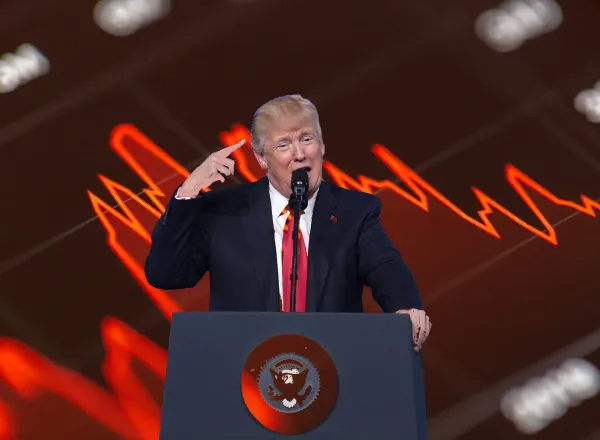
On April 1, Donald Trump startled the world by publicly declaring that he was “absolutely” considering withdrawing the United States from the 77-year-old NATO alliance. Trump’s remarks came only hours after Pete Hegseth, his Defense Secretary, declined to reaffirm the U.S. government’s commitment to NATO’s collective defense.
Actually, the Trump administration’s recent trashing of NATO was less shocking than it appeared. During Trump’s two terms in office, he derided the alliance from the start, developed a warm relationship with its foremost adversary (Vladimir Putin), withdrew U.S. support from embattled Ukraine, called for U.S. annexation of Canada (a NATO member), threatened a military takeover of Greenland (a territory of Denmark, a NATO member), and failed to consult his NATO allies about launching a U.S. war on Iran. Indeed, the Trump administration’s National Security Strategy of December 2025 outlined a sharp shift in U.S. policy from collective action through NATO toward a heavy reliance on U.S. military power.
In line with his “America First” rhetoric, Trump has reverted to an old U.S. tradition― nationalism―and all that entails in terms of militarism, war, and imperialism.
Nationalism has long played an important role in an unruly and ungoverned world. Within nations, law prevailed to at least some extent, limiting crime and violence. But, when it came to international affairs, the situation more closely resembled every nation for itself. In this context, many a nation adopted a go-it-alone strategy, employing military power and, on occasion, war as its rulers sought to maintain or secure whatever they viewed as in its national interest.
Over time, however, national rulers realized that their nations’ military strength could be enhanced by having allies―at least if the members of the alliance could agree upon a satisfactory division of the spoils in the event of a victory over their foes. From the standpoint of national security and, at times, survival, alliances among nations seemed to have advantages over go-it-alone nationalism. Alliances not only provided a remedy for the comparative weakness of small nations in a dangerous world, but added an element of collective decision-making in the realm of international affairs. Furthermore, by fostering cooperation among allied nations, alliances limited the danger of conflict or war among them.
Even so, as people learned only too well, alliances were hardly foolproof. Most notably, they failed to prevent two disastrous world wars.
Consequently, against the backdrop of massive slaughter in World War I, government officials began exploring a new approach to national security: international organization. In a largely lawless, anarchic world, argued U.S. President Woodrow Wilson, a League of Nations would provide the institutional framework for international cooperation and peace. Amid much fanfare, the League was established in 1920.
The League, however, remained a weak organization, constrained in taking effective action for peace by the requirement of unanimous agreement among its member nations and, more fundamentally, by the unwillingness of “the great powers” to depart from their traditional approaches to world affairs. Despite Wilson’s prominent role in creating the League, the U.S. Senate rejected U.S. membership. Meanwhile, major nations continued to enhance their military might and to squabble over raw materials, territory, and colonies. As a result, within a generation, the world had plunged into the Second World War, the most destructive conflict in human history, culminating in the development and use of nuclear weapons.
Toward the end of World War II, the anti-fascist allies were sufficiently sobered by the calamitous nature of the war to make another try at international organization. The new international entity, the United Nations, had some advantages over its predecessor. These included participation by all the great powers, a Charter that clearly banned international aggression, a General Assembly of all member nations with decisions made by majority vote, and considerable respect by member nations and the public.
And, subsequently, the United Nations did manage to resolve numerous international conflicts, to facilitate the end of colonialism, to secure worldwide definitions of human rights, and to institute a broad array of programs that improved the health and living standards of billions of people around the globe.
Nevertheless, although an advance over its ill-fated predecessor, the United Nations has remained a loose confederation of countries without the authority and strength necessary to curb destructive behavior by the world’s most powerful nations. All too often, action to maintain international peace and security has been subverted by the great power veto in the UN Security Council, as has been the case in recent years in connection with international military aggression by Russia, Israel, and the United States. Lacking an independent source of funding, the United Nations faces the prospect of reducing or terminating vital programs whenever major powers decide to punish it by cutting back contributions and required dues payments.
Currently, Trump, Putin, Benjamin Netanyhahu, and their rightwing counterparts, outraged at attempts by international organizations to enforce international law, are working zealously to undermine the United Nations and other international bodies―for example, the International Criminal Court―as part of their campaigns to silence their critics and restore their own national “greatness.”
To judge from the blood-stained history of a nationalist approach to global affairs, this reversion to a go-it-alone policy represents a recipe for disaster. Nor does an alliance approach offer a satisfactory improvement.
But the record of international organization is more promising. Why not strengthen the United Nations by granting it new, expanded authority to enforce international law, human rights, and world peace? The United Nations could even be reshaped into a democratic federation of nations, which, among other things, would make participation in and compliance with internationally-approved treaties mandatory. In fact, an international campaign is already underway to authorize a UN review conference to strengthen and transform the world organization.
Rather than throw up our hands at the latest outbreak of horrific violence by marauding nationalist bullies, let’s use the challenge afforded by the current international crisis to create a new and better world.
Lawrence S. Wittner (https://www.lawrenceswittner.com/ ) is Professor of History Emeritus at SUNY/Albany and the author of Confronting the Bomb (Stanford University Press).