
Why Lifetime Asbestos Exposure Histories Matter for Columbus Workers and Veterans
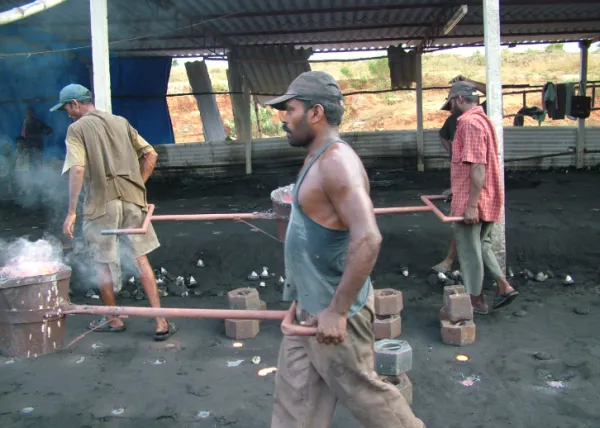
Central Ohio stands on the grounds of manufacturing plants, freight lines, and defense contractors , where generations of Columbus citizens built the city with their hands by working in factories, loading docks, and construction sites long before it was an "innovation hub." However, that legacy is harbouring a hazard often overlooked: asbestos exposure. For decades, this toxic mineral was the go-to material for insulation, machinery parts, and construction—prized for its heat resistance and durability. That widespread use came at a cost: millions of workers and many service members breathed in asbestos dust during much of the twentieth century.
Although scientific evidence linking asbestos to serious disease accumulated over time, widespread industrial use continued for decades. The long timespan allowed for many workers' and veterans' exposure histories to be tied to workplaces that have since closed or changed hands, taking employment histories with them. Today, the challenge isn't proving asbestos was hazardous — it's reconstructing where and when exposure occurred, using records never built to last a lifetime, let alone track illnesses like asbestos-related lung cancer with decades-long latency.
Central Ohio's Industrial Past Carries a Hidden Cost
Columbus's manufacturing, construction, transportation, and defense industries gave generations of Ohioans steady work — but also exposed many to asbestos, often unknowingly. Workers in foundries, metal fabrication facilities, power plants, and heavy manufacturing were among the occupations at greatest historical risk, including furnace operators, maintenance personnel, insulation installers, and others working around high-temperature equipment.
More than that, construction workers and transportation maintenance trades also experienced elevated exposure risk, as many routinely handled asbestos-containing materials with little or no respiratory protection, and many times without being fully informed of the long-term health risks.
Military Service Created Another Exposure Pathway
Military installations opened a second avenue of exposure. Like many mid-twentieth-century facilities, Lockbourne Air Force Base, the WWII-era installation now known as Rickenbacker Air National Guard Base, incorporated asbestos-containing materials in buildings, aircraft support infrastructure, and mechanical systems.
For veterans, exposure rarely occurred in just one setting — service members often moved from military duty directly into civilian workplaces where some continued to experience occupational asbestos exposure. Columbus is home to approximately 31,500 veterans, many of whom may have built careers after service in trades potentially contributing to their prolonged contamination risk. It is why, without a system tracking exposure across both military and civilian careers, piecing that history together can be extremely difficult decades later.
A Structural Gap in Tracking a National Crisis
Unfolding local cases, however, reflect a broader, national pattern: between 1940 and 1979, an estimated 27 million American workers were exposed to asbestos on the job. More alarmingly, asbestos-related deaths rose 20.2 percent between 1990 and 2019, and around 230,000 new lung cancer cases are diagnosed annually in the US. The staggering data further underscores that occupational asbestos exposure remains an established risk factor for lung cancer and continues to contribute to disease among previously exposed workers.
Furthermore, the numbers also reveal a structural problem: most occupational recordkeeping systems were designed primarily for administrative purposes rather than lifelong exposure tracking, whose effects may not surface for 30 or 40 years. And when asbestos-related lung cancer is diagnosed decades later, the evidentiary trail is often fragmented or gone entirely. Consequently, there remains no comprehensive system to document cumulative exposure across both a military and civilian career.
Even with policies such as the Honoring Our PACT Act, which expanded recognition of service-related toxic exposures, an important gap remains in documenting and integrating civilian occupational exposures that occur after military service. For veterans who later worked in Columbus's factories and industrial job sites, fragmented civilian exposure histories can complicate clinical assessment because clinicians may need to consider cumulative exposures acquired during both military service and subsequent civilian employment.
Stronger Protection for Occupational Histories
This documentation disparity is more than an administrative inconvenience. It falls hardest on the workers and veterans most susceptible to asbestos-related illness, at the exact moment — decades later — when they most need a clear record of their exposure. Although the military and industrial companies maintain their own personnel files, no system comprehensively preserves cumulative asbestos exposure across both careers.
Therefore, occupational exposure records should become permanent public health records that integrate military and civilian employment into one durable account of a person's working life — before those histories become impossible to reconstruct. Bridging this gap means rethinking how exposure records are kept: not as temporary employment documents, but as long-term public health records relevant for decades. Standardized digital exposure records, stronger coordination between military and civilian systems, and extended retention policies for occupations involving known contaminants could help ensure these histories aren't lost before the diseases they document appear. The story of Columbus is the story of the people who built it. Their exposure histories deserve the same lasting attention as the industries and installations they served — because no worker or veteran should disappear from the record simply because the evidence was never designed to last.
Jordan Cade is an attorney at Environmental Litigation Group, P.C., a Birmingham, Alabama-based legal firm providing legal assistance to victims of environmental toxic exposure.