Zahraa Kobeissi: A Woman Who Defies Israeli Bombings to Help Displaced Families in Lebanon
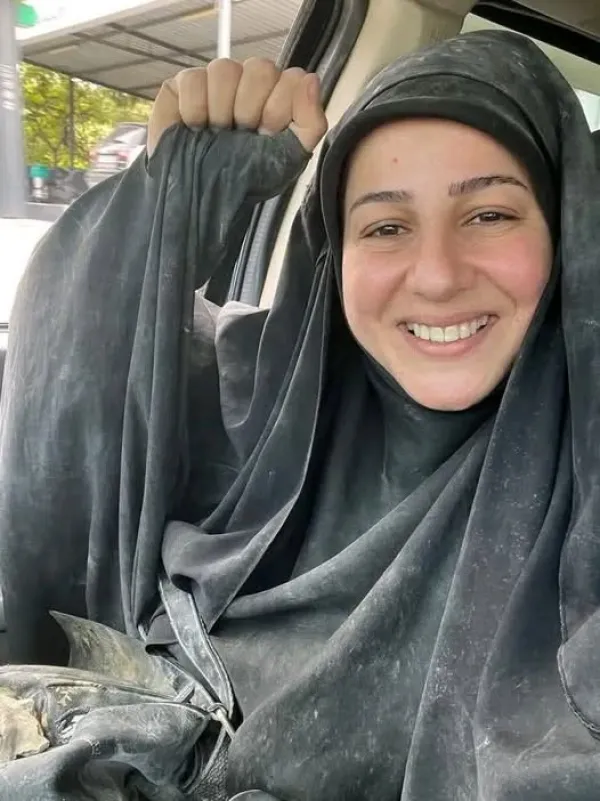
Zahraa Kobeissi is a young Lebanese woman defies Israeli bombings to help displaced families in Lebanon. Photo credit: Press TV, March 16, 2026
Lebanese humanitarian worker Zahraa Kobeissi, who is in her late thirties, drives across the country every day to evacuate civilians and deliver aid—undeterred by the threat of Israeli airstrikes.
“I will continue to help the displaced people until my last breath,” she told the Press TV website, exuding confidence and determination even as the Israeli regime announced a full‑fledged ground offensive in the country.
Kobeissi’s journey began during the 2024 Battles, when she first started evacuating civilians under fire. She recalled that she was injured during one of her humanitarian missions, which has since become her full‑time volunteer work. Her days follow a relentless routine: each morning, she drives evacuees out of the war zone.
“On my return trips,” Zahraa said, “I bring groceries, diapers, milk, and supplies for those who choose to remain in the south. Then I rest briefly before repeating the cycle.”
Kobeissi said she has no fear. “I remain steadfast in the South. I sleep here every night after hours of driving to transport the displaced or deliver aid.”
Last week, the Israeli Occupation Forces (IOF) bombed her house. She emerged with a smile and steadfastness—not because she was unhurt, but because she kept her abaya on and her body remained covered. She refused to fall into the rubble in fear. For her, the hijab is not merely a piece of cloth but an identity, dignity, and form of resistance.
“I long for victory or martyrdom. This is what drives me to be active all the time, with all my being and existence, without even a grain of fear in my heart,” she said.
Through her courage and compassion, Kobeissi has become more than a driver. She is a symbol of resilience, carrying Lebanon’s displaced not only to safety but toward hope.
She vowed never to leave her homeland and to continue working for her people. Kobeissi said she looks forward to witnessing a decisive triumph and seeing hundreds of thousands of displaced families return to their homes, victorious.
Israel has killed more than 250 people and injured 1,100 in a wave of strikes on Lebanon, hours after a ceasefire was announced in Iran. According to reports, 102 women and 130 children have been killed, and 4,812 people wounded. UN figures suggest more than 1.2 million people have been displaced—mostly from Shia Muslim communities in the south, the Bekaa Valley in the east, and the Hezbollah‑dominated suburbs of Beirut.
Today, Israeli airstrikes across Lebanon killed at least seven people despite a United States‑backed ceasefire extension. The strikes came three days after Lebanese and Israeli officials held talks in Washington, DC, resulting in an agreement to extend the ceasefire for another 45 days. Israel has repeatedly violated the truce, which was initially agreed upon in April.
Israeli strikes were reported in Hanaway, Dibal, Deir Ammar, Deir Amess, and Meirka in the Tyre district, according to Al Jazeera Arabic correspondents on the ground. Additional strikes were reported in Harouf and other areas across the south. Israel said it struck more than 30 targets across southern Lebanon—mainly civilian areas—in retaliation for Hezbollah suicide attacks on Israeli troops, which have inflicted heavy casualties.
The United States and Israel agreed on a plan to disarm Hezbollah, but President Michel Aoun, a former army chief, has ruled out using force, fearing that sectarian tensions could lead to civil war. Meanwhile, the U.S. has not pressured Israel to withdraw its troops from Lebanon or to stop violating the ceasefire agreement. For now, Hezbollah fighters continue to inflict significant losses on the Israeli military.
Meanwhile, Zahraa Kobeissi remains unwavering. She vowed not to leave her homeland and to continue serving her people. She said she looks forward to witnessing a decisive victory and seeing the displaced return home with pride.
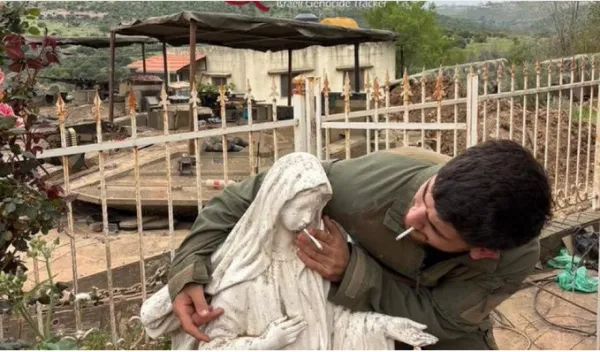
Caption photo #1 An Israeli occupation soldier mocking Virgin Mary in southern Lebanon. It’s almost like they insist on showing you what they think of Christians and Christianity despite Israel’s continuous PR damage control to many similar incidents. X
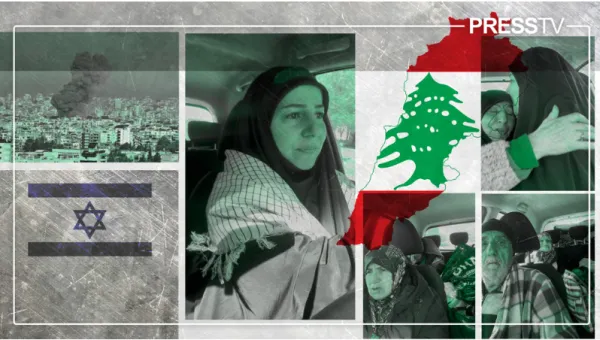
Caption photo #2: Zahraa Kobaissi is a young woman defies Israeli bombings to help displaced families in South Lebanon. Photo credit: Press TV, March 16, 2026
Mahmoud El‑Yousseph is a Palestinian freelance writer and retired U.S. Air Force veteran. He writes on U.S. foreign policy, Middle East affairs, and justice. Email: elyousseph6@yahoo.com