
Anti-War
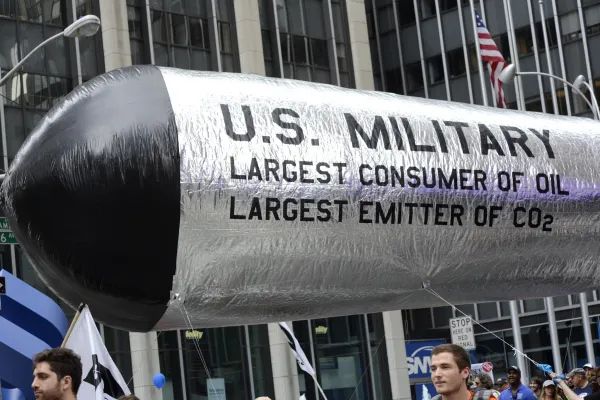
Remarks from this webinar.
Sometimes just for fun I try to figure out what I’m supposed to believe. I’m definitely supposed to believe that I can choose what to believe based on what pleases me. But I’m also supposed to believe that I have a duty to believe the right things. I think I’m supposed to believe the following: The greatest danger in the world is the wrong political party in the nation I live in. The second greatest threat to the world is Vladimir Putin. The third greatest threat to the world is global warming, but it’s being dealt with by educators and recycling trucks and humanitarian entrepreneurs and dedicated scientists and voters. One thing that’s not a serious threat at all is nuclear war, because that danger was switched off some 30 years ago. Putin might be the second greatest threat on Earth but it’s not a nuclear threat, it’s a threat to censor your social media accounts and restrict LGBTQ rights and limit your shopping options.
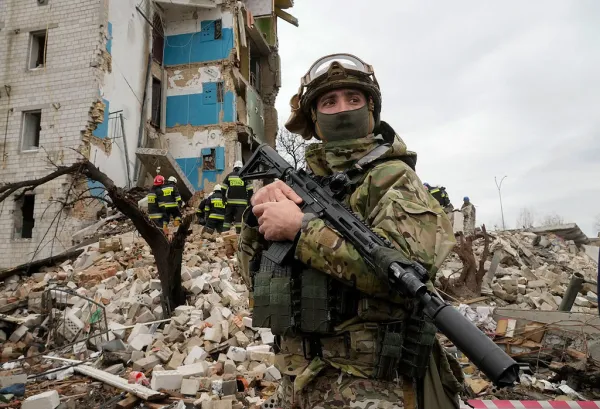
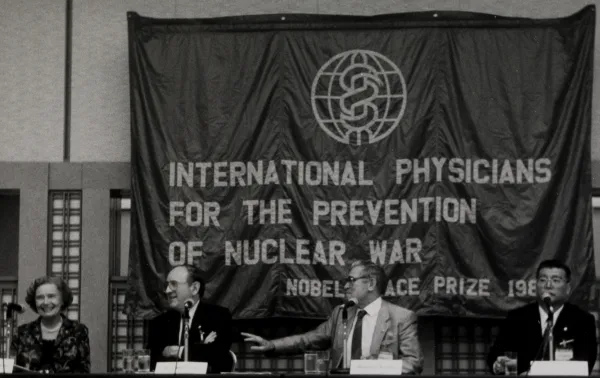
The game may be almost over.
Medea Benjamin and Nicolas J.S.Davies put it this way:
“The irresolvable dilemma facing Western leaders is that this is a no-win situation. How can they militarily defeat Russia, when it possesses 6,000 nuclear warheads and its military doctrine explicitly states that it will use them before it will accept an existential military defeat?”
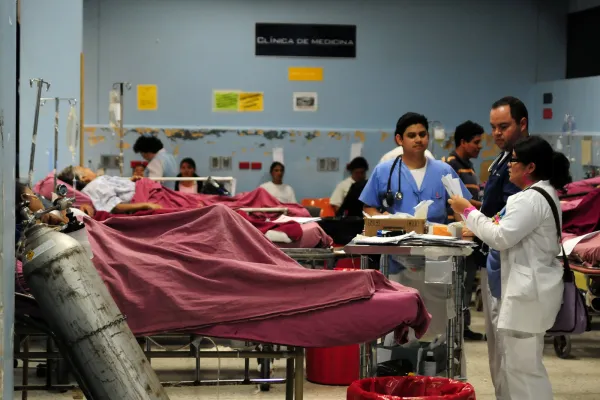
Chris Hedges’ latest book, The Greatest Evil Is War, is a terrific title and even better text. It doesn’t actually argue a case for war being a greater evil than other evils, but it sure does present evidence that war is tremendously evil. And I think in this moment of nuclear weapons threats, we can consider the case pre-established.
Yet the fact that we’re at major risk of nuclear apocalypse may not interest or move some people the way that the case made in this book might.
Of course, Hedges is honest about the evil on both sides of the war in Ukraine, which is quite rare and may either do a great deal of good persuading readers or prevent a lot of readers getting very far into his book — which would be a shame.
Hedges is brilliant on the supreme hypocrisy of the U.S. government and media.
He’s also excellent on the experiences of U.S. war veterans, and the horrible suffering and regrets that many of them have.
This book is also powerful in its descriptions of the shameful, dirty, and disgusting gore and stench of war. This is the opposite of the romanticization of war so prevalent on tv and computer screens.
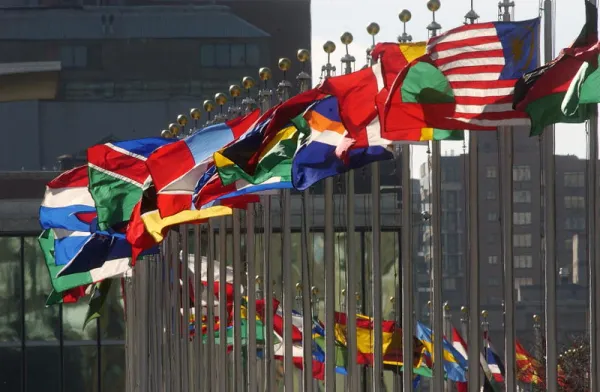
The 77th session of the United Nations General Assembly was, in many ways, similar to the 76th session and many other previous sessions: at best, a stage for rosy rhetoric that is rarely followed by tangible action or, at worse, a mere opportunity for some world leaders to score political points against their opponents.
This should surprise no one. For many years, the UN has been relegated to the role of either a cheerleader for the policy of great powers, or a timid protester of sociopolitical, economic or gender inequalities. Alas, as the Iraq war proved nearly thirty years ago, and as the Russia-Ukraine war is proving today, the UN seems the least effective party in bringing about global peace, equality and security for all.
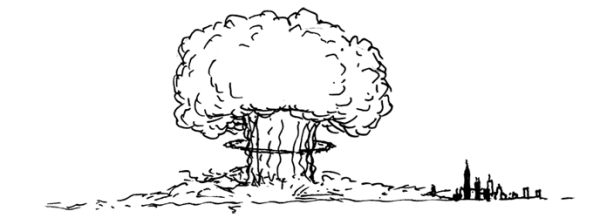
What does surrender look like in the world of geopolitics? To my mind, this gets pretty close:
“President Biden’s national security adviser said on Sunday that the United States had warned Russia that there would be ‘catastrophic consequences’ for the country if Moscow used nuclear weapons in its increasing desperation to hold on to territory in Ukraine.”
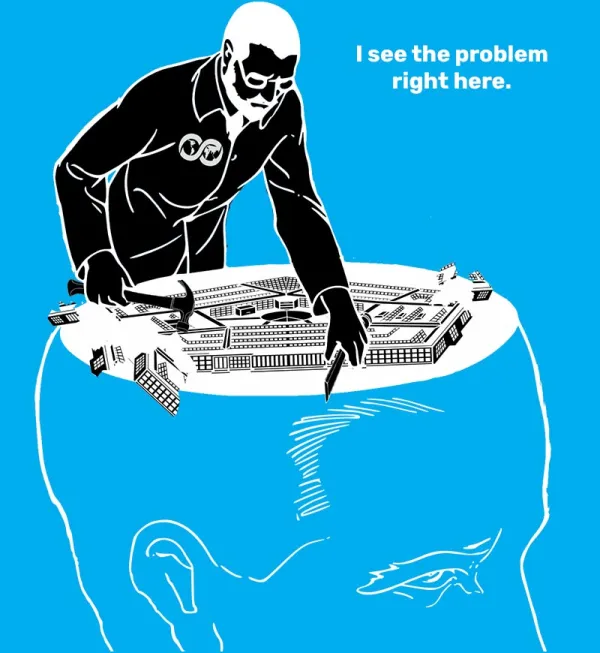
What would we do in a world lacking police, prisons, surveillance, borders, wars, nuclear weapons, and capitalism? Well, we might survive. We might sustain life on this little blue dot a little longer. That — in contrast to the status quo — ought to be sufficient. We might, in addition, do a lot more than sustain life. We might transform the lives of billions of people including each person reading these words. We might have lives with less fear and worry, more joy and accomplishment, more control and cooperation.
But, of course, the question I began with might be asked in the sense of “Wouldn’t the criminals get us, and the forces of law and order be imperiled, and evildoers take away our freedoms, and sloth and laziness deprive us of updated phone models every few months?”
I recommend, as a way to begin answering that concern, reading a new book by Ray Acheson called Abolishing State Violence: A World Beyond Bombs, Borders, and Cages.
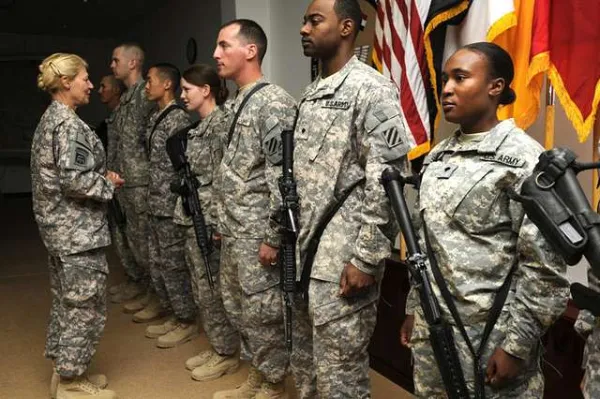
Ah, the children!
They belong to us, sayeth the Department of Defense. At least some of them do.
It’s a little more complicated than it used to be, thanks to one of the changes that occurred back in 1973, a year of startling historical significance. That was the year of the Roe v. Wade decision and, oh yeah, the Watergate hearings (remember those?). But there was more. The United States, tangled militarily in the quagmire of Vietnam and increasingly torn apart on the home front by protests, was on the brink of conceding defeat in Nam and getting the hell out of the ravaged country. Before that came about, the military-industrialists made a pragmatic decision. They got rid of the draft.
The idea was to shut up the protesters by taking away their personal stake in America’s militarism. The term that was then emerging was “Vietnam syndrome” — people were sick of war. Uh oh! Big problem for the defense industry and all the groveling politicians indebted to it. Patriotism itself had become poisoned. People began calling for profound national change, including (God help us) an end to war. Was the antiwar movement becoming the new patriotism?
Remarks on September 19, 2022 for online event at https://peaceweek.org
Powerpoint here.
Thank you for including us. After I speak, World BEYOND War Education Director Phill Gittins will discuss the educational work that can move us away from war, and World BEYOND War Canada Organizer Maya Garfinkel will discuss the nonviolent activism that can do the same. This way, I can talk just about the easy part, which is why we should abolish war.
One of my favorite blogs is that of Caitlin Johnstone. Why have I never written about how great it is? I’m not sure. I am too busy to write about most things. I have invited her on my radio show and had no reply. I do know that one of my favorite things to do is also one of hers: correct the mistakes of others. I like to correct my own mistakes too, of course, but it’s not as much fun, and only seems useful to write about when my mistake is shared by millions. I think Ms. Johnstone has now made, in her own talented way, a mistake shared by millions in a post called “In This Disaster We Are All, Ultimately, Innocent,” and I think it’s possibly a horribly dangerous one.