
Arts
Friday, September 26, 2025 | 7:30 p.m.
Saturday, September 27, 2025 | 7:30 p.m.
COSI Planetarium, 333 W Broad St, Columbus, OH 43215
Columbus Gay Men's Chorus starts the season with our exciting VOX show called Queeriverse. This concert features all of your favorite space-themed music and will be performed in the COSI Planetarium. Not only will you hear the amazing sound of VOX while watching the Planetarium show, but your ticket gets access to COSI exhibitions before the concert.
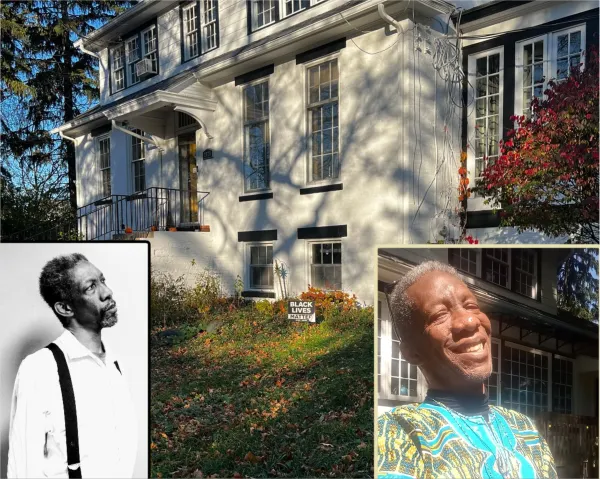
On Sunbury Road, where the city begins to thin and green again, the Agler Freedom House sits modestly behind a line of trees. Its windows are plain, the white clapboard siding unadorned. The casual passerby might miss it entirely. But the ground beneath it carries a memory older than the city of Columbus itself.
In the mid-19th century, this house stood on a quiet stretch of road that was far from quiet in its purpose. Runaway slaves – men, women, and children – moved through here at night, guided by whispered directions and the promise of safety. The Agler family, white abolitionists in a hostile state, took them in. Basements became bunkers, kitchens became waystations.
The people who stopped here weren’t simply “runaways” – they were fugitives under federal law, risking life and limb for the radical act of freedom. They were also freedom seekers, part of a network of the defiant and the determined that would come to be called the Underground Railroad.
More than 150 years later, another kind of traveler found his way to the same door.

This article first appeared on Reel Time with Richard
While much of the world is rightfully concerned about what’s going on in Gaza, the northeast African country of Sudan may be the site of even greater misery, if only because its population is far larger. After years of dictatorships, military coups, rebellion and civil war, its people—those who haven’t fled—find life a daily struggle.
The documentary Sudan, Remember Us is a record of the ways young Sudanese rebels tried to head off the current situation by fighting repression and pushing for change. These protesters are remarkable for the courage they display, but also for their creativity, as they often use poetry and other forms of art to make their points.
Written and directed by French-Tunisian filmmaker Hind Meddeb, the doc begins with scenes of military strife in Khartoum in 2023, representing the beginning of the civil war that still engulfs the country. It then flashes back four years to the spring of 2019, when a rebellion has ended the long reign of dictator Omar Al-Bashir.
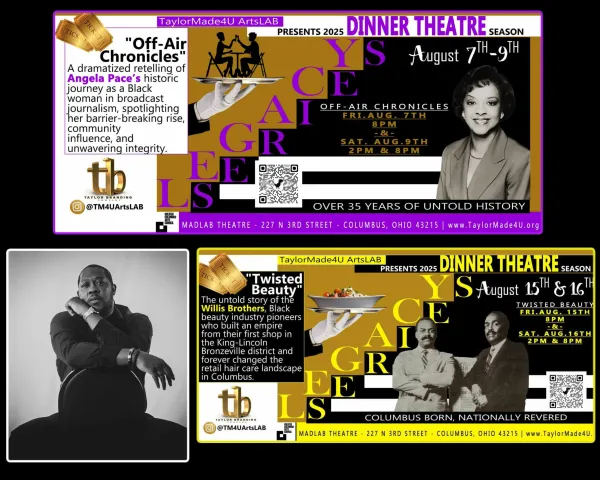
In a city that paved over its history, Z.F. Taylor is putting it back on stage.
The idea for the Legacy Series didn’t start in a theater. It began with a conversation with local business owner Todd Wilson, who spoke of the King-Lincoln Bronzeville District as a place rich in history. He told Z.F. Taylor there were stories in the community that needed to be told, stories that could “really impact the present generation and the generations to come.”
For Taylor (pictured above), a playwright since the age of 12 and a man who admits he hasn’t had a real vacation in over 20 years, that idea became a mission. The Legacy Series, he says, was born from “the need to tell stories from days gone by so that people can get lessons to help them be better for days to come”.
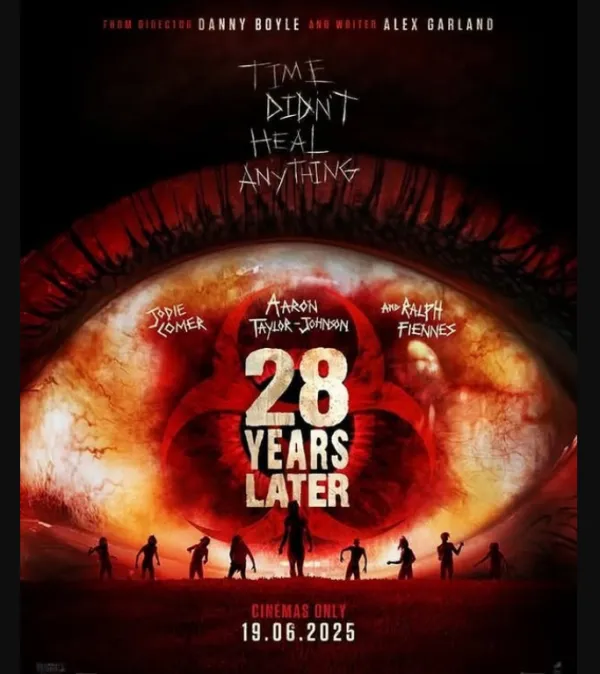
A central motif of the new horror film 28 Years Later is its statement about what normal looks like. From the outset, normality is encoded in the battle between normal humans vs abnormal, zombified ones. But another subtler message also makes itself known: normal isn’t about diversity. The film ministers to the idea of the ‘unwelcome other’ by apparently only casting people of colour in the role of zombies. And so, the real horror is in the thinking that seems to have informed the casting.
The film re-centres whiteness, under the guise of genre convention and nostalgia. In so doing, it echoes a lingering cultural mood that quietly reinforces exclusion. I should know. I’m Black and I’ve seen this mood afoot in many instances of procedural fluency - that automatic application of actions and behaviours that, in the case of race, leads to exclusion.
This article first appeared on Reel Time with Richard Ades
One of my favorite movies of 2024 was The Seed of the Sacred Fig, about a family torn apart by Iran’s theocratic dictatorship. In the same year, one of my favorite guilty pleasures was Cobra Kai, the Karate Kid-inspired TV series that was wrapping up its six-season run.
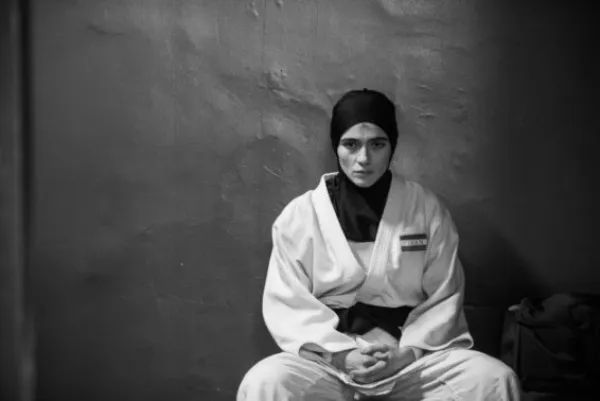
So maybe it’s no surprise that one of my favorite films of 2025 is Tatami, which combines a jab at Iranian authoritarianism with youthful martial arts.
Before you let your imagination run wild, no, this is not the tale of two dojos that trade chops and kicks while arguing over Islamic principles. Instead, it centers on Leila Hosseini, an Iranian athlete who travels to Tbilisi, Georgia to take part in an international judo competition.
Portrayed with fierce determination by Adrienne Mandi, Leila psyches herself up for what she knows will be a grueling test of her skill and stamina. In one long day, a series of bouts will pit her against some of the world’s toughest competitors.
This article first appeared on Reel Time with Richard Ades.
As a documentary about a woman who deals with trauma with the help of exercise, Jeannette reminds me of a movie I wanted to make years ago. The main difference is that my film never got made, probably because I didn’t know how to create a space in which the woman in question felt safe enough to tell her story.
Director Maris Curran, obviously, does know how. She partly accomplishes this by avoiding the kind of probing interviews one generally sees in documentaries. Instead, she allows her subject to simply live her life in front of the camera.
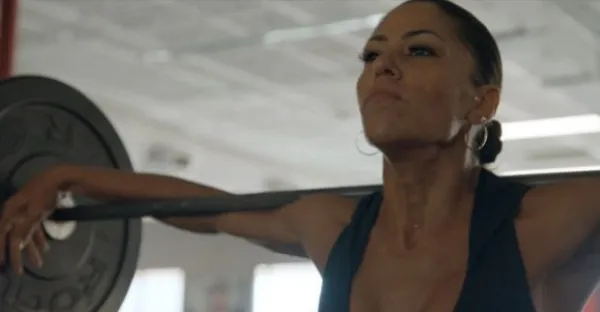
Curran’s subject is Jeannette Feliciano, a survivor of 2016’s horrific mass shooting at Pulse, a gay nightclub in Orlando, Florida.
Besides being a survivor, Jeannette is also a lesbian, a single mom, a Latina, a personal trainer and a competitive bodybuilder. All of these facets of her life are represented in the documentary’s one hour and 18 minutes, though some are given more space than others.
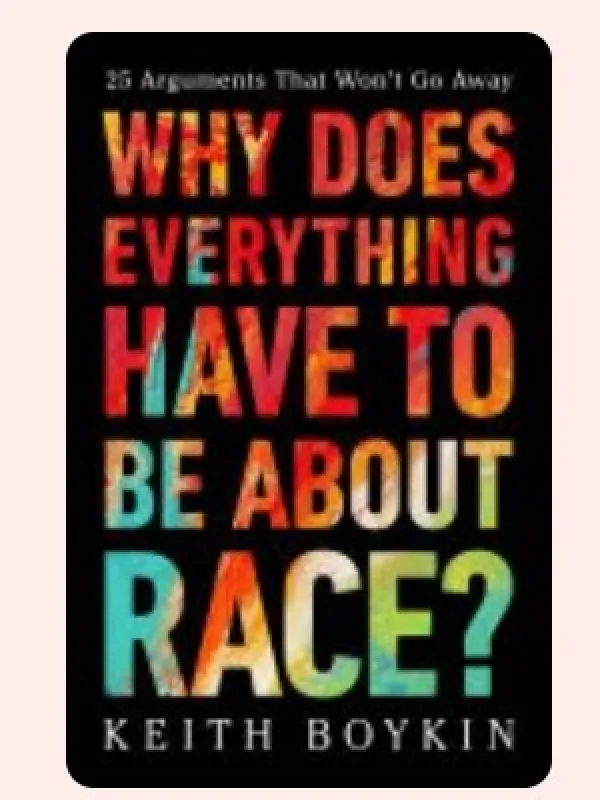
I would swear on the graves of my parents and four grandparents that this is the most common question from white people when a race-related incident occurs or the subject of race comes up. It is often asked with an exasperated tone of voice, accompanied by an oh-here-we-go-again eye roll, and followed by an explanation from the white person about how they cannot possibly be racist because they have a Black son-in-law or frequently go to lunch with a Black co-worker or root for whatever team LeBron James is playing on. (Many years ago a manager in a now defunct women’s store I used to patronize told me “I should be a Black person because I love soul music so much” when a song by a Black recording artist began playing on the Muzak system.) Being thought of as racist is insulting and scary for many white people. It immediately puts them on the defensive.
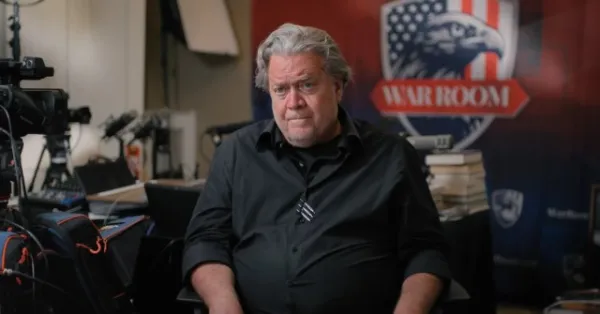
When Donald Trump talked about immigrants eating people’s pets during a 2024 presidential debate, he was carrying on a longtime Republican campaign tactic: Win the votes of White Americans by scaring the hell out of them.
According to Andrew Goldberg’s documentary White With Fear, this strategy can be traced back at least as far as the 1968 presidential campaign. Even though the controversial Vietnam War was still raging, we learn, the campaign of Republican Richard Nixon focused mainly on race.
Among the film’s many interviewees is author Rick Perlstein (Nixonland), who explains that the GOP worked to recapture the White House by tapping into many White Americans’ hatred of Blacks. This was done largely through innuendo and dog whistles.
When Nixon pledged to support “law and order” and fight crime, for example, it was understood that he was talking specifically about Black crime. The candidate’s subtext was hard to miss when he made statements such as referring to Black-majority Washington, D.C. as “the crime capital of the world.”
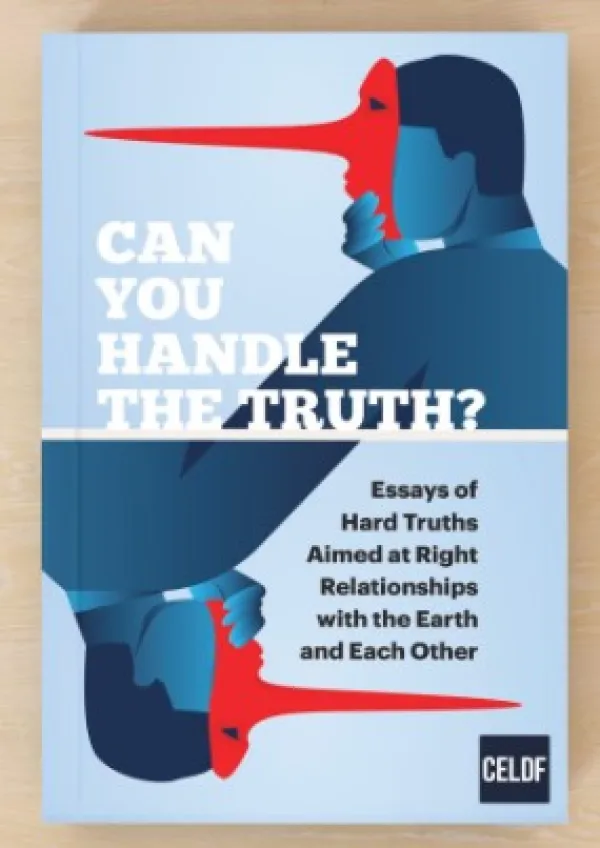
The Community Environmental Legal Defense Fund (CELDF) is proud to announce the publication of “Can You Handle the Truth? Essays of Hard Truths Aimed at Right- Relationships with the Earth and Each Other.”
It includes pieces written by Kai Huschke, Tish O’Dell, Terry Lodge, Michelle Beatty, Max Wilbert, Will Falk, Chad Nicholson, and Ben G. Price.