
Arts
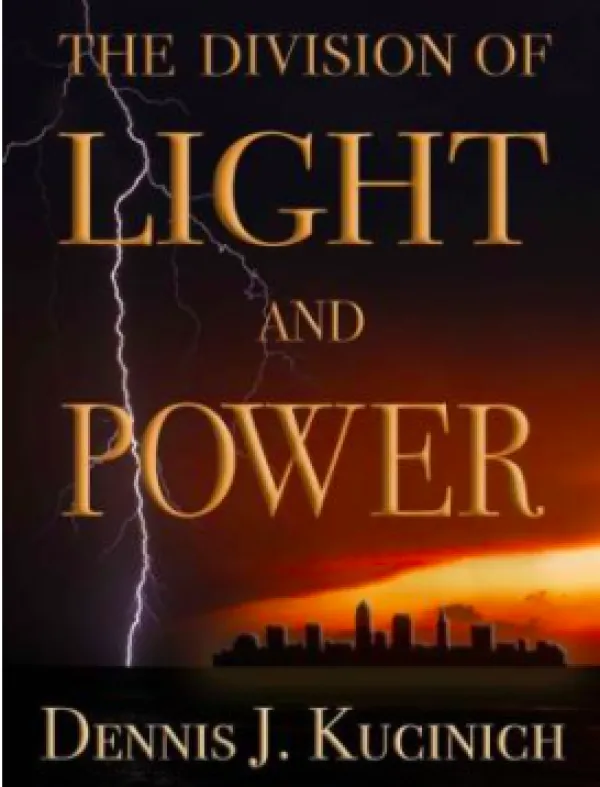
Dennis Kucinich was a hero of mine.
His newly released book, The Division of Light and Power (Finney Avenue Books), is all about how he became a hero to me nearly five decades ago when he was first a Cleveland City Councilman and then, for one glorious but controversial term, was the mayor of Cleveland, then the largest and most powerful city in Ohio.
The book is well worth reading if you, like me, were old enough to be aware of Kucinich's rise to power. If you are younger and want to learn about the era, the book will enlighten you as well.
I was living 60 miles to the south in my hometown of Ashland, Ohio. We got all of our TV and much or our radio from Cleveland, not to mention the Cleveland Plain Dealer, then the largest and most powerful newspaper in Ohio.

Alabama and Argentina. Cleveland, Columbus, Cuba, and Czechoslovakia. Guinea, Haiti, and Kent. Mauritania and Mexico. New Jersey, New York, and Romania. Sierra Leone and South Sudan. Youngstown and Vietnam.
What do these places have in common?
Find out as you read Far From Their Eyes, Ohio Migration Anthology (Volume I). Each story, essay, painting, and poem in this anthology is rooted in at least two worlds – the physical place where its creator lives, today, and the place from which they and their ancestors came.
Sign up here to get first notice and please share and support this work: https://bit.ly/OMAVolumeOne.
61
No one was talking, and that pissed Jefferson off.
Torture was needed.
He was already being tortured, torn asunder by love and duty. He dialed O’Grady, to pass it on.
“You wanted to dust those bills? Where do I go?”
“Forget that. Something’s happened. Hang on,” O’Grady said. She put the phone down on her desk and began speaking to those around her.
“When was this supposed to have happened? Police radio, right? Let’s make sure we get an accurate report log time. We need a copy of that call,” she said, picking up the phone.
“Your buddy got shot and killed.”
“Who?”
“Edgar Smith Wilson. That’s right, that’s the photo I want,” she said to someone else on her end.
“Okay,” a voice in the background said.
“Now. Yeah, what’s her name’s Dad. He was coming out of a restaurant Downtown. Got killed a few minutes ago in a drive-by. Broad daylight, right on the sidewalk.”
“Damn! Anybody else get killed?” Jefferson said.
“Nope. Turn on channel 6, they got a news break. I gotta go,” and she hung up.
54
Sunrise.
Toby rolled out of his bed and walked to the front door. He opened it and looked down, expecting to see his pile of papers, delivered to him by one of the nicest guys on the planet, Jake Adler, his circulation boss for the Bugle. Mr. Adler took care of his few carriers. Most had been replaced by married couples who drove cars.
Instead of seeing his pile, there was nothing.
Thankfully, it wasn’t raining. Toby hustled down the steps to the sidewalk. He saw Mr. Adler’s car, double-parked, just down the street to his left. He didn’t see Mr. Adler. He knew the car well because his dad had one, just like it, same color and everything.
He ran back up the stairs to inside the door and put on flip-flops, and hustled back down the stairs and onto the sidewalk toward Mr. Adler’s car.
Toby came even with Mr. Adler’s car and the one it was double-parked next to. The cars looked weird, though.
He walked slowly into the street, behind Mr. Adler’s car. The car looked like it had rolled down the hill, backwards, into the car parked on the curb. Toby cautiously walked up to the driver’s window and looked inside.

Mack Beggs has a problem. The Texas teen is an accomplished wrestler, but the state forces him to wrestle girls. That’s because Mack was born a female, and though he’s begun transitioning to male, Texas law requires young athletes to compete in the gender they were assigned at birth.
Mack is one of three teenagers portrayed in Changing the Game, a documentary directed by Mark Barnett that examines the controversial issue of trans athletes in a way that’s compassionate, thoughtful and evenhanded. It’s also comprehensive, as each of the youths lives in a different state, and each state has a different way of dealing with the issue. Also featured are:
• Sarah Rose Huckman, a competitive skier who lives in New Hampshire, which allows trans athletes to compete in their chosen gender, but only if they’ve undergone reassignment surgery.
• Andraya Yearwood, a track athlete who lives in Connecticut, which allows all athletes to compete in their preferred gender regardless of where they are in the reassignment process.
41
Lynette O’Grady had a habit of quickly and succinctly identifying a solution to a particular problem, part of what made her a good editor, and who she is.
This day, she indulged another habit: looking at a pair of shoes, in the House of Guillermo, served by Cesar.
“Yes, miss, how may I help you?” he said.
“Everything in here is so lovely. I’ve heard about this place, but this is my first time in. I don’t really need any shoes …”
“Oh, miss, please, never say those words,” he urged.
“A woman -- every woman -- occasionally needs new shoes. It is part of who you are, or perhaps, who you want to be.”
He flashed a smile as he took her elbow and led O'Grady to a wide display of low-heeled shoes.
The showroom was arranged, shoes on one side and other footwear on the other, both by height of heel. O’Grady saw the symmetry immediately.
“This is fascinating,” she commented.
“Let’s see, if we were to replace the shoes you have on with this outfit, I would suggest … Let’s see what size you are,” Cesar said as he led O’Grady to a chair.
In seconds, she was seated and measured and he was off.
36
Ablock later, the bus stopped again, and Anton stepped on, fumbling for change.
“Oh, man,” Anton said, counting out what he had.
“How much you need?” Jim said.
“I don’t know. A buck?”
“Here,” and Jim peeled off a dollar bill.
“Thank you, sir.”
“You owe the next guy.”
“I got that,” Anton said, sitting down across from Jim.
The bus took off and rumbled down the street. After six blocks or so, Anton leaned across the aisle.
“Buy you a beer?” Anton said to Jim.
“Sounds good,” and the two were out of the bus.
“There’s a place around the corner,” Anton said.
“Hester. I know it,” Jim said.
“Anton Evers,” holding out his hand to shake.
“Wallace, Jim Wallace,” shaking Anton back.
Both men instinctively thought they’d heard each other’s names before, somewhere.
The men walked in, eyeballed a booth and sat down. A cute waitress, Ebony, sauntered over.
“Couple a beers?” she said, wiping the table.
“That'd be fine,” Anton said.
“So, what are you doing out tonight?” Jim said.
“You wouldn’t believe me if I told you.”
25
Isabel entered the restaurant, and Kate and their father, Edgar Smith Wilson, waved her over. He dutifully kissed and hugged both girls, his girls.
“Can you believe, we’ve never been to this place?” Isabel said, placing her cloth napkin on her lap. Sister Kate looked at Dad.
“I, uh, that is, we came here, but only once before,” he said, looking into his lap.
“Really? When was that?” Isabel said.
“The night … we took you to Pleasant Gardens,” Kate said.
“We needed a good meal and this place was close,” Edgar said.
“Yeah, Pleasant Gardens. Kind of makes me hungry for a big salad. Can you believe that? What am I, a veg-head? Hell no, I need a steak,” Isabel said, closing her Ten Commandments tablet-sized menu and letting it fall into the fourth, unoccupied seat at the four-top.
“What’d you find out?” Edgar said.
“The malls in Rome weren’t built to be shopped in one day,” Kate said.
“Crab cakes! That’s me,” Isabel said.
“Two,” Dad said.
“Copycats,” Kate said.
The meal concluded, time for talk. Edgar reviewed the plan of the Exercise. Short and sweet.
15
Jack Barns hung up his phone with a finger tap on the desk. He loved his desk, just like the one in the first Tron movie.
Screen, keyboard, phone, all touchscreen through the desktop glass. The only thing on the desktop was a bottle of mescal and a small glass, which Barns filled.
He grabbed the glass and walked to the floor to ceiling window of his office, looking out over Philadelphia. Louise entered the room, carrying some papers.
“Did you eat anything today?” she mothered.
“Those chicken wings at the lunch meeting, they were pretty good,” he said.
“Marilyn is here. Do you want to see her?”
“No. Send her in,” he said. Marilyn entered the room.
“Are you it? I thought we were having a meeting,” she said, heading to one of the few comfy seats in the room. She pulled out some papers and dropped her briefcase loudly on the floor, kicking it a few extra inches.
“Like a drink?” Barns said, tapping his desk.
“Can you get Ms. Ece a …” he got out before Louise entered and interrupted.
8
Jack Barns punched his cell phone, texting. The intercom on his desk buzzed. He tossed the cell phone onto the desk with a clatter and punched the in-desk phone.
“Yes, Louise?”
“Ms. Sachs and her party are here for their 10 o’clock.”
“Tell ‘em to swing it in,” and they did.
“Come in, let’s sit over here. The view is better. Anyone care for a drink?” Barns said.
“Tequila and a Coke, in separate glasses, for Mr. Smith Wilson,” Louise said without prompting.
“Ms. Sachs will take Zia-Zong tea and Mr. Papilov will have black coffee, correct?” she said, walking to the bar on the side of the room.
Their drinks dispensed, Louise left the room and closed the door behind her. Papilov pulled a flask from within his coat pocket and spiked his coffee.
“Well?” Barns said. “Where do we stand?”
“You said not to poke around PPD yet. Did you make your call?” Sachs asked.
“No, because there’s something else,” Barns said.