
Arts
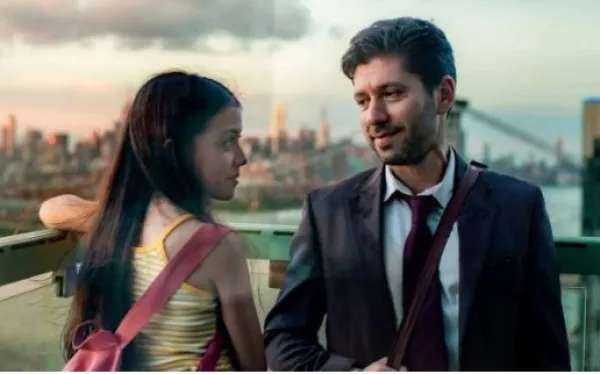
As the cheating husband who drove his wife to a life of comedy in The Marvelous Mrs. Maisel, Michael Zegen proved he can play a cad without losing the audience’s sympathy. By the end of the series, in fact, we were rooting for him almost as much as we were for his joke-telling ex.
In the comedy-drama Notice to Quit, as actor-turned-real estate agent Andy Singer, Zegen again relies on his natural likability. So, it seems, does first-time writer/director Simon Hacker.
Perhaps more than he should.
To be blunt, Hacker gives us almost no reason to cheer for Andy, an ethics-challenged New Yorker who’s down on his luck. To name just one of his vices, he regularly makes extra bucks by stealing appliances out of vacant properties and selling them to a ragtag gang of thugs.
Then, just as Andy is being evicted from his apartment because he’s behind on the rent, 10-year-old daughter Anna (a relatable Kasey Bella Suarez) shows up and wants to spend the day with him. She’s mad because her mom (Andy’s ex) is moving to Florida, and she doesn’t want to go.

This article first appeard on Reel Time with Richard.
A good fireworks show begins with a “wow” and ends with a “WOW,” filling the space in between with enough peaks to fuel our anticipation. MJ: The Musical, based on the life of Michael Jackson, follows that formula almost exactly.
The action has barely begun when the title character (an amazing Jamaal Fields-Green) launches into an MTV-worthy rendition of the Jackson classic “Whip It.” Then, nearly 2½ hours later, the show is only minutes from its finale when it delivers the song-and-dance number we’ve all been waiting for: “Thriller.”
And by the way: When I say “delivers,” imagine the word being followed by multiple exclamation points. The number is so over-the-top astounding that it alone would nearly justify the original Broadway production’s Tonys for choreography (Christopher Wheeldon, who also directs), lighting design (Natasha Katz) and sound design (Gareth Owen).
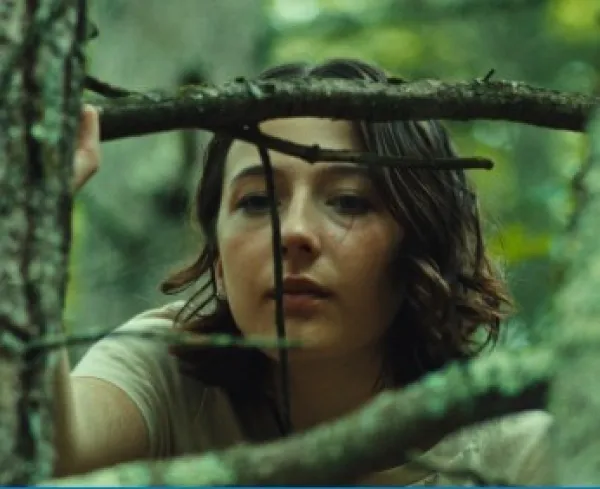
When you’re hiking through nature, you miss a lot if you’re not paying attention. The same holds true when you’re viewing Good One, the story of a teenage girl’s hike through the Adirondacks with her dad and his best friend.
Seen mostly through the eyes of 17-year-old Sam (Lily Collias), the flick is full of telling moments, but few of them hit you over the head. Instead, writer/director India Donaldson expects you to watch and listen for clues about what Sam is going through.
Fortunately, Collias’s face registers the girl’s most fleeting thoughts, and cinematographer Wilson Cameron’s lens is right there to capture them.
Taking place over three days, the film follows along as Sam goes on what seems to be a family tradition: an extended hike with her dad, Chris (James Le Gros). They were supposed to be accompanied by both Chris’s friend Matt (Danny McCarthy) and his teenage son, but the son bails out following a last-minute family argument.
This leaves Sam alone with two divorced, middle-aged men whose egos and life experiences sometimes make them difficult traveling companions.

This article first appeared on Reel Time with Richard.
Kneecap is a movie about Irish rappers who deliver their rhymes in their native Irish. As such, it can be a lot for American viewers to absorb, especially since it unfolds at a take-no-prisoners pace.
Once you get your bearings, though, writer/director Rich Peppiatt’s debut flick is a blast and a hoot.
The title refers to an actual Northern Ireland hip-hop band that took its name from the painful punishment often meted out by republican enforcers during the period of upheaval known as “The Troubles.” Set in 2019 or so, long after relative peace has arrived, the film purports to be the band’s origin story.
I say “purports” because Peppiatt’s clever script no doubt takes massive liberties with reality. If the story still has an air of authenticity, it’s partly because the band members all play themselves, and they do so with panache and conviction.
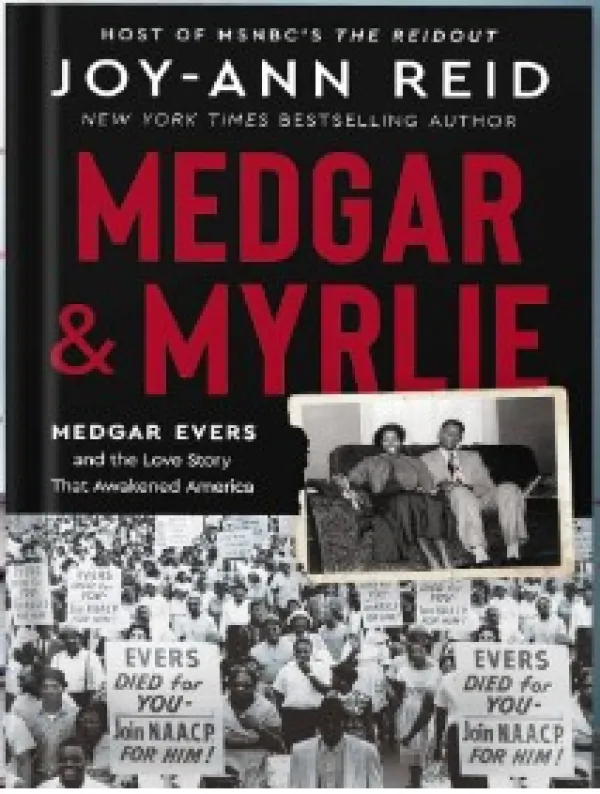
After Fannie Lou Hamer, Medgar Evers is the black freedom fighter I most admire. Born in 1925 near Decauter. Mississippi, and reared in the most racist state in the union–the historian Lerone Bennett called it “the worst place in the world for a black boy”–Evers was one of five children in a family that included two children from his mother’s previous marriage. His father owned a small farm and worked in a sawmill to support his family.
Black children in the south learned about the deadly consequences of stepping out of line early, and the lessons were reinforced constantly. When Medgar was eleven or twelve years old, a family friend was lynched for allegedly talking back to a white man. Evers remembered that the man’s bloody clothing was left on a fence for almost a year, and everyone acted as though nothing untoward had happened. The refusal to acknowledge the event helped keep the black community safe and alive.
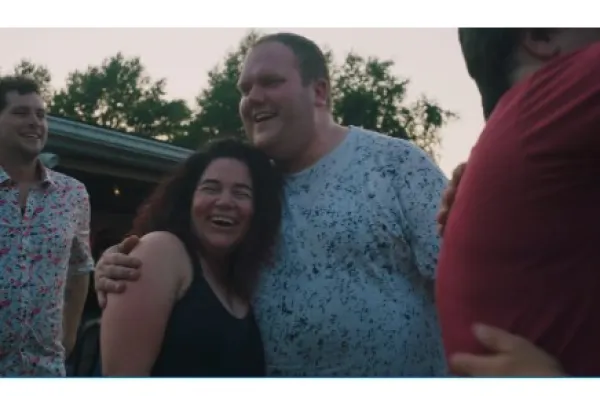
At the beginning of Conversion, a man tells the story of his first love—and first loss.
At 15, he had a boyfriend whose parents had put him through a doctor’s treatment program in an attempt to convert him to heterosexuality. After classmates discovered the two youths holding hands behind the school, the boyfriend said he was terrified that he’d be sent back into the program.
Later that night, he took his own life.
“Our love killed him,” the man remembers thinking at the time. But, of course, what really killed the boy was society’s problem with homosexuality, as well as the doctor’s attempt to “cure” him through what’s often called “conversion therapy.”
Though this practice is now widely condemned and even illegal in nearly half of U.S. states, thousands of LGBTQ people have been subjected to it down through the years. Three of them tell their stories in Zach Meiners’s new documentary.
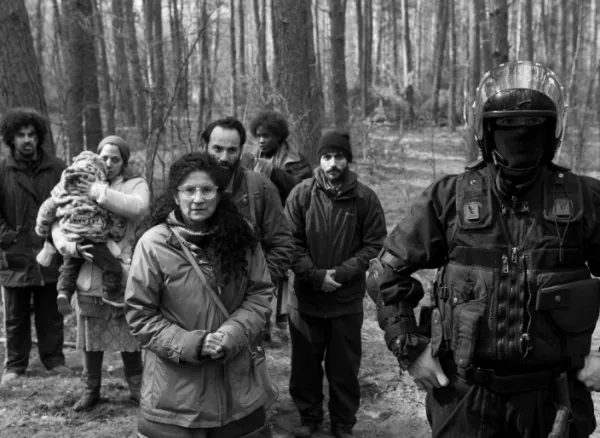
The life of a migrant is an unending battle for survival.
That was the message delivered by 2023’s Io Capitano, the story of two Senegalese teens’ perilous attempt to reach Europe. And it’s a message that comes across even more terrifyingly in Agnieszka Holland’s Green Border.
The acclaimed director sets her tale in a specific time and place: the border between Poland and Belarus in 2021. The year is significant because that’s when Belarusian dictator Alexander Lukashenko encouraged desperate people from around the world to travel to his communist country, where they supposedly would be guaranteed safe passage to Poland and the rest of the European Union.
As the film opens, we meet several people who’ve taken advantage of Lukashenko’s offer by catching a flight to Belarus. Among them are Bashir and Amina (Jalal Altawil and Dalia Naous), a Syrian couple who are traveling with an older relative and three young children. There’s also Leila (Behi Djanati Atai), an Afghan teacher fleeing Taliban persecution.

Listen to "Everybody Knows with Dr. Bob and Dan-o" on WGRN 91.9FM on Fridays at 11pm or streaming at wgrn.org.
They play tunes by bands that have performed at past Community Festivals and talk about their experiences.
Free Press Network radio archive.

Renowned Ohio based artist Samuel Deji Adebuga is set to unveil his latest exhibition on Saturday, July 13th at the 700 Bryden building in Columbus, Ohio from 4pm to 8pm. The exhibition, titled "Deji Adebuga: The Retrospective Exhibit 2024" will showcase Adebuga's unique artistic vision and talent.
Adebuga's latest collection captures the essence of human emotions and experiences, offering viewers a thought-provoking and immersive artistic journey. Through his masterful use of color, texture, and composition. Adebuga invites audiences to reflect on the complexities of life and find connection in their own personal narratives.
The exhibition will feature a diverse range of artwork. " Art is a language that has given me access to new narratives, using mixed media to exaggerate details in mostly traditional-based motifs." explains Adebuga. Adebuga's signature style, characterized by bold brushstrokes and expressive forms will be on full display, captivating art enthusiasts and collectors alike.

The Columbus Gay Men’s Chorus (“CGMC”), central Ohio’s premiere TTBB vocal organization, is presenting their annual summer concert series, this year titled BANNED, on June 22 and 23 at the Riffe Center’s Davidson Theatre. The concert purposefully is influenced by current affairs, and is a reflection of the LGBTQIA+ community’s strong feelings about them.
“I, along with so many in the Queer community, have been scared, concerned, and angry about the way that our government is attacking oppressed individuals,” said Brayton Bollenbacher, Artistic Director for the Chorus. “These bans are meant to make us feel isolated and alone. But we aren't. We are an upset community of people that are tired of politicians making decisions that harm our community.”
Woven through the poignant concert’s lyrics, choreography and imagery are thematic elements of book bans, references to “Don’t Say Gay” legislation, affirmations of women’s and immigrants’ rights, and those of the transgender community. Bollenbacher said that BANNED’s programming is about “fighting back.”