
Editorial

I call the public’s attention to today’s radical, unprecedented, unconstitutional, and inhumane campaign to ban books in schools. It combines intersecting dimensions that span history, education, child development, and respect for the text and legal and cultural traditions of “We the People,” “Public Welfare” and “Public Interest.” It includes the rights of children, for which we fought from the late 19th century into the present.
I write as a historian of literacy and education, and children and youth; a teacher of college students for almost 50 years; and a concerned citizen. My colleagues and friends include authors of national prize-winning, young adult novels banned in several states on false grounds.
To your surprise, perhaps, my answer is an emphatic, unqualified NO. In this Busting Myths column, I will be schematic, but I am prepared to expand my understanding of both city and state in response to readers’ questions. For background, I refer you to my essays on the city and state published in Columbus Free Press since September 2021, available on the website.
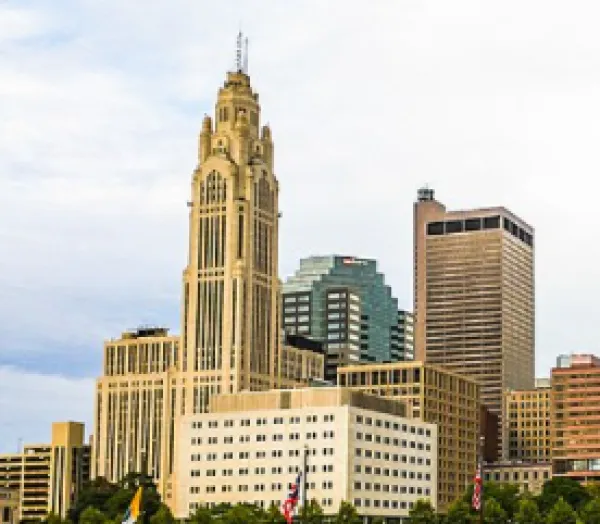
Is Columbus really a City: That’s capital “C” City as in legally established, organized, managed?
Despite ranking 14th in the United States and growing, Columbus has no identity or sense of itself as an urban place. It has no agreed-upon landmark(s). Consider the Columbus Dispatch’s amateur “historians’” flailing efforts. Being one of innumerable Columbuses or Columbias across the nation is only one indicator. Its media are well below average. And, it has no signature professional sports team or mascot. Brutus Buckeye and “Carmen, Ohio” don’t cut it.
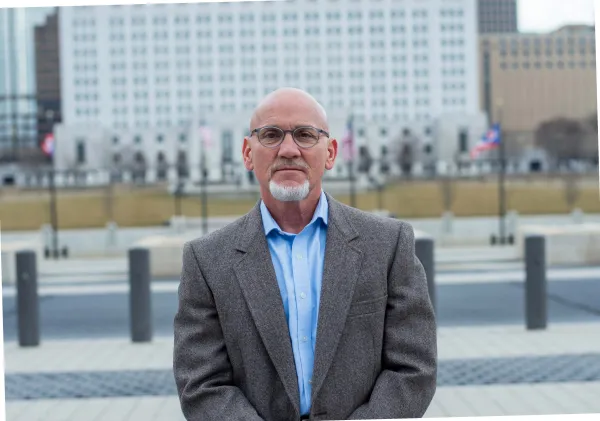
Joe Motil, former Columbus City Council candidate and longtime community advocate who is strongly considering running for Mayor in 2023, states that, “It is long overdue that Mayor Ginther, Columbus City Council and our Franklin County Board of Commissioners join together and invest $120 million of city and county allocated federal American Rescue Plan funds towards affordable housing. Along with a matching $60 million investment by The Columbus Partnership and its 84 members, a desperately needed immediate infusion of a $180 million-dollar affordable housing investment can be realized. These funds could provide up to 5,000 affordable housing units for those wage earners at 60 percent AMI ($35,200) and less.”
At tonight’s Columbus City Council meeting, a total of $5.5 million in American Rescue Plan (ARP) funds were voted on and approved for the YWCA, YMCA, Faith Mission, Maryhaven and Southeast Inc. This would leave a balance of about $44.7 million of the city’s current ARP funds along with another $93 million that is to arrive next month totaling $137 million in available funds.
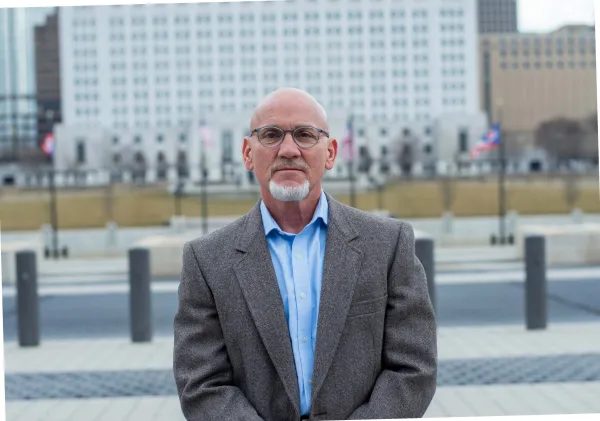
Joe Motil, former Columbus City Council candidate and longtime community advocate who is strongly considering running for Mayor in 2023 states that, “Mayor Ginther’s continued Enterprise Zone tax abatement hand outs at the Rickenbacker logistics center and elsewhere need to be repealed. And with Intel’s presence, the need for tax incentives as an enticement to locate at Rickenbacker and in other Columbus locations makes no sense at all.”
This past Monday, Columbus City Council members approved of a $5.34 million 10-year tax abatement to the athletic sportswear company lululemon USA Inc. The company has operated a distribution warehouse since 2014 at the Rickenbacker logistics center which is one of the if not the number one most risk-free development logistics centers in the United States. Rickenbacker boasted a vacancy rate of its warehouse space of 2.1 percent at the end of the recent 4th quarter.

Ohio's governor is given such great authority that experts say that the officeholder is one of the five most powerful state chief executives in the country.
Then there is Mike DeWine, Ohio's current governor, who acts likes he is among the five least powerful governors in the country when it comes to redoing state legislative and Congressional districts.
DeWine is one of seven members of the State Redistricting Commission. If he had chosen to exercise his authority and his power to persuade, the Ohio Constitutional fiasco would have been over weeks ago and the May 3 primary would be full speed ahead with candidates having filed their petitions.
Instead, the fiasco continues at this writing with the Ohio Supreme Court having turned down the state legislative districts three times and the Congressional boundaries once with more judicial rejections in prospect and the chances of holding the May 3 primary for those races reduced to zero.
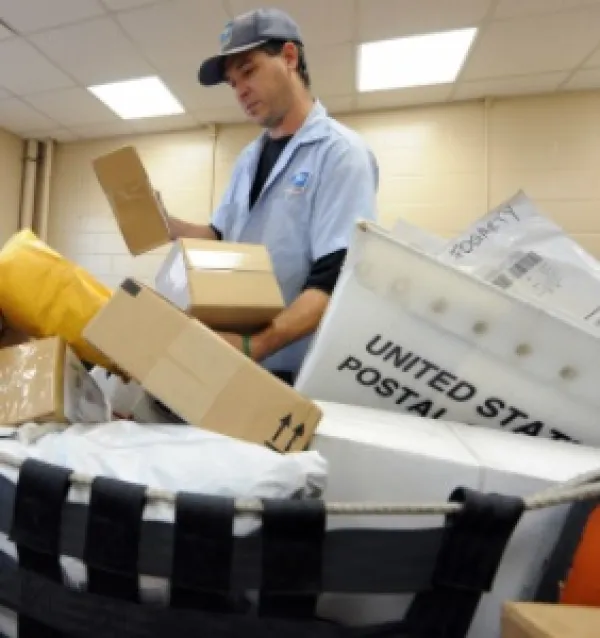
For more than 18 months I have suffered failing service from the U.S. Postal Service. Beginning with Donald Trump’s appointment of the unqualified campaign contributor Louis DeJoy, who also invests heavily in competing delivery services, my household along with countless others no longer receives either daily or on-time deliveries. DeJoy claimed that he acted to control costs and cover the poorly designed postal workers’ retirement fund. But at the same time, he actively cut back on legally mandated services and endorsed Trump’s and his allies’ partisan and illegal efforts to repudiate legally endorsed mail-in balloting (which my household has done for more than a decade legally and without incident, and safely during the pandemic).

I have written about Columbus’ identity crisis and the failure of its media and especially the non-daily, non-news Columbus Dispatch in both the Columbus Free Press and ColumbusUnderground, but I have only touched briefly on WOSU, the Ohio State University-owned, local National Public Radio affiliate. (See “Columbus’ identity crisis and its media”; “Response to Columbus Alive, ‘The list: Reasons that Columbus Underground opinion piece is trash,’ by Andy Downing and Joel Oliphint, Columbus Alive, July 26: A visit to journalism fantasy land”; and “The Columbus Dispatch: The decline of a metropolitan daily newspaper.”)
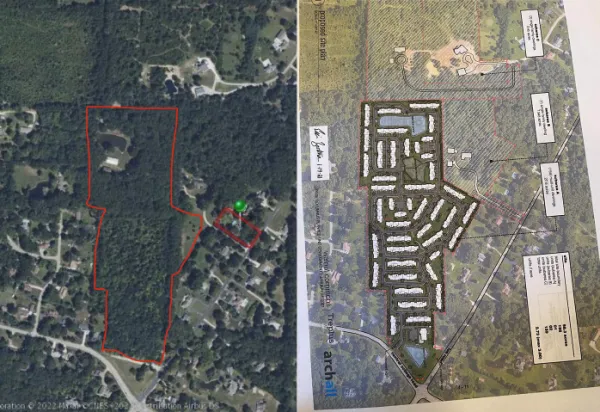
I recently received a phone call from Andrew Nortz who is a 6½ year resident of Blendon Township and whose one-acre property abuts a new development of 27.88 acres that is currently being cleared for 156 units of one- and two-bedroom one story apartments. He asked if I would meet with him and his wife and listen to what they had to say about how they and other neighbors were bamboozled by the City of Columbus, developers and the developers’ seasoned zoning attorneys. Andrew had read about my involvement in fighting alongside of the Little Turtle neighborhood against the jaw-droppingly unethical Little Turtle Roadway project that is just around the corner from Blendon Township.
Columbus City Council unanimously approved the rezoning of the property in July of last year. Mr. Nortz gave me a tour on March 16 of the 27.88 acres that is now being developed. He said the area is home to wild turkeys, fox, deer, owls, hawks, raccoons, numerous bird species, wetlands, natural springs and vernal pools.

The Ohio State University strikes out again. From evidence-free slogans to an ordered, bought, and delivered “consultant’s report” to Campus unSafety non-Alerts and Campus unSafety Officers, who are inactive and lack direction. Note the repetition of Campus, and not Campus and Off-Campus or university area. Is the confusion ignorance or purposeful?
Shortly following OSU’s release of the Security Risk Management Consultant’s “Off-Campus Safety Assessment Report and Recommendations,” an off-campus student reported a gunshot through the window of his East 12th Avenue rental house. That “report” was commissioned from a New Albany-based, primarily “corporate campus” security evaluation firm that had never before studied an off-campus university area. Not surprisingly, it “praised” the university’s off-campus safety measures, adding a few modest, obvious, and long-overdue recommendations and photos of everyday, illegal trash.

As I have written in these and other publications, Columbus is poorly served by its major media, from its no-longer-daily Columbus Dispatch, owned and operated by the USA Today/Gannett chain, to its three network TV affiliates and its NPR affiliate. None actively and reliably serve their publics or fulfill the press’s and media’s historical and democratic mission. (See my columns, “Columbus’ identity crisis and its media”; “Response to Columbus Alive, ‘The list: Reasons that Columbus Underground opinion piece is trash,’ by Andy Downing and Joel Oliphint, Columbus Alive, July 26: A visit to journalism fantasy land”; “The Columbus Dispatch – The decline of a metropolitan daily newspaper”; and “WOSU, the nation’s worst NPR affiliate?