
Editorial
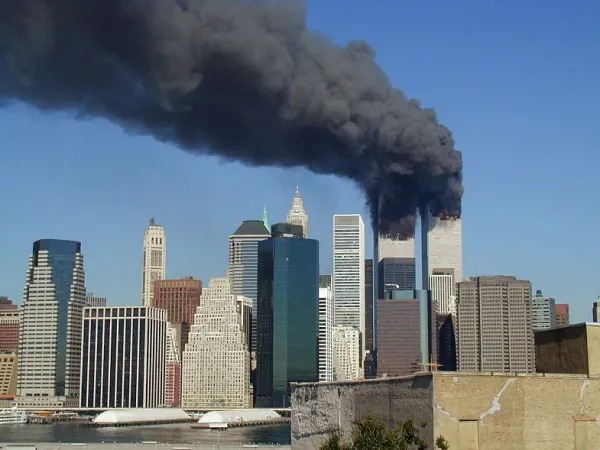
Like many Americans, I’ll never forget where I was on 9/11. Fittingly, I was in world history class during my senior year at Bexley High School — the hallways had already been buzzing about a possible terrorist attack in New York City that involved hijacked airplanes. Since it was September 2001, we didn’t have smartphones or ample Internet access to quickly check the facts, so we wheeled in a portable TV from the Teacher’s Lounge and fired up the network stations. Sure enough, as the static faded from the screen, images of the Two Towers billowing black smoke across lower Manhattan became visible and our worst fears were realized. At that point, I had only been 18-years-old for over a month, but 9/11 was the day I went from learning about world history to watching it on live TV. By the time the bell rang, the first tower had collapsed into the streets of New York and with it, as Hunter S. Thompson wrote that day, “all hopes for Peace in Our Time, in the United States or any other country.”
Systemic racism. According to some sources it’s a form of racism that is embedded as a normal practice within society or an organization. Recently, Merriam-Webster has decided to change their definition of racism to reflect systemic oppression and examples of such actions. I don’t have to read someone else’s definition of systemic racism. In fact, no minority person, who is aware of what it entails, needs to read it. We live, hear about it and see it, almost daily.
It happens everywhere, even in the grocery line. I was fourth in the line at Save-a-Lot in Northern Lights on Cleveland Ave, which is in a minority area. The line had stopped moving and I heard the security guard, white, say “Where’s your receipt for that?” in an aggressive manner to a clean cut, nicely dressed middle aged Black man. The man was speaking in low voice tone and I didn’t hear his response. The guard said, “How do I know you brought that across the street?”
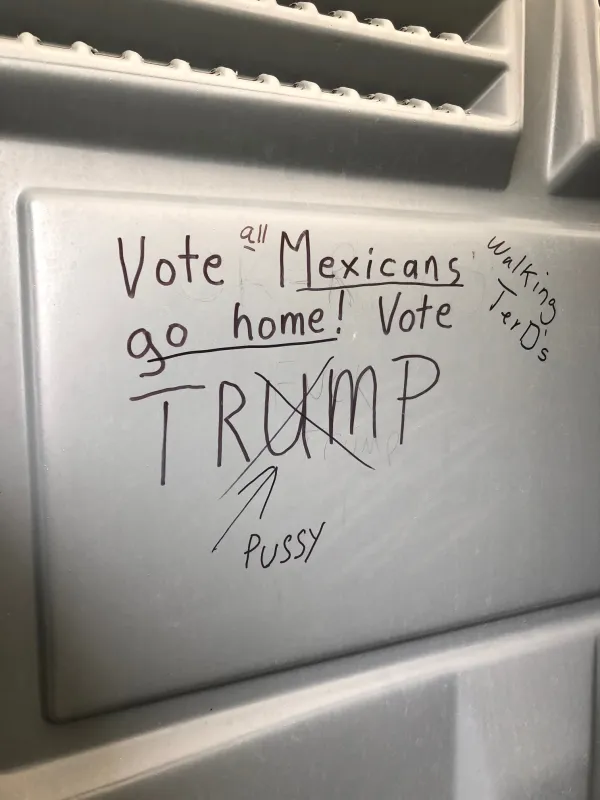
Former Columbus City Council Candidate Joe Motil states that it is finally time for construction industry leaders to begin addressing the racist, sexist, and homophobic environment on construction projects here in Central Ohio. Columbus Business First reported (Facebook data center construction halted in New Albany after "racist graffiti" found on site) today that Turner Construction halted work activities at the Facebook Data Center construction site in New Albany due to “racially charged graffiti” that was scrawled on six portable toilets on the site. The Facebook construction project is currently the largest project in Central Ohio.
The company said, “This is totally unacceptable. We suspended work to send a message about how serious we take this behavior and to provide time for every single person on the site to participate in anti-bias training. Work will resume when training is complete.”

Recently I've become aware that OSU wants to build a new power plant that runs on fracked gas, and it's got me pretty angry both as a student and as a taxpayer. I’m a third-year undergraduate student at OSU's School of Food, Agricultural, and Environmental Sciences. The global climate crisis is no new topic to me. I've been hearing about it, its causes (chiefly fossil fuel usage) and its solutions (replacing fossil fuels with renewable energy sources), since the 1st grade. It's always been a looming problem in my mind but I always assumed that our society would adjust and solve the problem. Evidently, the steering wheel is still in the hands of people who don't feel the same urgency that my generation feels. I enrolled at OSU because I thought of it as a cutting edge research school. I thought it'd be part of the solution to the biggest problems of this era. This proposal has shown me that the reality is much less promising.
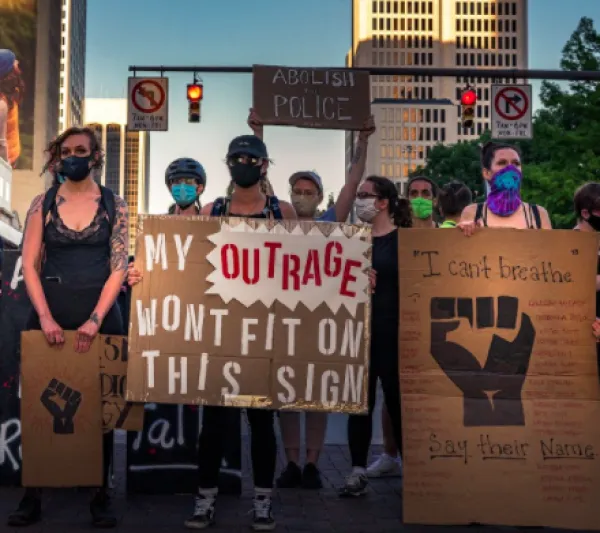
The United States of America has spent much of its modern history ignoring the most important problems it must solve to be able to move forward as a contemporary democracy. A country that attempted to correct the horror of slavery after the Civil War and experienced a strong Civil Rights movement in the 1960s, stopped short of eradicating racism. While some Western European countries kept trying to consolidate an environment with more equity in politics and economic rights with an understanding of the role of regional alliances, the US insisted on a political and economical model that increased the breach between the rich and poor. US society in general didn’t address the structural failures of a system that embraces several levels and kinds of segregation among the components of society.
It seems that a storm arrived in the context of an inoperant fascist government and it just became bigger with the pandemic and the explosion of civil rebellion towards a problem that has been ignored and even denied for too long -- racism and inequity.
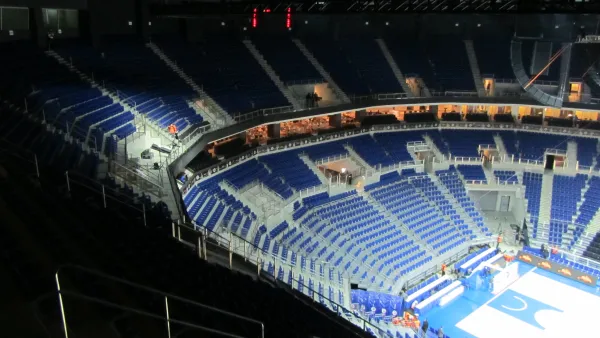
This fall the citizens of Franklin County should vote in Nationwide Arena.
As we saw in the spring primaries, there is huge confusion about where our citizens can vote. The shabby, little-known, woefully inadequate voting center on Morse Road is a shameful disgrace to our democracy. With the Pandemic we will not have the ability to staff and maintain the usual wide range of neighborhood voting facilities that have been traditionally spread around the county.
Instead, as will be done in Atlanta, our largest indoor sports arena offers an ideal alternative. Should we opt for two locations, the Schottenstein Center on campus might also be used.
Nationwide Arena is owned by the public. The decision to use it for the fall election can be made by city council, in concert with the county election board.
Nationwide is secure, safe and centrally located. It has plenty of parking. Everybody knows where it is.
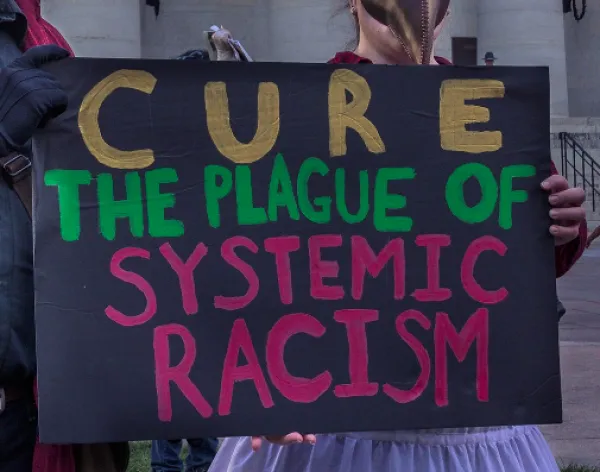
It’s maddening that the three words “Black Lives Matter” is so hard to say for some of our public officials. Those in the majority of the Ohio Assembly, where a resolution was introduced to declare racism a public health crisis earlier this month, would do our country a great service in urging their allies to learn to say it and mean it. But considering that the US Vice President won’t say it, those of us who’ve been in the streets proclaiming it shouldn’t be surprised when so few people in power are willing to use those words, let alone show up in the streets to say it with us.
As someone who’s worked with both organized labor and justice-seeking organizations from before the first shot in this recent uprising was fired—who has participated in dozens of direct actions, petition drives, and various other campaigns that either directly or secondarily had to do with racism—I have a question. As someone who, like anyone with a shred of empathy within them, was horrified in watching any portion of the 8:46 video in which yet another police officer murdered another Black man, I have a caveat to this support.
Back in the mid-sixties, in the heady days of Lyndon Johnson’s ‘Great Society Program,’ I was working in my first job out of college as an ‘intergroup relations professional’ at the Detroit Commission on Community Relations. I spent my days helping to enforce newly enacted ‘open housing’ and ‘equal opportunity’ ordinances designed to begin reversing centuries of injustice against African Americans in the Motor City.
With two sociology degrees focused on race relations on my vita, I was assigned to design and facilitate a program of ‘racial sensitivity training’ for Detroit’s entire -notoriously racist - police force. The program was funded under the then newly created Federal Office of Equal Opportunity.
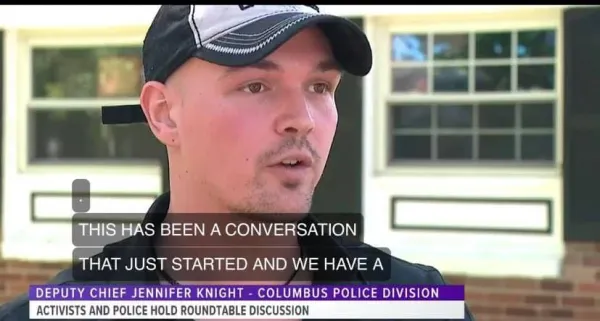
With groups of young people taking over downtown Columbus, the George Floyd protests are unique in how decentralized their organization has been and how social media was used to coordinate thousands to converge on downtown.
Many groups have shared the mic and they have similar goals to completely restructure the concept of policing.
But this decentralized movement – a fundamental strategy for today’s protesters – has led some local protesters to separate themselves from others so to promote what some believe are “softened” demands to city government and Columbus police.
At warp speed many protesters soon felt they were being led by people they have never met, who are spreading a message many protesters don’t agree with.
How did the Columbus protests become co-opted by group(s) who don’t share the same vision and goals as the majority of protesters? And just exactly who are some of these group(s) who seemingly materialized out of clouds of tear gas?
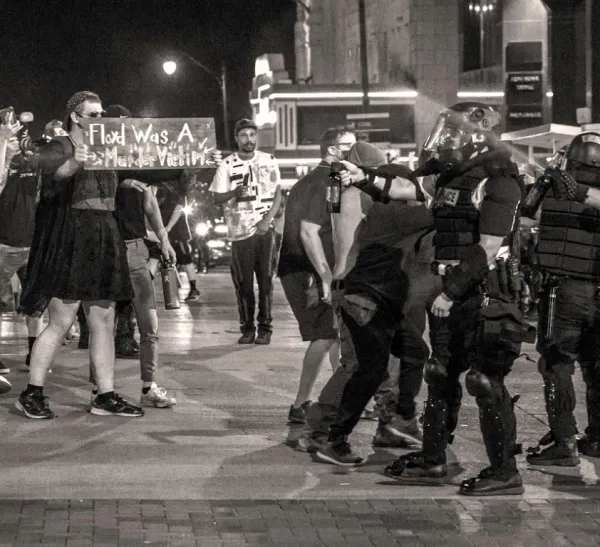
Columbus Police Chief Thomas Quinlan, in a news report today, May 31, 2020, was quoted as proclaiming: “Saturday night sent a strong and clear message and [that he] hopes it prevents more destruction.”
Quinlan referred to the draconian and unnecessary curfew imposed on Columbus Saturday, May 30 by Mayor Ginther, and the Ohio National Guard and Ohio state trooper deployment to try to stop the city’s anti-police brutality demonstrations.
Such a tone deaf statement, sadly typical of our Columbus Police Department (CPD) for so many decades.
No Tom, your message tells us this:
· No one in city or state government or the CPD has heard a word the demonstrators are saying
· City and state priorities are that broken windows are more important than lives lost to police brutality
· City and state priorities are that demonstrations must be tamped down, and the safety and health of protestors is irrelevant (hence macing in the face)
· The status quo of racism and police brutality in the city and CPD is in place and nothing will change
· You think you’re being a tough macho guy but really it seems cowardly.