
Editorial

The powerful global response to the terror attack on the French magazine Charlie Hebdo must now face a terrifying reality: It’s a horrible thing when an organ of free speech is assaulted and journalists die.
It will be an apocalyptic thing when it happens to an atomic reactor and whole continents are irradiated, with children first to suffer, a death toll in the millions and eco-economic impacts beyond calculation.
For decades our global security apparatus and its attendant media mavens have pretended that the radioactive elephant in the room of global terror does not exist. But after Fukushima, Chernobyl, Three Mile Island, 9/11, Charlie Hebdo and so much more, a terrible reality has become all too clear.
We have seen four American-designed reactors explode and three melt at a single Japanese site. A severely escalated thyroid cancer rate has followed, with more health disasters yet to come. Some two dozen sibling GE reactors currently operate in the U.S.

An uneasy but hopeful 2015 unfolds as we celebrate The Free Press’ 45th year. We began as an underground OSU campus-based newspaper in October 1970 by activists enraged over the Kent State killings and the senseless Vietnam War. The Free Press has gone through many iterations over the years as a publication and website. Though we’ve always struggled with funding, we’re trying to publish this newspaper twice a month in 2015. If you have a business or service you’d like to promote, please contact our ad sales staff to help support our mission – to comfort the afflicted and afflict the comfortable.
Obama’s left turn: too little, too late?
Looks like Obama has grown a spine at the last minute, knowing he’s a lame duck in his last two years. The president lifted the embargo and recognized Cuba, announced he will veto the Keystone pipeline, changed the enforcement of immigration laws, wants college education to be free….what’s up? He’s finally doing the things the majority twice elected him to do. Maybe next he’ll free Leonard Peltier.
Don’t Gintherize Columbus!

The Ohio Rights Group (ORG) proudly continues its mission of support for the medical, therapeutic and industrial uses of the cannabis plant in Ohio. The group still enthusiastically supports the Ohio Cannabis Rights Amendment (OCRA), which would codify those uses as patient rights into the Ohio constitution.
Although the number of signatures collected so far was insufficient to make the fall 2014 ballot, the proposed amendment remains viable and is still being circulated to gather the 301,105 signatures of registered Ohio voters now necessary for ballot placement. The total count for signatures was lowered from 385,247 following the recent gubernatorial election in which the turnout used to calculate this requirement was much lower than in 2010. The ORG has so far collected approximately 150,000 signatures for the OCRA, roughly one-third to one half of those required. The law governing ballot initiatives also mandates signatures from 44 counties of Ohio’s 88 counties to exceed 5 percent of that county’s gubernatorial vote. This benchmark has been met for 30 Ohio counties, or almost 70 percent of that requirement.
I think some of you have wondered where I've been, at least I'd like to hope so. Indeed, I've missed the intermittent hate mail and compliments from people nowhere close to my intended audience (fellow nonwhite revolutionary socialists under 35 where are youuuuuuuuu). Initially, my hiatus was borne out of dirty rotten old-fashioned opportunism. I was figuring that if I was going to write for free, I might as well do it on my own platform. But I would also be selling myself short, because to be real wid it, I was also getting a low-key case of drapetomania.
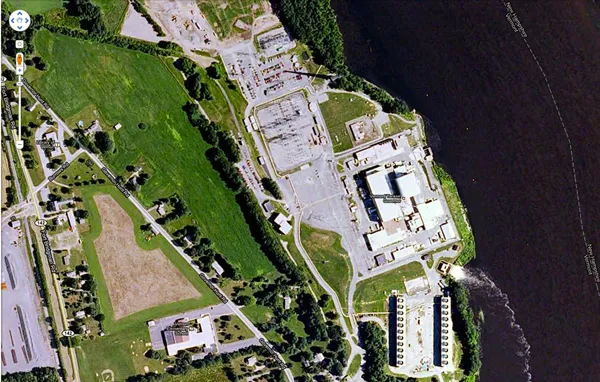
As Ohioans fight to shut the state's two dying reactors, good news has come from Vermont. Thanks to decades of dedicated activism, the Vermont Yankee reactor at Vernon was permanently shut down on Dec. 29, 2014.
Citizen activists made it happen. The number of licensed U.S. commercial reactors is now under 100 where once it was to be 1,000.
Years of hard grassroots campaigning by dedicated, non-violent nuclear opponents, working for a Solartopian green-powered economy, forced this reactor’s corporate owner to bring it down. Hopefully, the same can be done--SOON!---to the dangerous, decrepit reactors at Davis-Besse, near Toledo, and Perry east of Cleveland.

There is a mental health epidemic in our midst and it is happening to some of our best people.
While the United States government continues its eternally self-defeating War on Drugs, the Veterans Administration (VA) is producing junkies at an exponential rate. But the drugs they are taking are legal. And one side-effect doesn’t last long because you won’t be around to suffer – its suicide. No surprise is that one veteran commits suicide every hour, this according to the VA.
Post Traumatic Stress Disorder is the number one affliction affecting our nation’s Iraqi and Afghanistan veterans. And after rotating countless patients through every single antidepressant and antianxiety medication that modern psychiatry has to offer, the VA says they have a cure.
The VA believes the most successful medication prescribed for combat PTSD is the benzodiazepine. A class that includes Xanex, Valium, Klonopin, and Adavan.
THE GOOD
In a historical breakthrough, the U.S. Department of Justice appointed U.S. attorneys to investigate “election fraud” in Ohio and the nation.
In a surprise move a day prior to Election Day, U.S. Attorney Carter M. Stewart designated three election officials to investigate voter suppression and “election fraud’ in Ohio.
“It’s our duty to ensure that all qualified voters have the opportunity to cast their ballots and have their votes counted free of discrimination, intimidation, or fraud in the election process,” U.S. Attorney Stewart said.
Stewart’s press release specifically referenced “altering vote tallies” and “actions of persons designed to interrupt or intimidate voters at polling places by questioning or challenging them…”
“Both protecting the right to vote and combating election fraud are essential to maintaining the confidence of all Americans in our democratic system of government,” Stewart said. “We encourage anyone who has information suggesting voting discrimination or ballot fraud to contact the appropriate authorities.”

Supporters of public access TV have wondered for years why the Columbus city government closed the station. The reasons given by the city never made much sense – until a previously hidden reason was recently revealed.
Bogus reason number 1: lack of money
When funding for public access TV was drastically cut in 2001, Columbus Mayor Michael Coleman told The Other Paper that the action was not taken as a reaction to the station’s program content but because of “a lack of money.”
In response to questions about public access TV in 2006, Mike Brown in the mayor’s office likewise explained that the city “faced significant budget challenges during the recession of the early 2000s, and that led to significant reductions to . . . public financing for Public Access Television.” But he said the mayor supported “the concept” of public access TV.
The approval by Columbus voters of a 25 percent incometax increase in 2009 and the resulting budget surpluses took away the “lack of money” explanation. The restoration of public access TV could therefore have been expected. But city officials didn’t do it.
If medical marijuana in Ohio will be remembered for one thing in 2014, it will be the push to place the Ohio Cannabis Rights Amendment (OCRA) on the ballot. Hardly one Ohio television station, media outlet, newspaper or magazine could be found that didn’t carry at least one story. The issue was hotly debated. Thousands of volunteers offered their time and talent. Petition circulators collected signatures at dozens of events.
But the bar for getting a constitutional amendment to the ballot is a high one, and to date, signatures for OCRA still fall short of the required 385, 247-plus. The measure missed the ballot.
“Still” is the key word, though. Each of the 100,000+ signatures collected for the OCRA thus far is “evergreen” - still good - and will remain so, unless the signed address changes.
Despite the obvious challenge, the Ohio Rights Group saw 2014 as a great success. Consider these accomplishments:

Gift-giving - Help the local economy
Free Press picks
In some family and friendship relationships, or even at your workplace, you just can't get out of the typical gift exchange. If you don't like participating in mainstream consumerism during the holiday season, The Free Press has some suggestions for alternatives to gift-giving and how to buy gifts that make you feel good.
Instead of camping out at the mall or Walmart, or using your credit card online, you can patronize small independent businesses for your gift buying. In order to save the planet, we need to re-localize, to stimulate the local economy and circulate our surplus labor value.