
Feature

If an organizing committee is at the heart of building a community organization, how do you find the people who will join that committee? This definitely is not simply “add water and stir!”
Assuming we have already identified and defined the community, for an organizing committee to be effective, it will have to be representative of that community. All of the community!
If the community is geographical, that means ideally that the organizing committee will include active members from all points of the compass. Furthermore, the committee will also have to reflect the diversity of the community, racially and ethnically for sure, but also in terms of gender and possibly religion.
Herbalists Without Borders is an international, non-profit, non-governmental organization that works to deliver health justice and humanitarian aid worldwide through direct service and volunteerism. Some chapters work in war-torn or famine-stricken nations, some chapters exclusively work with veterans, while others serve their communities’ underserved (uninsured, houseless or underemployed) populations.
In central Ohio, the chapter (HWBCO: Herbalists Without Borders, Central Ohio) is currently focused on running People’s Clinics and a People’s Apothecary, both of which are sliding scale (no one turned away for lack of funds).
Currently, the chapter runs clinics once monthly in conjunction with other mutual aid organizations: Food Not Bombs or Mothers In Arms. They hope to increase to weekly clinics as they get more volunteers. “We know the need is there, we just need to grow to meet it.” says Whitney Dunlap, and organizer with HWBCO. The People’s Apothecary is available at every clinic and each HWBCO organizing meeting (monthly on fourth Sundays of each month).
When you know, you know. Take President Donald Trump’s Cincinnati speech just before the El Paso and Dayton nightmares. A handful of lefty protestors compared to roughly 20,000 possessed Trumpers, many of whom use the N-word judiciously and have never read a book.
The Ohio General Assembly is firmly in Republican control. All statewide non-judicial elected officials are also GOP. Ohio now has a six-week abortion ban. Proud Boys are marching down Sawmill Road (with a quick stop at Walmart).
Let’s face it, Ohio is becoming redder. When you see so many speeding pick-up trucks sporting American flags, the obvious is staring in you in the face like a crazed Trump supporter ready to punch you out.
“(Ohio is) clearly becoming more conservative, a bit older,” said Ohio U.S. Senator Sherrod Brown just after Ohio’s dreadful midterms for Democrats. “We still have too many young people leaving. We don’t have enough people moving in, so it’s increasingly hard. And we see fewer workers in unions, which makes it harder, as you know.”
As we approach the 2020 presidential election, you may find yourself in a bout of confusion over the GOP’s agenda. Denying climate change, accepting support from white nationalists, and the marriage of church and state all come to mind as things that have never been promoted so radically by the party. In addition to this shortlist, they are also pawns of the tobacco industry.
In a scathing piece by the Guardian, the Trump administration was taken to task with a plethora of facts connecting it to the tobacco industry. It turns out that over the last 35 years, the president has had a mutually supportive relationship with tobacco companies. The same is true of other big names in the GOP.
These ties have allowed tobacco lobbyists to play a role in policymaking. The fact that this has not been spoken of more is odd considering that the evidence for it is so condemnatory. What’s the deal with the Trump administration’s affiliation with the tobacco industry, and how is it shaping national health policy?
In the early seventies I went to East High School and lived right smack in the middle of Mt. Vernon Ave and 21st, in a big ten room brick house. When I lived there the neighborhood was clean. People kept their lawns up and the streets clean. Adults watched out for the children roaming the neighborhoods and reported their bad behavior to their parents. Contrary to the common stereotype portrayed of black men at the time, my father was in the home, his brother was in his home, and just about everybody I knew had a father or father figure in the home.
In the eighties, Crack Cocaine was “dropped” into the Near East side area. HUD begin to outplace and outsource decent hardworking families, some who had lived there all of their adulthood, out of Poindexter Village. They replaced them with young, mostly single mothers. Some of these young mothers had friends that brought terror and fear to the village due to gang activity and drug activity that caused the “decent” people to move, those who could move, the elderly on fixed incomes had to stay and live in fear, while their landlord watched and did nothing.
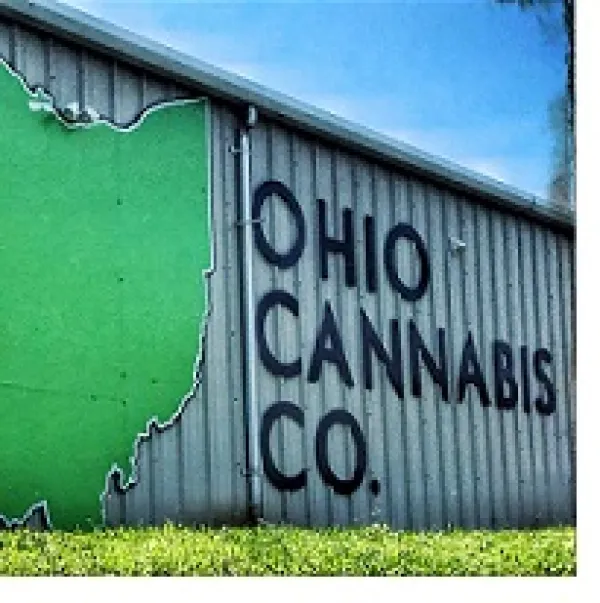
Let’s talk about purchasing medical marijuana from an Ohio dispensary. Get out your calculator, supercomputer, Alexa, Siri and a slide rule. You’ll need them. Why? Because buying cannabis can be complicated.
First, what’s allowed. HB 523, which the Ohio legislature enacted in 2016, created a system wherein qualified patients with a physician’s recommendation can purchase medical marijuana. The law permits nine forms: patches, lotions, creams, ointments, oils, tinctures, capsules, edibles and, of course, plant material, aka flower. Further, the bill established a seemingly generous maximum 90-day supply.
Implementing this quantity, though, became complicated because bureaucrats had to figure out what comprised a 90-day supply. So, they turned to conventional medicine and the “daily dose.” You know, “take two twice a day,” ignoring that most patients consume cannabis “PRN” or as needed. A puff here, a drop there. In addition, the English ounces had to be melded with metric grams.
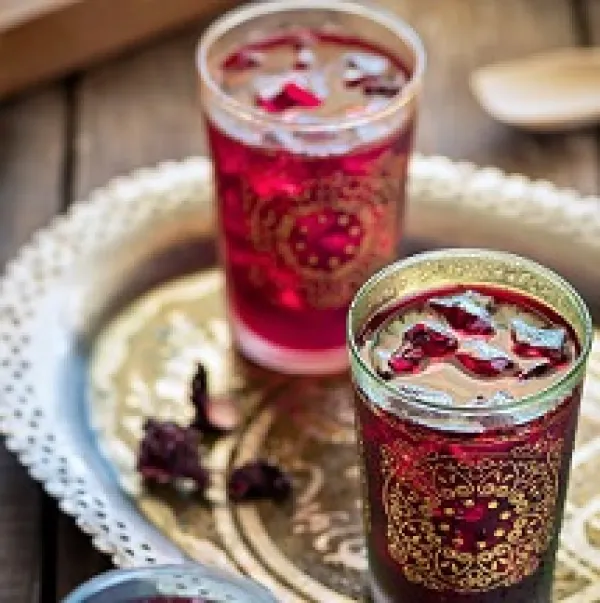
Temperatures during the summer months have been scorching. The last few weeks of July brought a dangerous heatwave throughout Ohio, the greater United States and worldwide. Staying cool during the month of August is achievable, however, with the help of herbalism and cooling energetics. Learning to harness the power of herbs — to beat the heat —is a valuable tool as more sweltering days approach.
Yet, how on earth can herbs help the human body to cool down? When working with live plant medicine it is important to consider that the life force of the plant itself has its own energy. The subtle energetic properties of herbs hold valuable answers on how one might use them to dissipate heat. Just as each human is born with their own unique set of genes, so are plants.
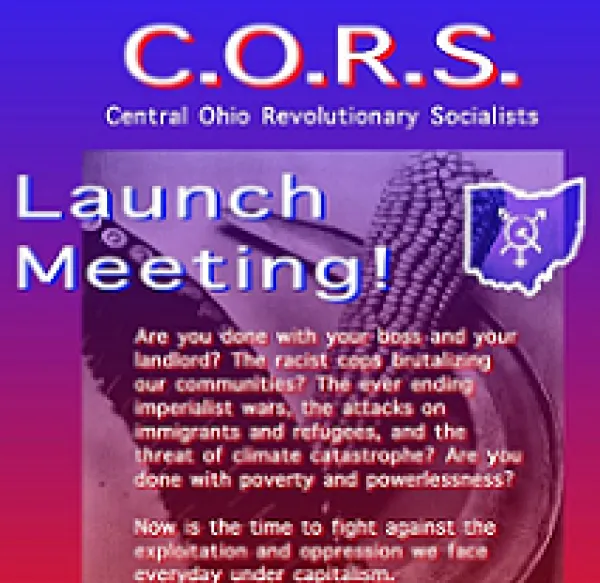
On Thursday at 7pm, Central Ohio Revolutionary Socialists, CORS, will have their first launch meeting. The event title is, “Revolution in our Lifetime: CORS Launch Meeting” and it will be held in St. Stephens Episcopal Church. CORS will host two launch meetings to discuss their points of unity, their code of conduct, and their membership requirements to let leftists in the city know about their revolutionary project.
On Thursday at 7pm, Central Ohio Revolutionary Socialists, CORS, will have their first launch meeting. The event title is, “Revolution in our Lifetime: CORS Launch Meeting” and it will be held in St. Stephens Episcopal Church. CORS will host two launch meetings to discuss their points of unity, their code of conduct, and their membership requirements to let leftists in the city know about their revolutionary project.
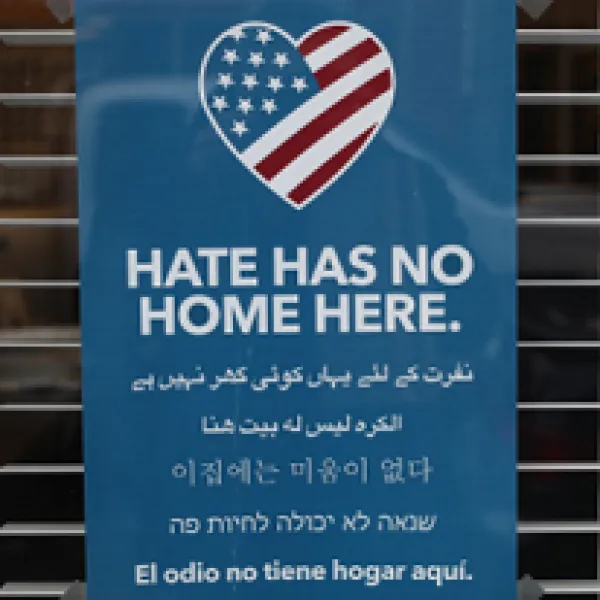
In 2017, the year that Donald Trump was inaugurated, there was a 17% increase in hate crimes within the United States from the previous year. Due to the prejudiced rhetoric spoken by the new leader of the free world during his campaign, some accused him publicly of being responsible for the rise in these kinds of crime. President Trump has not had much to say on the matter.
However, the number of hate crimes within the demographics his campaign demonized (people from the Middle Eastern and Latin America, Muslims, and LGBTQ+ people) were particularly notable. As reported by Roll Call:
Most of the 7,175 cases in 2017 involved race-based bias, though there were at least 1,564 cases that involved bias against certain religions. People were targeted for their sexual orientation in 1,130 cases.