
Feature
During my life I have met and interacted with four women who have been diagnosed with Multiple Sclerosis. There is one common thread between all these four women. They all have lost their only child to accident, disease, terrorist attacks, between their ages of 7 and 10. Another trend I noticed, when I was volunteering at a drug rehabilitation center in India, is that apart from dealing with addiction, about 6 to 7 families out of 10 were also dealing with a loved one's cancer diagnosis.
In this scenario two things were noticed consistently. The person who was diagnosed with cancer was always the one who shared an extremely close bond with the person who was an addict. And second the diagnosis of cancer always came about 4 to 6 years after their loved one was suffering from full blown addiction. I have always wondered if there is a connection here between sense of loss, helplessness or any other negative feelings and dis-ease.
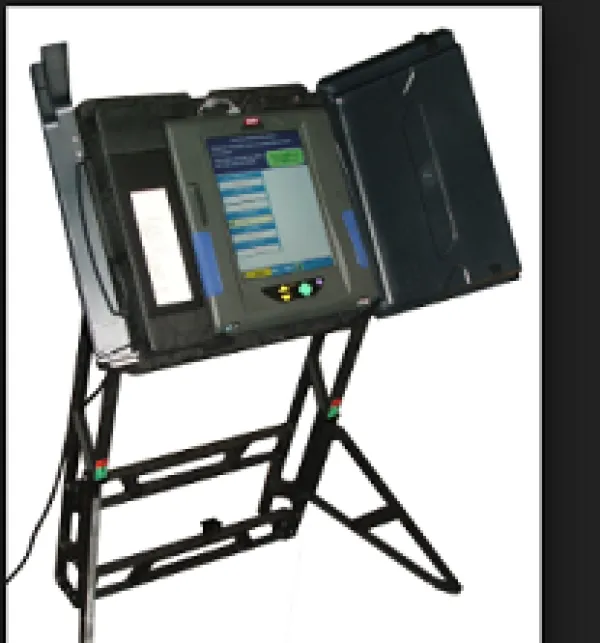
The speed that hackers were able to breach security on dozens of electronic voting machines at one of the United States’ largest cybersecurity conferences underscores the long-standing problem with computerized electronic voting systems in our country. At the annual DefCon cybersecurity conference this July, hacker managed to break into every voting machine within minutes, according to an article in The Hill.[1]
Thomas Richards, a security consultant, said “It took me only a few minutes to see how to hack it” referring to the Premier Election Solutions voting machine currently used in Georgia.[2]
Computerized voting in the United States was promoted by an interlocking industrial complex of political operatives, technicians and vendors.
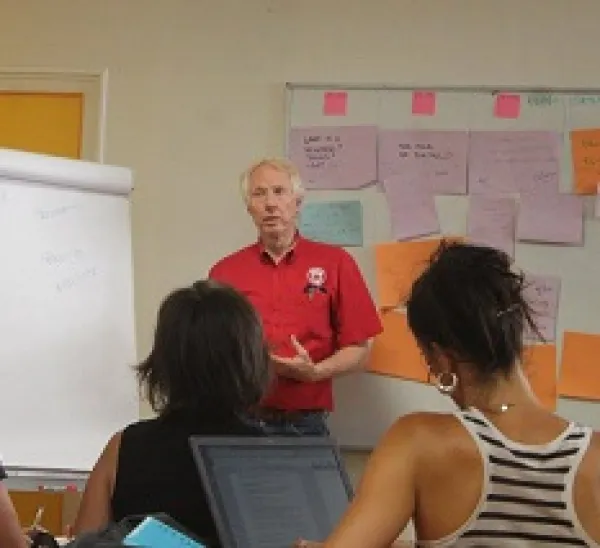
An issue might be burning through the community. Friends and colleagues might always be talking about a nagging issue. A problem or grievance that might have seemed personal turns out to be shared by many who want a vehicle to demand justice and win change. Whatever triggers the drive to build an organization dedicated to building power and achieving change, if is worth doing, it is important to keep alive, and that means that sustainability always matters.
Sustainability in organizing is a euphemism for self-sufficiency. Self-sufficiency requires organizational control of financing.
There are two sources of organizational funding. One is external funding and the other is internal financing. Sustainability privileges either source if it is driven and determined by the organization itself.
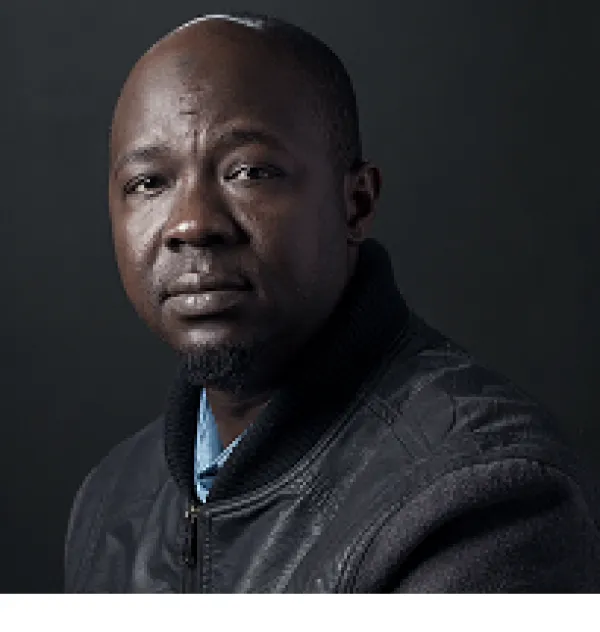
“Freedom is indivisible,” John Kennedy once remarked. “When one man is enslaved, none are free. In Columbus, I had the opportunity to interview four men who have been directly affected by a system of slavery and brutal racism in the West African country of Mauritania. Three are either seeking or have received asylum because of slavery. The fourth is an abolitionist, who is running for president of Mauritania, Biram Abeid. Ahmed Tidiane raises money to support ex-slaves. Omar Wagne risked his freedom and even his life to register those recently freed from bondage, so they could vote and send their children to school. Hassan Fall fought to save his aunt from the punishing bonds of slavery. Ahmed, Omar and Hassan have sought asylum in the U. S. Together, these four men have risked their lives to tell a story that highlights the repressive and brutal system now operating against Black Africans in Mauritania, but they also tell a story of hope for a tribe of slaves and ex-slaves.
Local gun safety group, Ohioans for Gun Safety is seeking to pass ballot initiative for common-sense background checks on gun sales in Ohio.
Ohioans for Gun Safety, a grassroots non-partisan advocacy group, is working to close the legal loopholes which allow for private sales of guns, particularly online and at gun shows, without background checks. There are many gun owners who strongly believe that such checks are necessary to reduce the amount of gun violence in our state.
“We are not against gun ownership,” says Marian Harris, one of the organizers. “We simply feel it is high time that common-sense background checks be put into place to reduce the number of gun sales to those who should not have access to them, such as convicted felons, convicted domestic abusers and those adjudicated mentally ill.”
Zach Sager, a gun owner himself, strongly supports the measure.
Local gun safety group, Ohioans for Gun Safety is seeking to pass ballot initiative for common-sense background checks on gun sales in Ohio.
Ohioans for Gun Safety, a grassroots non-partisan advocacy group, is working to close the legal loopholes which allow for private sales of guns, particularly online and at gun shows, without background checks. There are many gun owners who strongly believe that such checks are necessary to reduce the amount of gun violence in our state.
“We are not against gun ownership,” says Marian Harris, one of the organizers. “We simply feel it is high time that common-sense background checks be put into place to reduce the number of gun sales to those who should not have access to them, such as convicted felons, convicted domestic abusers and those adjudicated mentally ill.”
Zach Sager, a gun owner himself, strongly supports the measure.

As the Trump Administration puts efforts into weakening the Clean Power Plan, renewable energy is still increasing in Ohio. According to a new report by Environment Ohio Research & Policy Center, Ohio went from producing 1 Gigawatt hour of solar energy and 15 GWh of wind energy in 2008, to now producing 260 GWh of solar energy and 1,563 GWh of wind energy.
“The last decade has seen explosive growth in the key technologies to power Ohio with clean, renewable energy,” said Nancy Goodes, Campaign Organizer for Environment Ohio “Ohio is poised to accelerate its shift away from fossil fuels. With renewable energy prices falling and new energy-saving technologies coming on line every day, Ohio should work towards the long-term goal of obtaining 100 percent of our energy from clean, renewable sources.”

At first glance, there is not much in common between the 19-year-old single mother living in the Kibera slum of Kenya pictured here and the Ohio State students pictured below. More than 7,800 miles separate them, they’ve never met and they lead very different lives, but one issue connects them.
Mercy is a patient at her local Family Health Options Kenya (FHOK) clinic, which no longer receives federal aid from the U.S. because of Trump’s Global Gag Rule. Mercy depends on the health care and family planning services FHOK provides to give her daughter the best possible life, and these Ohio State students are fighting to make sure those services stay available to Mercy. They volunteer their time and efforts to resist and organize against this dangerous policy.
Thursday, June 21 was Go Skate Day, which was changed to Sunday because of rain. Last time I tried to Go Skate during Go Skate Day I manage to manual a curb. A manual is a trick where you ollie up onto a surface and either coast on your back wheels or front wheels.
This year I decided to watch Embassy Boardshop's Go Skateboard Day which was held in at the Dublin Skatepark. Why am I always in Calabasas? Because they didn't fix Dodge when it would've made sense. It's OK. There are some meetings where they are building a new park at Driving Park.
I arrived at Dodge and ran into Shane Mastell who skates with all the dudes from the era Epicly Later'd was spawned from, though he is a little younger. He looked like the late Dylan Reider so we discussed beauty professions.
Skateboarding is one of those things you can't really fake. There many styles but kids know if you're wack. Shane was there because his friend John Simms was one of the judges. Simms is one of the best skaters in the history of Columbus skateboarding. Simms has a new ig (@dudleyclips) that shows footie from 90's skateboarding videos he had at home.