
Human Rights
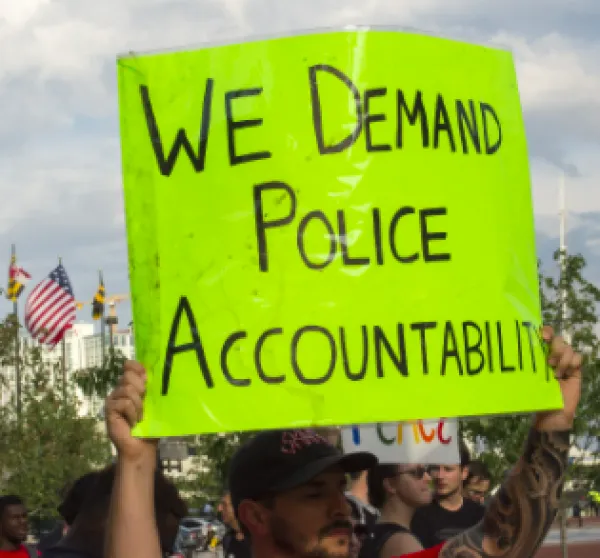
Since 1871 the Civil Rights Act has held state and local officials—including police officers—legally liable for damages if their actions violate a citizen’s Constitutional rights.
That’s until the Supreme Court punched a huge hole in the law, making it now nearly impossible to hold police officers accountable—even for acts that clearly violate the rights of citizens. Such actions multiplied massively under the war on drugs.
As part of that “war,” state and local police departments, in the 1970s, ramped-up their acquisition of military equipment and adoption of military-style tactics, including the use of Special Weapons and Tactics Teams (SWAT) and no-knock drug raids.
The timing is curious. Just as police departments began gearing up their war-like tactics, the Supreme Court created a legal defense—known as qualified immunity—in time to protect police officers engaging in such tactics.
By the mid-1990s, according to criminologist Peter Kraska, nearly 90% of U.S. cities with a population over 50,000 had a SWAT team—almost double of what existed in the mid-1980s.
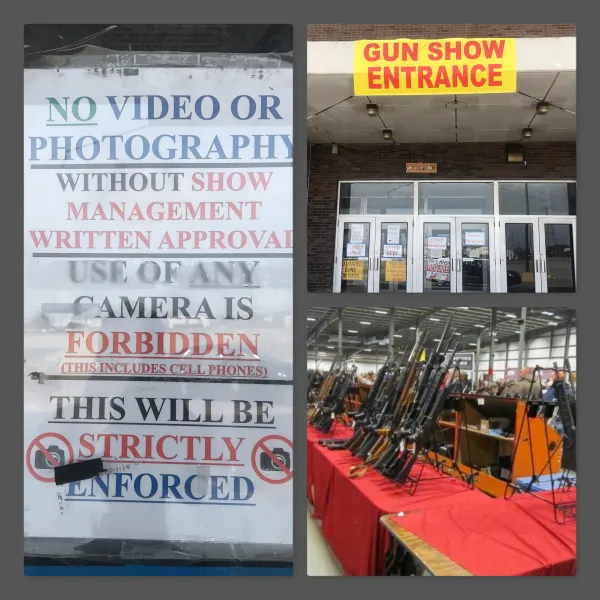
In the derelict and nearly extinct Westland Mall, where the current owner couldn’t care less about the cratered parking lot, there’s still one last tenant hanging on – and for those who enter this tenant’s premises, they must unload their gun and never, ever take a picture or video of what goes on inside. You could also easily lose your life here too, as was the case back in September.
Welcome to creepy and dystopian 21st-centruy America in all its splendor.
The Westland Mall’s glory days have come and gone but may rise again. In 2019 the entire 88 acres was bought by LGR Realty of Columbus and they have designs on finally demolishing the mall to build condos and offices, or mixed-use.
But like many commercial-leasing companies/developers they have a (greedy) disconnect about what’s best for the community, what’s truly important, and needed. And just like Westland Mall’s moon-scaped parking lot, LGR Realty doesn’t seem to care what the mall’s last renter sells or the repercussions.
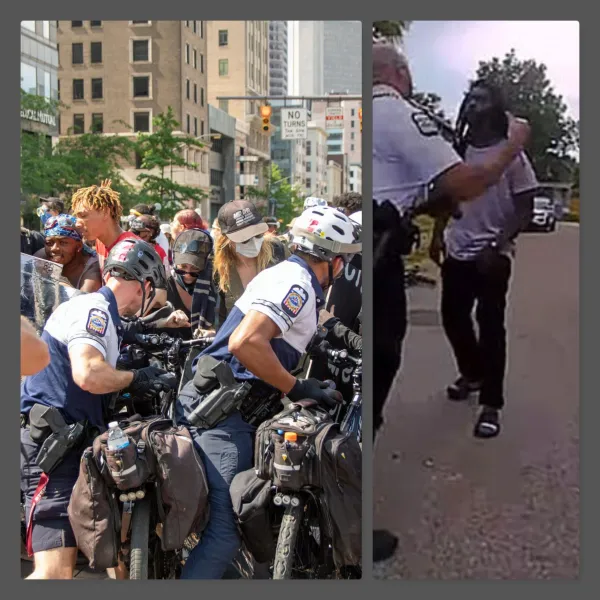
The protester civil-rights suit concluded this week as two Columbus police commanding officers took the virtual stand in the City’s defense. One commander insinuated the Division’s use of force against protesters was warranted because lines were crossed when objects were hurled at them or when the Palace Theatre was damaged.
“Most cops understand when individuals are going from peaceful to violent,” testified Commander Duane Mabry to a City defense attorney. “And so we have to move that to a large scale with a crowd. So throwing stuff at us is kind of a clue they are a violent crowd. Destroying property is a clue they are a violent crowd. Fighting amongst each other is a clue they are violent crowd.”
After the Ferguson protests in 2014, Cmdr. Mabry was tasked to give the entire Division a “refresher course” on crowd control and to continue to do so annually.
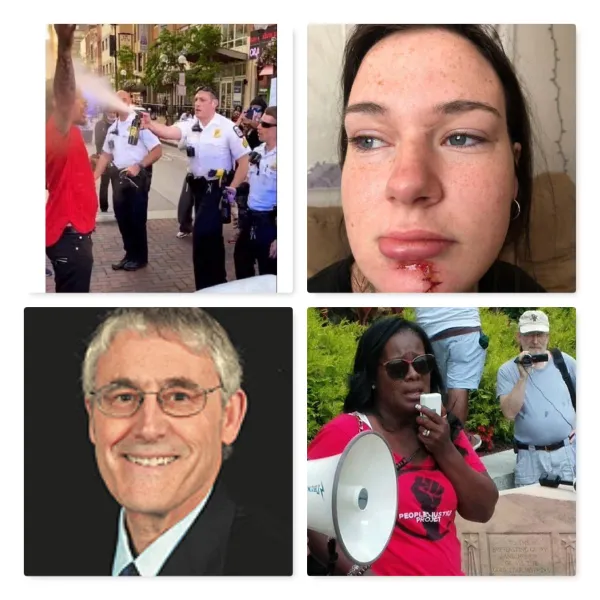
The federal lawsuit against the Columbus Division of Police’s overly aggressive and war-like response to mostly peaceful protesters is underway this week with People’s Justice Project’s Tammy Fournier Alsaada as lead plaintiff and former Chief Thomas Quinlan, the City of Columbus, and other officers as defendants.
Mayor Ginther testified on Monday for two hours, and Quinlan is scheduled to testify Wednesday morning 9 a.m. The trial can be accessed by calling 646-749-3112 with the access code 347 407 869.
On the fateful day of May 30, 2020, Alsaada was near Broad and High when she learned protesters were being arrested. She peacefully sought out Division commanding officers for explanations and to resolve any ongoing conflicts. But when she approached a line of officers, she was pepper sprayed without provocation.
An additional12 other plaintiffs were protesters.
Long-time Columbus activist attorney Fred Gittes is a lead attorney for the suit. His social justice history is well-documented, representing athletes from Ohio State who were assaulted by police to Somali residents killed by police.
On Thursday, February 18th, Edith Espinal will leave Columbus Mennonite Church, where she’s been living in sanctuary for more than three years, to meet with Immigration and Customs Enforcement (ICE) officers. While ICE officials have assured Edith is not a priority for detention or deportation, this is still a risk. That's why Edith needs our support!
Join us tomorrow, February 18th from 11 a.m. - 1 p.m. at the ICE field office at 675 Brooksedge Boulevard to keep ICE accountable to their assurances and promises that Edith is safe from detention and deportation.
The Biden administration has announced a series of immigration executive orders, including one that sets new guidance about who is considered a priority for removal. Under these new guidelines, Edith should not be considered a priority for removal and should be granted a reprieve from deportation.
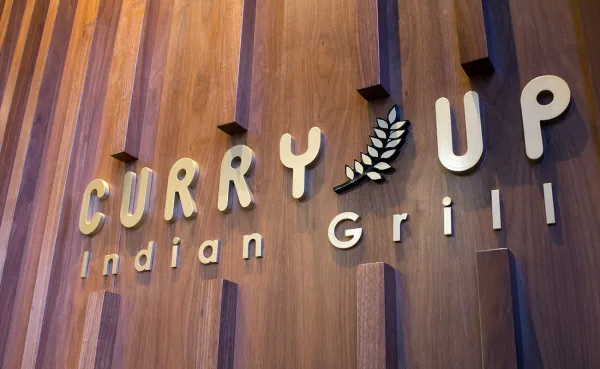
After it went public that black-owned bakery Bake Me Happy in Merion Village was on the receiving end of a racist and violent threat, another minority-owned restaurant came forward saying they too are dealing with racists making threats behind their cell phones.
Not to downplay their situation, but Bake Me Happy told Columbus police and the FBI they received threats over a single weekend. The popular and lauded Curry Up Indian Grill on Sawmill Road told the Free Press they’ve been targeted with racist calls for almost two years now, about six to ten times a month.
Curry Up owner Vishal Patel said he received a threat “just the other day.” And threats against minority-owned restaurants and businesses could be a much bigger problem than the police or public know.
Patel believes minority-owned establishments up and down Sawmill are also receiving threats, but the owners are too afraid or worried they may scare customers away if they were to go public.
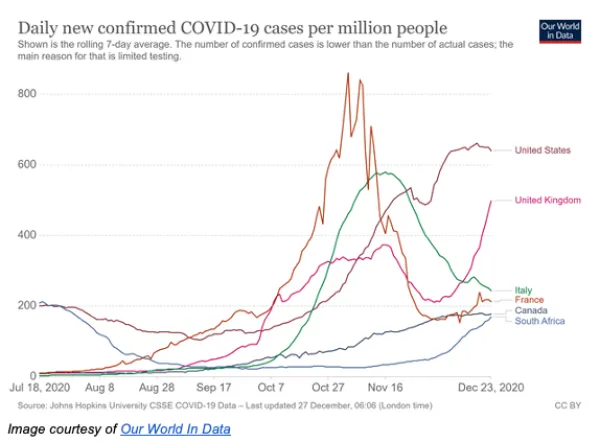
Should you be worried about the new COVID strains originating in the UK, South Africa, and elsewhere, and recently identified in the US, as well as newly identified strains that originated in the US and quickly became predominant in Central Ohio?

Unprecedented. Traumatic. Heartrending. 20XX* is the year many want to forget, never speak of again. It was beyond stressful. From a frightening pandemic to escalating poverty to police brutality to political drama. For cannabis, it was memorable. Let’s take a look:
The pandemic. A newly discovered virus called CO (corona) VI (virus) D (disease) 19 (year of discovery) – aka COVID-19, arrived in the U.S. on January 22nd. It was more than the bad cold caused by its cousins. And it’s effects can linger long into the future. Social distancing, masks and stay-at-home orders became unheard of norms.
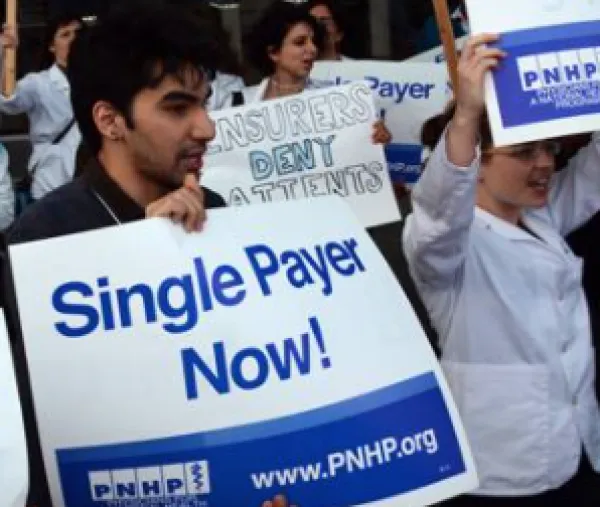
In the USA, hospitals are closings, health care workers are being laid off, substandard working conditions for nurses exist, lack of protective equipment, insurance companies’ massive profits without paying for hospital costs, millions uninsured and unwilling to have COVID-19 tests because of the cost. All these conditions are a result of hospital and staffing decisions are made on financial basis. Since elective surgeries were cancelled or postponed, hospitals have lost their primary funding source.
It is no wonder COVID-19 death rates are increasing, and are out of control.
Here are some numbers and facts:
* Eighty hospitals in the USA have closed this year.
* 80,000 nurses and health care workers were laid off or furloughed.
* 58,025 of the 138,707 private practice doctor’s offices closed from 3/2020 to 6/2020.
That is a reduction of almost 42%.
As the New Year approaches you can almost feel the global sense of relief felt by leaving 2020 behind. It was truly a difficult year that met us head-on with unique challenges, tested our resiliency, and stole both people and traditions we hold dear. The theme of uncertainty was woven into every aspect of our lives - school, work, healthcare, activism - few things were spared.
It is difficult to predict what lies ahead - but one thing is certain - we have the creativity, vision, and power to create the just, fair, and sustainable communities we desire. This truth should illuminate the path we choose in 2021.
In response to crippling economic uncertainty - mutual aid groups cropped up across the nation and continue to offer support and locate resources.
Legal protections offered to racial injustice wore thin and the veil of community police protection was torn away by Black Lives Matter protests paired with a demand to defund (and ultimately restructure) a system that perpetuates racism, poverty, and violence.