
Human Rights
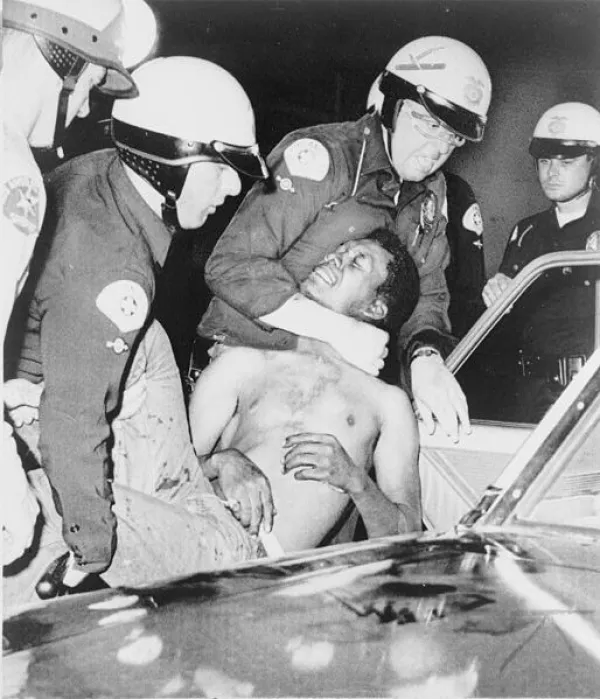
Responses to recent police killings of Black men show just how deep the racial divide is in this country. There is an “us” versus “them” mentality at play. The “enemy,” according to some, are the Black Lives Matter protestors who are challenging the continued assault on the lives of Black people by the police. The police are being undermined by criticisms of their behavior and unable to do their job of protecting the public. If we accept what Donald Trump is shouting and tweeting at us, we live in a country overwhelmed by crime and violence, and we need to return to the good old days when America was great and safe. Well, Donald Trump and I share a common birth year and skin color but very little else – even the America that we both grew up in.
There are many people in America who question our legal justice system. There have been protest marches in cities across the nation in regards to, what has been perceived as, police injustices that continue to plague the African American community.
What is justice? The dictionary defines justice as “just behavior or treatment” and “a concern for justice, peace and genuine respect for people.” Justice is to be carried out legally by a judge or magistrate, “in particular a judge of the supreme court of a country or state.”
People who carry out justice need to be fair-minded, honest, impartial and be able to objectively be fair to all. The sense of Americans not feeling safe in regards to our legal justice system stems from the continued lack of a sense of justice that some of our lawmakers, policemen and judges have demonstrated.
JP Marat writes:
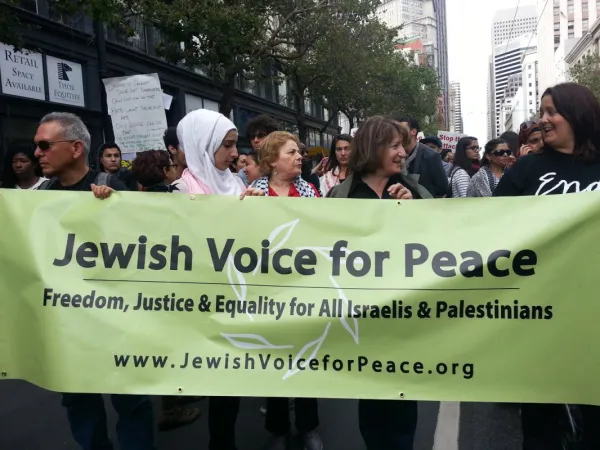
Imagine a narrow strip of land extending about two miles on either side of Interstate 71 and running through Columbus from I-270 North to I-270 South. Now imagine 1.8 million Ohioans are forced to live there behind a large militarized wall that prevents the free flow of people, food and material in and out of the enclave. Attempts to enter or leave without proper authorization are met with force. Resistance brings artillery and aerial bombardment of civilian neighborhoods within the wall.
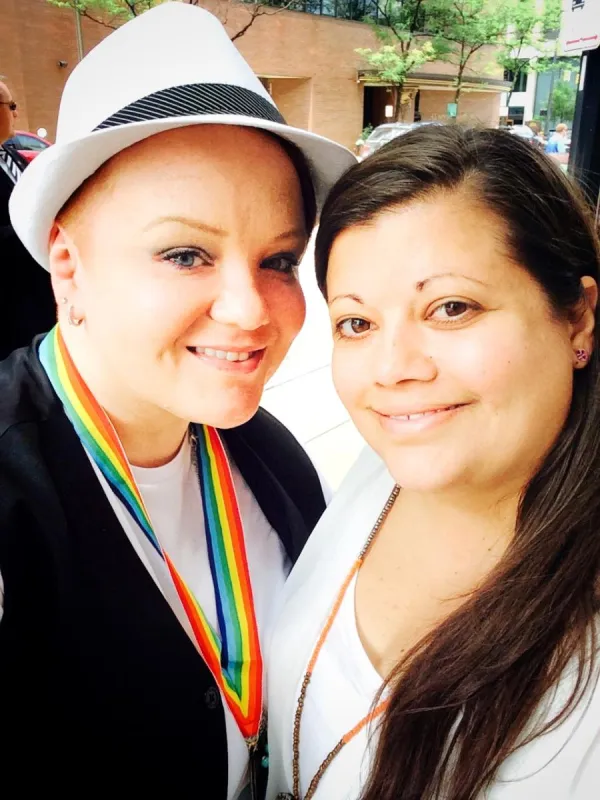
In a tremendous show of solidarity, the Bexley City Council has taken a monumental and pioneering step. On June 23, 2015, the Council passed a non-discrimination ordinance. Ordinance 12-15 bans the discrimination in the city of Bexley based upon sexual orientation, gender identity or expression, national origin, disability, race, age, familial status or military status. The measure passed by a vote of 6-0. Council President Richard Sharpe abstained from voting.
Due to this new ordinance, no one can be refused a job, business service or an apartment in the city of Bexley based on the above listed characteristics. Violators can be fined up to $1000 for their first offense. This new law goes into effect in 30 days.
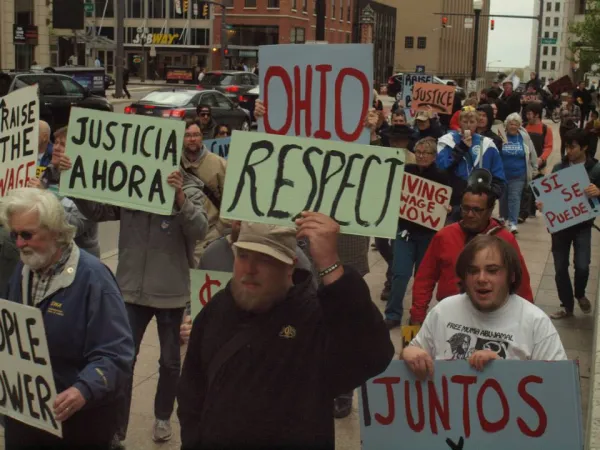
On May 1st, (May Day - International Workers' Day), we will be celebrating the collective strength of workers and voicing the call to "Rai$e ColumbU$" by respecting the dignity of workers here in the city.
For the past several years, a coalition of labor unions, community organizations, immigrant justice groups, students, and people of faith have come together to celebrate May Day. May Day, also known as "International Workers' Day"), Mayday is celebrated marking the victory of the 8 hour work day; a long struggle in the labor movement. Labor has since made great strides and continues to intersect the issues we all face as a community.
Join the event here and watch for more details: https://www.facebook.com/events/442420695912606/
The Columbus community galvanized after the police shootings in Ferguson and New York and held demonstrations in solidarity with those communities. Then, unfortunately, the issue of police killing unarmed black males was brought close to home with the deaths at the hands of policemen of John Crawford in the Beavercreek, Ohio Walmart and Tamir Rice in Cleveland. Several local groups joined the “Hands Up! Don’t Shoot” and “Black Lives Matter” movement. However, one group that has prevailed as the organization dedicated to keeping the issue in the forefront of the Columbus community and actively work towards solutions.
That organization is “Columbus Effective Steps Towards Resistance,” founded in December 2014 by a group centered mostly on the OSU campus. They describe their group this way: “Effective Steps is a network designed to engage community groups and individuals in the Columbus area together to work toward ending police brutality.”
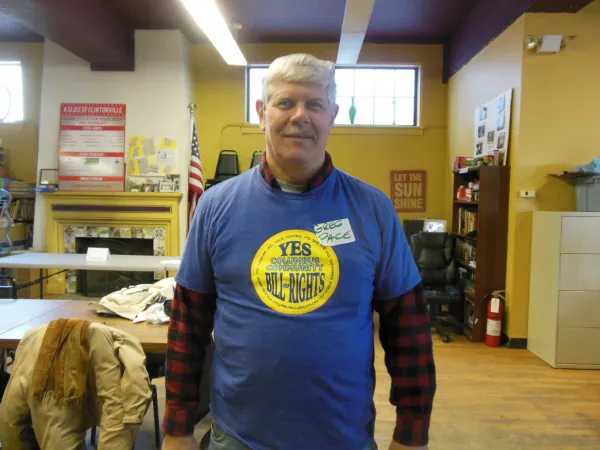
Amid the smell of donated bread inside the Clintonville-Beechwold Community Resource Center, I sought advice from fellow canvassers, working on the Columbus Community Bill of Rights, which aims to bring democracy to the decision of whether toxic fracking waste is allowed to be put into areas where it can negatively affect the health of Columbus residents.
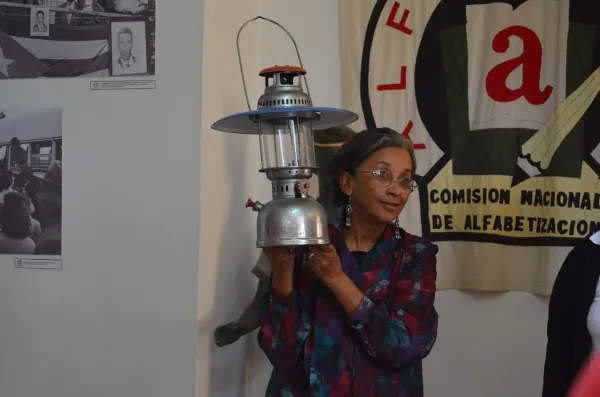
According to the CIA Factbook – that’s right, the CIA – Cuba is a more literate society than the United States. Cuba is rated fifth in the world in literacy. The United States, a mere 22nd. UNESCO, the United Nations Educational, Scientific and Cultural Organization, confirms the CIA’s assessment of Cuban literacy.
Yet, what most U.S. citizens don’t know is how the Cuban went from being one of the least literate nations in the world in 1959 under the brutal dictator and mob-front Batista.
With Cuba’s literacy rate at a staggering low 23 percent in 1960, Castro appeared before the United Nations on September 20 and proclaimed the people of Cuba would eliminate illiteracy in a year. They succeeded.
I had the privilege of visiting Cuba’s National Literacy Museum on February 10th , 2015 as part of a Code Pink “To Cuba with Love” delegation. It is housed in an old military base, the one Batista fled Cuba from with the CIA and mob over New Year’s in 1959-1960. It is the only literacy museum in the world.