
News
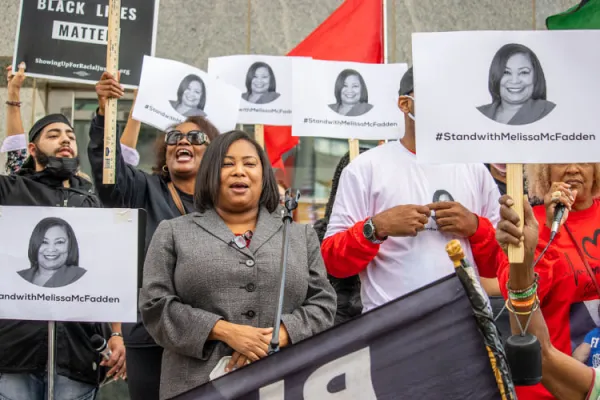
The protests in the summer of 2020 after the murder of George Floyd focused attention on the interaction of police and the Black community. Protestors accused Columbus Division of Police officers of multiple use of force violations. Several internal and external investigations, trials, and lawsuits are still pending. The Division’s internal investigations are conducted under the supervision of Mark Gardner, the Commander of the Internal Affairs Bureau.
Gardner and other supervisors have expressed the notion that many protestors are affiliated with an “organized group” called Black Lives Matter (BLM) in internal documents obtained through records requests. They also expressed opinions that BLM is or should be on the City’s official list of hate groups.
“It is concerning that the person who is in charge of Internal Affairs, the bureau that is responsible for investigating the complaints filed by the protestors, also believes that Black Lives Matter is a hate group,” said Columbus police Lt. Melissa McFadden, speaking as a private citizen.

On Wednesday, the Biden administration and a bipartisan group of U.S. Senators announced an agreement on details of a roughly $1 trillion infrastructure package, which includes $550 billion in new federal investments. Later in the day, the Senate voted 67-32 to proceed with debate on the bill. The bill’s “once-in-a-generation” investments would “enhance our competitiveness, create good jobs, and make our economy more sustainable, resilient, and just,” according to a White House statement.
The infrastructure deal is Track 1 of four legislative tracks with bills that could decisively shape the future of trains in the U.S. Find HSRA’s breakdown of all the train-related action in Congress here.
Thank you for taking the time to learn about and take action on this very serious issue affecting ALL Ohio residents, the environment, and water sources of the ENTIRE state.
State and private actors have allowed the use and processing of radioactive oil and gas brine in our communities and state. However, Ohio Revised Code (Section 2927.24) makes it a crime to place a radioactive substance in a public place or waterway with the knowledge that it may cause serious harm. We are calling on the Attorney General and county prosecutors to investigate and prosecute this violation of the law.
To acquaint yourself with facts regarding the use and dangers of radioactive oil and gas brine being used as a deicer and dust suppressant in Ohio, please go to this link and review the information before speaking to elected officials and members of the community. https://www.ohiocrn.org/toxic-trespass
Thank you for taking the time to learn about and take action on this very serious issue affecting ALL Ohio residents, the environment, and water sources of the ENTIRE state.
State and private actors have allowed the use and processing of radioactive oil and gas brine in our communities and state. However, Ohio Revised Code (Section 2927.24) makes it a crime to place a radioactive substance in a public place or waterway with the knowledge that it may cause serious harm. We are calling on the Attorney General and county prosecutors to investigate and prosecute this violation of the law.
To acquaint yourself with facts regarding the use and dangers of radioactive oil and gas brine being used as a deicer and dust suppressant in Ohio, please go to this link and review the information before speaking to elected officials and members of the community. https://www.ohiocrn.org/toxic-trespass
Stifling Democracy? One citizen-led initiative makes it on November’s ballot but the other is denied
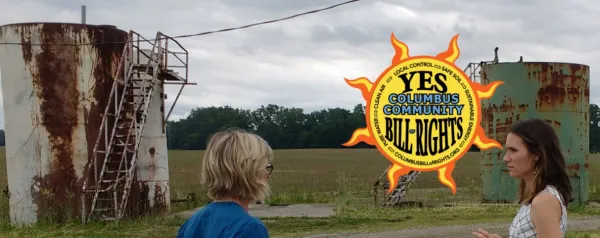
The citizen-led ProEnergy Ohio ballot initiative is likely making Columbus City Council, the Mayor’s Office and the Columbus Partnership take serious pause. Many believed the initiative was doomed, yet it made it on November’s ballot. Unfortunately, another environmental citizen-led initiative that many activists championed will not get a vote, and remains in limbo.
Columbus City Council in 2020 voted against putting ProEnergy Ohio’s “Columbus Clean Energy Initiative” on a future ballot even though the Franklin County Board of Elections found ProEnergy had collected enough valid signatures. City Council argued ProEnergy’s summary language for the initiative was insufficient.
But ProEnergy filed suit in Ohio Supreme Court and won. In a 5-2 decision the court stated City Council’s denial was illegitimate and “abused its discretion”.
City spokesperson Melanie Crabil told the Free Press in an email, “We can confirm that it will be on the November ballot.”

For the first time, the 25 million animals confined in factory “farms,” together with the U.S. Great Lake contaminated by their waste, will speak directly to Ohioans in a provocative, hard-hitting billboard and social media ad campaign centered in Toledo and including Cleveland and Columbus.
Through early October, five rotating ads (attached) will appear a total of over 100,000 times on high-visibility electronic boards and social media platforms, sponsored by Lake Erie Advocates. The duration of the campaign includes when the Solheim Cup, an international women’s golf championship, is played in Toledo.

Eviction filings in Franklin County have increased by 150% since 2020 and the population of unsheltered houseless people has risen by 235% since 2007, says an activist coalition that wants the community to know Franklin County’s eviction court is still at its pandemic temp site in the Greater Columbus Convention Center.
The sentiment all along has been that the move to the Convention Center wasn’t entirely about social distancing but the need for more space as the crush of local evictions could become overwhelming.
“Instead of helping struggling residents during the pandemic, city and county leadership worked to ensure that evictions could continue by moving eviction court to a larger space. The deck has long been stacked against Franklin County residents, and it’s clear our leadership has no intention of solving the problems we face. Housing is a human right, and we and our neighbors deserve better,” said Charlie Geer of the Central Ohio Housing Action Network.

It is no secret that many believe the Fraternal Order of Police (FOP) Capital City Lodge 9 and its union members have strong-armed their way into having too much control over how the Division polices Columbus citizens with minimal chance of being held accountable for their actions.
Local activists believe FOP Capital City Lodge 9 can be brazen, toxic and indifferent to those they serve.
They endorsed Trump for President last year even though many residents they serve heartedly rejected Trump. They threatened to charge Congresswoman Joyce Beatty with assaulting an officer after she was maced during that fateful Saturday afternoon, May 30, 2020, during George Floyd Black Lives Matter protests. They mocked Lebron James after he was critical of the Ma’Khia Bryant shooting by police.
The Ohio Senate Finance Committee last week added a clause to the proposed 2022-2023 state budget which would give any “medical practitioner, health care institution, or healthcare payer” the “freedom” to decline services if it violates their moral, ethical, or religious beliefs.”
SC3909, or the “Medical Practitioner Conscience Clause,” would make it legal to discriminate based on any reason that would violate a doctor or health care provider’s “conscience.” The clause would protect discriminatory practices by health care workers and providers from being “civilly, criminally, or administratively liable.”
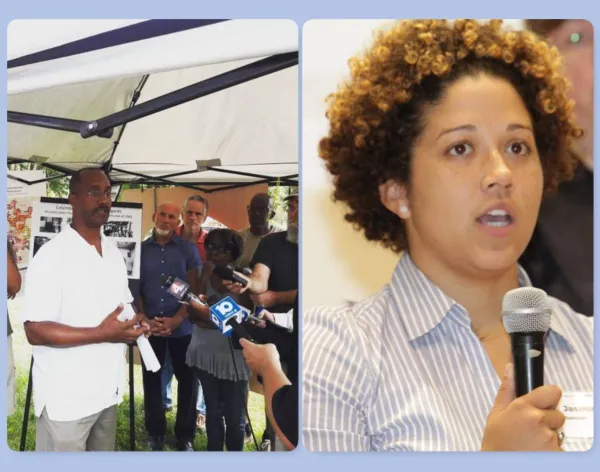
The Columbus Division of Police has a new chief in Elaine Bryant but this isn’t ceasing the mission of the Columbus Police Accountability Project or “C-PAP,” which is one month into taking sworn testimony from the community as it seeks to convince the United States Department of Justice (DOJ) that the Division “is out of control and needs federal oversight.”
So far over 30 individuals have come forward, testifying to the C-PAP’s volunteer citizen leaders in the Columbus Black community, which was announced by civil rights attorney Sean Walton at a press conference in late April.
They’re retelling stories of unconstitutional stops with no cause, unconstitutional detentions, and unlawful uses of force, among other complaints. Their treatment by Columbus police is something they vividly remember and will never forget. Many of those testified about being abused or arrested in retaliation for peacefully exercising their Free Speech rights at the George Floyd protests last summer.
“If you have stories to tell, come tell them. We can, must and will fix this,” C-PAP organizers stated in a recent press release.